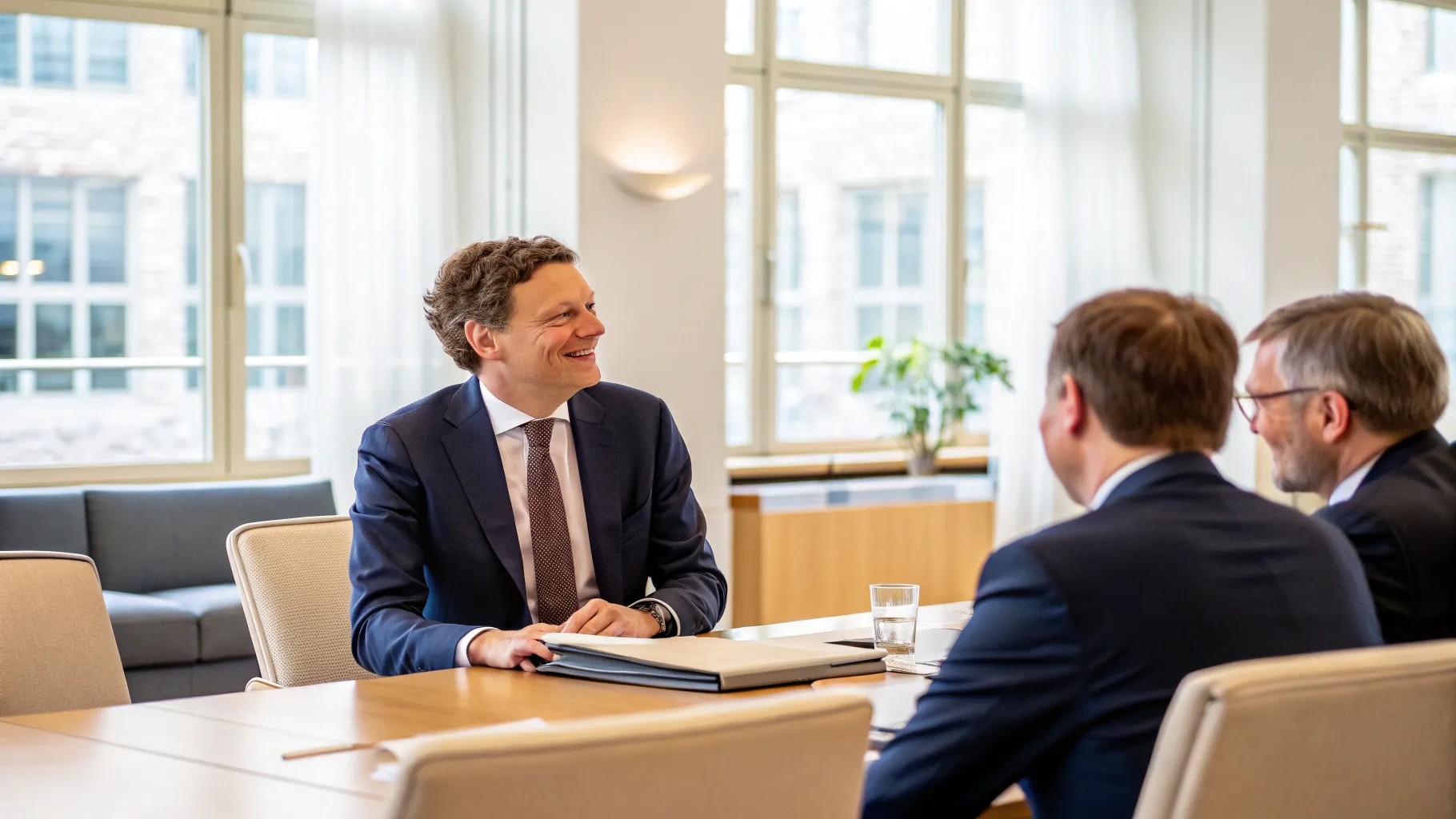
The Dutch government moved to ease tensions in ongoing economic talks, with Economy Minister Vincent Karremans framing a recent step as a gesture meant to keep negotiations on track and productive.
In a brief statement released in The Hague, Karremans described the move as a positive sign meant to support dialogue with partners and investors. He did not detail the measure, but he stressed the intent behind it. The comment suggests that the Netherlands is seeking to maintain momentum in discussions that have drawn close attention from business groups and policymakers.
“We see this as a show of goodwill,” Dutch Economy Minister Vincent Karremans said in a statement.
The timing is notable. European governments are balancing domestic pressures with cross-border economic commitments as firms assess investment plans for the coming year. Even modest steps, framed as cooperative signals, can influence expectations and help prevent talks from stalling.
Background: Signaling In Economic Negotiations
Governments often use small policy moves or public statements to signal intent during delicate talks. Such gestures can help lower the temperature while parties work through technical issues. In trade and investment discussions, these signals may include extending deadlines, pausing enforcement actions, or sharing information early to build trust.
For the Netherlands, maintaining a stable policy path is central to keeping its position as a hub for logistics, energy, and advanced manufacturing. Businesses prize clarity. Even when details are scarce, a visible effort to keep talks constructive can reduce uncertainty.
What The Statement Suggests
Karremans’s words point to a strategy built around keeping channels open. The choice to highlight goodwill, rather than specific concessions, indicates a focus on tone and process. That approach can be useful when substantive issues are complex or when parties need time to align legal and regulatory details.
- It reassures stakeholders that dialogue remains active.
- It puts public pressure on other parties to respond in kind.
- It buys time for technical teams to finalize proposals.
Such signaling can help avoid market jitters. Investors often look for cues that talks are moving forward, even if the timeline extends. A calm message can steady expectations while details are hammered out.
Industry And Policy Implications
Companies with cross-border exposure will watch for any concrete follow-up. A goodwill gesture can mean flexibility on implementation dates, provisional access to programs, or revised guidance to regulators. Each of these can affect hiring, capital spending, and supply chain planning.
For policymakers, the immediate task is keeping stakeholders informed without preempting outcomes. Transparency about next steps helps manage risk. If the gesture leads to reciprocal steps, both sides can claim progress without locking in permanent changes too early.
Balancing Domestic And External Pressures
Any move framed as cooperative must also play at home. Ministers often need to show that they are protecting national interests while preserving external relationships. Clear communication on objectives—jobs, investment, and long-term stability—can help build public support.
If opponents argue that goodwill weakens leverage, the government will point to the cost of prolonged uncertainty. Protracted disputes can delay projects and raise financing costs. A managed process can prevent such spillovers.
What To Watch Next
Observers will look for signs that the gesture prompts a response. Those signals may include announcements about meeting schedules, draft texts moving to the next stage, or joint statements confirming areas of alignment. Markets will also react to any clarity on timelines or interim arrangements.
Practical markers of progress could include updated guidance to agencies, invitations for stakeholder input, or early publication of impact assessments. Each step would indicate that the goodwill message is translating into workstreams with measurable outcomes.
Karremans’s emphasis on tone reflects a familiar playbook in high-stakes negotiations: start by lowering friction, then move to concrete issues. If the gesture leads to a stable path for talks, it could limit uncertainty for firms planning budgets and supply needs in the months ahead.
The signal from The Hague is simple but purposeful. By setting a cooperative tone, the government invites partners to keep the process moving. The next weeks will reveal whether goodwill becomes agreement—or whether more signals will be needed to keep the door open.

Rashan is a seasoned technology journalist and visionary leader serving as the Editor-in-Chief of DevX.com, a leading online publication focused on software development, programming languages, and emerging technologies. With his deep expertise in the tech industry and her passion for empowering developers, Rashan has transformed DevX.com into a vibrant hub of knowledge and innovation. Reach out to Rashan at [email protected]