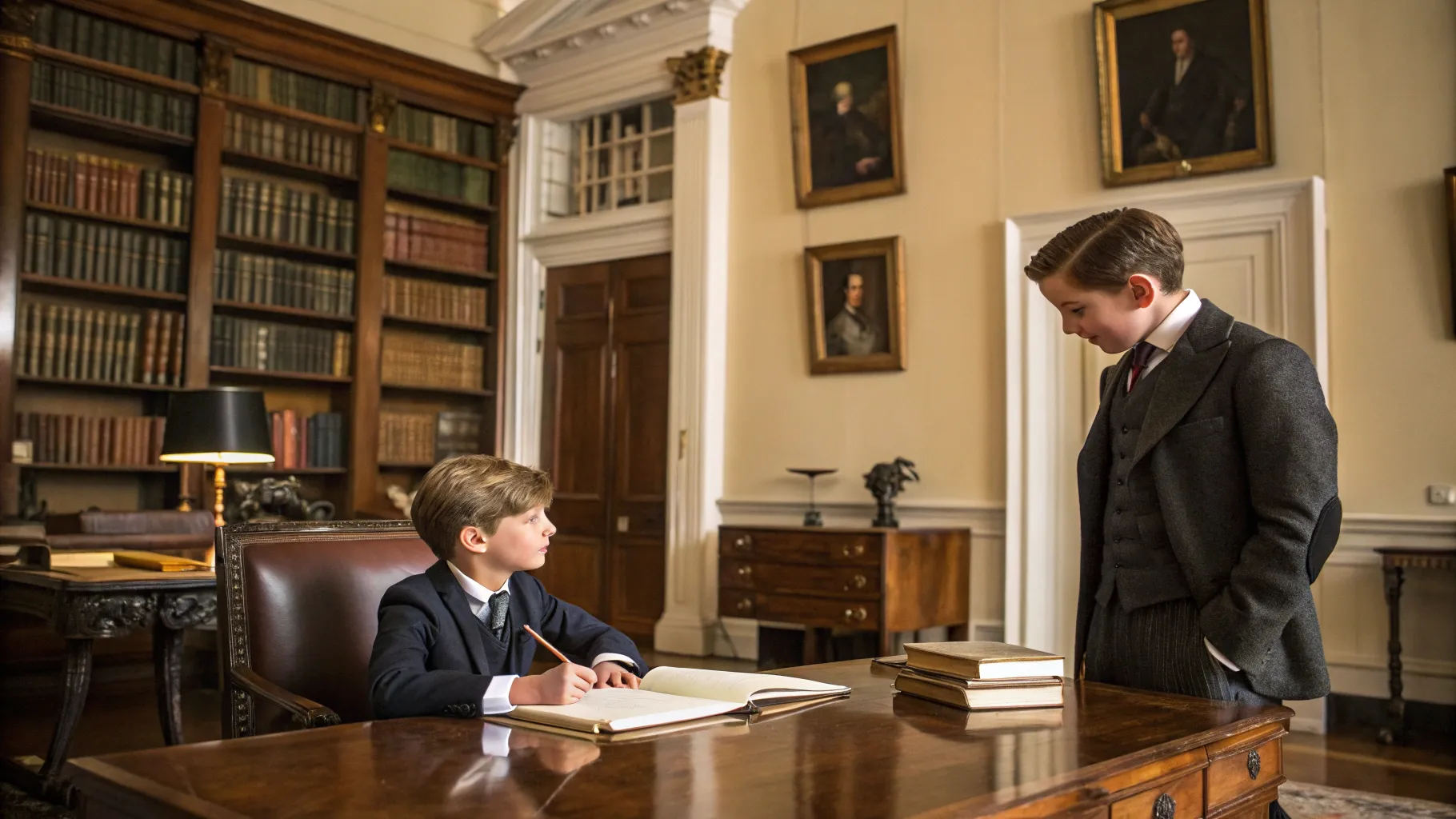
A recent UK tutoring advert calling for “an extraordinary tutor” to guide a child “on his first steps to becoming an English gentleman” has stirred debate over class, education, and what money can buy. The listing, shared on a private tutoring platform, seeks a specialist educator for a young boy. It hints at a curriculum heavy on manners, culture, and social polish rather than standard exam prep. The post has raised questions about how private tutoring is used and who benefits.
An Ad That Signals Status
The advert’s language suggests a brief that goes past literacy or numeracy. It places refinement and social grooming at the center of the job. The post reads:
“An extraordinary tutor” required “to support child on his first steps to becoming an English gentleman.”
Education consultants say requests like this surface in high-fee markets, where parents seek bespoke instruction on etiquette, cultural knowledge, and public poise. That can include how to behave at formal events, how to hold a conversation with adults, and how to manage social media with discretion. Such jobs tend to command premium rates and long-term placements.
A Growing Private Tutoring Market
The UK has seen steady growth in private tutoring over the past decade. Charities and research groups have reported that around a third of pupils in England have received paid tuition at some point, with higher participation in London. During the pandemic, use of tutors rose further as families tried to close learning gaps and secure school places.
High-net-worth families often seek add-ons. These include interview coaching for selective schools, high-level English instruction, and training in debate or public speaking. Such packages can run for years and mirror the expectations of elite independent schools.
- Academic catch-up and exam preparation remain the largest share of demand.
- Soft skills and etiquette tutoring form a smaller, high-fee niche.
- Placement support for top schools drives interest in both.
What “English Gentleman” Means Today
The phrase “English gentleman” carries strong cultural baggage. For some, it suggests education, courtesy, and civic duty. For others, it signals class barriers and outdated norms about who belongs in elite spaces. Social historians note the term’s roots in a narrow idea of status. Its use in a modern tutoring brief points to parents who still see that identity as an asset.
Critics argue that coaching a child into a coded social role can limit a broader vision of character. Supporters counter that good manners, confidence, and polished communication help children in school interviews and later in professional life.
Equity Concerns and Child Development
State school leaders and charities have warned that the rise of premium tutoring can widen gaps. When families can buy tailored polish alongside academic help, the advantage can carry through to university admissions and early jobs. Advocates for access call for public investment in oracy, cultural literacy, and enrichment in state schools, so these skills are not restricted to those who can pay.
Child development specialists urge balance. They say social skills should be taught with empathy and inclusion, not performance pressure. The risk, they note, is turning childhood into a long audition for status.
Industry View
Private tutors report a steady stream of requests tied to interviews, school readiness, and etiquette. Many say they focus on confidence, reading, and curiosity, not just polish. One London-based tutor described a careful approach: build core literacy first, then add conversation skills and cultural awareness through books, museums, and role play. That approach, they argue, supports both exams and life skills without forcing a child into a rigid mold.
What To Watch
As parents seek every edge, tutoring briefs like this are likely to continue. Two factors will shape the market: household budgets under pressure and ongoing competition for selective school places. Policymakers and schools, meanwhile, face pressure to widen access to enrichment so soft skills are not a luxury good.
The advert’s phrasing may be old-fashioned, but the motive is current. Families want their children to stand out. The question now is whether that pursuit will push the sector further into image coaching, or back toward a broader vision of education that blends knowledge, kindness, and confidence.

Deanna Ritchie is a managing editor at DevX. She has a degree in English Literature. She has written 2000+ articles on getting out of debt and mastering your finances. She has edited over 60,000 articles in her life. She has a passion for helping writers inspire others through their words. Deanna has also been an editor at Entrepreneur Magazine and ReadWrite.