AI infrastructure is being rebuilt in plain sight. A quiet site in rural Indiana now hosts one of the largest AI campuses on Earth, drawing up to 2 gigawatts of power and running close to a million processors—with no GPUs. My view is simple: the winners in AI will be those who master power, systems, and silicon, not those who merely buy more GPUs.
This shift matters because compute demand is exploding while costs, power, and supply chains are hitting hard limits. The old model—buy GPUs, scale, repeat—no longer holds. What comes next will be decided by who controls the full stack, from chips to substations.
The New AI Playbook: Own the Stack
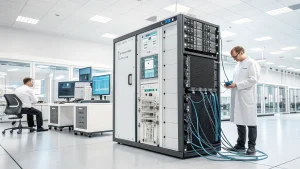
The speaker lays out a stark contrast. NVIDIA’s GPU-dense model still scales, but it’s constrained by packaging capacity, cost, and lead times. Meanwhile, Amazon has built a vast AI campus around its in-house Trainium chips, redesigned power delivery, and rethought cooling—an end-to-end bet on control.
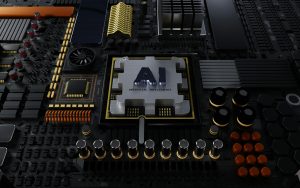
“Mother Earth is starting to look like a motherboard.”
“The race is no longer about performance. It’s about who can engineer a whole system where power, cooling, silicon, and data move in lock step.”
I agree with that shift in priorities. AI’s bottleneck has moved from model quality to watts, wires, and wallets. GPUs still matter, but efficiency per dollar and tokens per megawatt matter more.
Why This Strategy Is Smart—and Risky
Amazon’s approach is to scale custom silicon, tame costs, and secure cheap, steady electricity. Trainium 2 already claims around 50% better pricing than comparable GPU systems, plus up to 40% lower data center energy use. Trainium 3 pushes further: more compute, more memory bandwidth, and five times more AI tokens per megawatt. That is real leverage.
But the risk is just as real. Trainium must prove performance at colossal scale. The system depends on software maturity, careful networking, and the success of anchor customers like Anthropic. The speaker flags this tension openly.
“This is either the smartest bet in modern AI or the most expensive miscalculation.”
Power Is The Scarce Resource
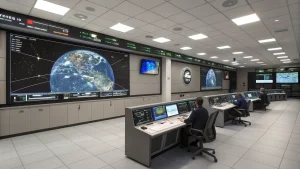
The most striking point is not the chips. It’s the power. At 2 GW, one campus rivals an entire region’s appetite. Power quality is as important as quantity. AI loads surge in milliseconds; the grid doesn’t like that. Amazon’s fix includes large battery systems to smooth spikes before they hit racks.
Cooling is the other half. Water is efficient but politically and environmentally fraught. Air is less efficient but easier on local supplies. Rainier leans on outside air most of the year, accepting higher noise and power draw to avoid draining aquifers. That trade-off is the new normal.
- Energy first: Secure stable baseload near the campus.
- Custom silicon: Optimize for efficiency, not just peak speed.
- Network pragmatism: Copper where possible; optics where needed.
- Cooling trade-offs: Protect water or power, but expect costs either way.
Each lever helps, but none works alone. The edge comes from integration.
Co-Design Is The Real Advantage
Co-design between model teams and chip teams is a big unlock. Google proved it with TPU. Amazon is trying it with Trainium and Anthropic, shaping silicon around model needs. General-purpose GPUs excel at flexibility; specialized accelerators win on efficiency. Right now, performance per dollar is the metric that moves budgets.
There is a counterpoint: capital loops can outrun profit. Big tech funds labs, labs spend on compute, new models demand more compute, and the cycle repeats. I share the concern. But I also think full-stack control of energy and silicon is the only credible path to bend the cost curve.
My Take
Farmland turning into “compute fields” isn’t hype; it’s strategy. Amazon’s move to cluster data centers beside nuclear plants, batteries, and reinforced grids shows where this is going. AI’s future will be decided by who locks down power, land, and custom silicon—and aligns them into one coherent machine.
The GPU era won’t vanish. It will share the stage with specialized chips and smarter power engineering. The lesson is clear: AI scale is an energy problem dressed as a compute challenge. Plan for that, or fall behind.
Conclusion
I believe others should follow the same playbook: secure long-term power, invest in specialized silicon, and redesign networks and cooling for efficiency. Push for siting near stable baseload, not just cheap land. Demand performance per dollar, not peak specs. If leaders act now, we can build AI that is powerful, affordable, and grid-friendly. If they don’t, the cost of compute—and the cost to communities—will only climb.
Frequently Asked Questions
Q: Why are companies moving away from pure GPU clusters?
GPUs are constrained by supply, packaging capacity, and soaring costs. Specialized chips can deliver better performance per dollar and more predictable scaling.
Q: What makes power the main constraint for AI sites?
AI clusters draw huge, spiky loads that stress grids. Stable, abundant electricity—and ways to smooth fast surges—are now central to reliable operations.
Q: How does co-design between models and chips help?
Tuning silicon to a model’s workload cuts waste and boosts throughput. It sacrifices some flexibility to gain efficiency and lower operating costs.
Q: Is shifting from water cooling to more air cooling wise?
It reduces strain on local water supplies but increases power draw and noise. It’s a trade-off that depends on climate, grid strength, and community impact.
Q: Could this investment cycle be a bubble?
It’s a risk. Spending can outpace profits. The best defense is full-stack control—energy, silicon, and software—to keep costs in check as models grow.