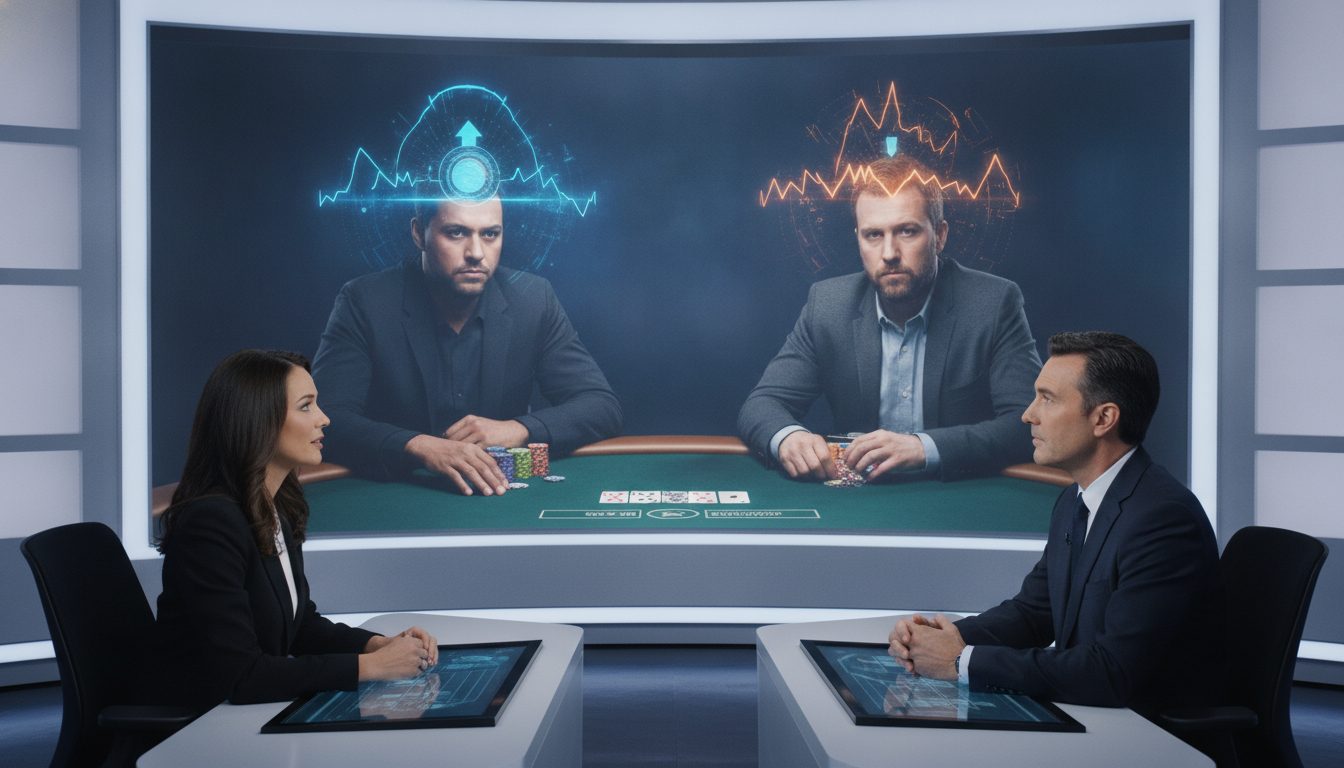
ESPN introduced an artificial intelligence tool that flags poker “tells” during broadcasts of the 2026 World Series of Poker, raising questions about fairness and showmanship. The feature appeared on live coverage from Las Vegas, with on-screen prompts that hinted at players’ confidence or stress levels. Fans and players are now asking whether the technology adds insight or risks changing the game.
During the broadcast, the feature was described as an “AI tells detection” tool. On-air discussion framed the debate bluntly.
“Is it a neat computer-powered party trick, or a real threat to poker’s future?”
The rollout comes as sports networks test new data layers to keep viewers engaged. Poker has long relied on production enhancements, from hole-card cameras to real-time win probabilities. This is the first time a major network has tried to quantify live “tells” on air.
Why This Matters Now
Poker’s drama often lives in human behavior. Small gestures, timing, and speech patterns can hint at strength or weakness. Skilled players study these signals, but they also use them as misdirection. Turning that dance into numbers could change how viewers judge a hand and how players act on camera.
AI in sports broadcasting has become more common. Baseball telecasts show pitch models. Soccer matches use tracking data to grade runs. Poker is a more delicate case because the edge comes from concealment. The new tool pushes that boundary.
What the Tool Might Be Measuring
ESPN did not release full technical details during the broadcast. The on-screen prompts suggested a blend of video and timing analysis. Similar systems in research often look at:
- Facial micro-movements and gaze shifts.
- Hand movements, fidgeting, or posture changes.
- Speech tempo or pauses during table talk.
- Action timing, like how fast a bet is placed.
Any model would need careful training to avoid false signals. Poker tables are noisy, players use props, and lighting varies across stages. A graphic that hints at confidence could mislead viewers if the model is off by context or style.
Player Concerns and Competitive Integrity
Some professionals worry that the feature could leak insights that took years to learn. If a broadcast system highlights a recurring habit, opponents can review clips and adjust faster than before. Others argue that top players already study footage, so the change is marginal.
There is also a fairness question. Does the tool profile some styles or faces more than others? Bias in computer vision is a known risk. If a model flags stress more often for one demographic, that would be a serious issue for televised events that rely on trust.
Broadcast-only use is a partial safeguard. Players at the table do not see the on-screen prompts in real time. Still, televised reads can affect reputations and future matchups. Tournament officials and sponsors will watch for any sign that the tool changes behavior at the felt.
Entertainment Value for Viewers
For casual fans, the feature may act like training wheels. It can guide attention to moments that matter, much like win probability graphics do in other sports. It also gives commentators a new hook for storytelling.
Yet overreliance could flatten the mystery that makes poker compelling. If a graphic suggests a player is bluffing and the outcome proves it wrong, viewers may question the telecast rather than the play. Balance will be key.
What Comes Next
Networks will test acceptance across different events and broadcast windows. Data privacy rules and player agreements will shape how far the technology goes. Rights holders may set limits on the types of signals that can be analyzed or displayed.
Casinos and organizers will face choices too. They can treat AI tells as a broadcast-only feature, or they can adopt versions for coaching and review. Each path raises new questions about training edges and game integrity.
Key Questions to Watch
- How accurate are the prompts across diverse players and settings?
- Will organizers publish validation methods or third-party audits?
- Do players get a right to opt out on televised tables?
- How will regulators and sponsors weigh bias and privacy risks?
ESPN’s “AI tells detection” tool signals a new phase for televised poker. It may enrich coverage if it stays narrow, transparent, and validated. If it overreaches, it could pressure players to change natural behavior and seed mistrust with fans. The next events on the poker calendar will show whether this feature is a brief gadget or a fixture in the broadcast toolkit.

Kirstie a technology news reporter at DevX. She reports on emerging technologies and startups waiting to skyrocket.