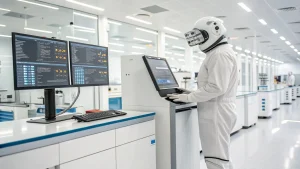
The European Union is taking steps to establish a robust domestic artificial intelligence (AI) industry but faces challenges in chip supply and energy requirements. Plans to build AI-focused gigafactories in Europe aim to adhere to the EU’s stringent regulations. Still, concerns persist over the significant investment needed and the potential short lifespan of data centers. The push for these AI hubs comes as the United States restricts access to crucial AI chips, adding another difficulty for European companies entering the competitive AI landscape.
Despite these hurdles, EU officials remain hopeful that aligning AI technologies with European standards will set a global precedent. Italy’s Synapsia recently signed a $2.5-billion contract with UAE’s Bold Technologies to provide AI-powered city management services for Abu Dhabi, indicating the high stakes and lucrative possibilities in the developing AI industry. The EU’s strategy has recently shown signs of shifting. During the Paris AI Action Summit in February, European Commission President Ursula von der Leyen announced plans to cut red tape and support AI business development.
EU plans AI industry despite challenges
French President Macron echoed this sentiment, urging the EU’s regulatory framework to be simplified. If this shift materializes, the EU risks weakening its position and influence in global AI governance.
The EU’s AI Act has served as a regulatory blueprint for other countries, and a more business-friendly interpretation could potentially weaken risk management and protection from AI harm globally. Under the current administration, the US appears headed toward a deregulatory approach to AI development. At the same time, China focuses on mitigating domestic risks, with some measures aimed at minimizing risks to its political stability. The EU faces a crucial opportunity to enhance its role in the global chip value chain and establish its players as pivotal entities within the GPU ecosystem.
To maximize the benefits of recent investments, the EU must streamline regulations and collaborate with its AI industry leaders to deploy resources optimally. Despite the potential short-term challenges posed by U.S. restrictions, Europe has a substantial opportunity to strengthen its semiconductor industry and secure a significant position within the GPU ecosystem, paving the way for greater AI sovereignty.
Image Credits: Photo by ThisisEngineering on Unsplash

Noah Nguyen is a multi-talented developer who brings a unique perspective to his craft. Initially a creative writing professor, he turned to Dev work for the ability to work remotely. He now lives in Seattle, spending time hiking and drinking craft beer with his fiancee.