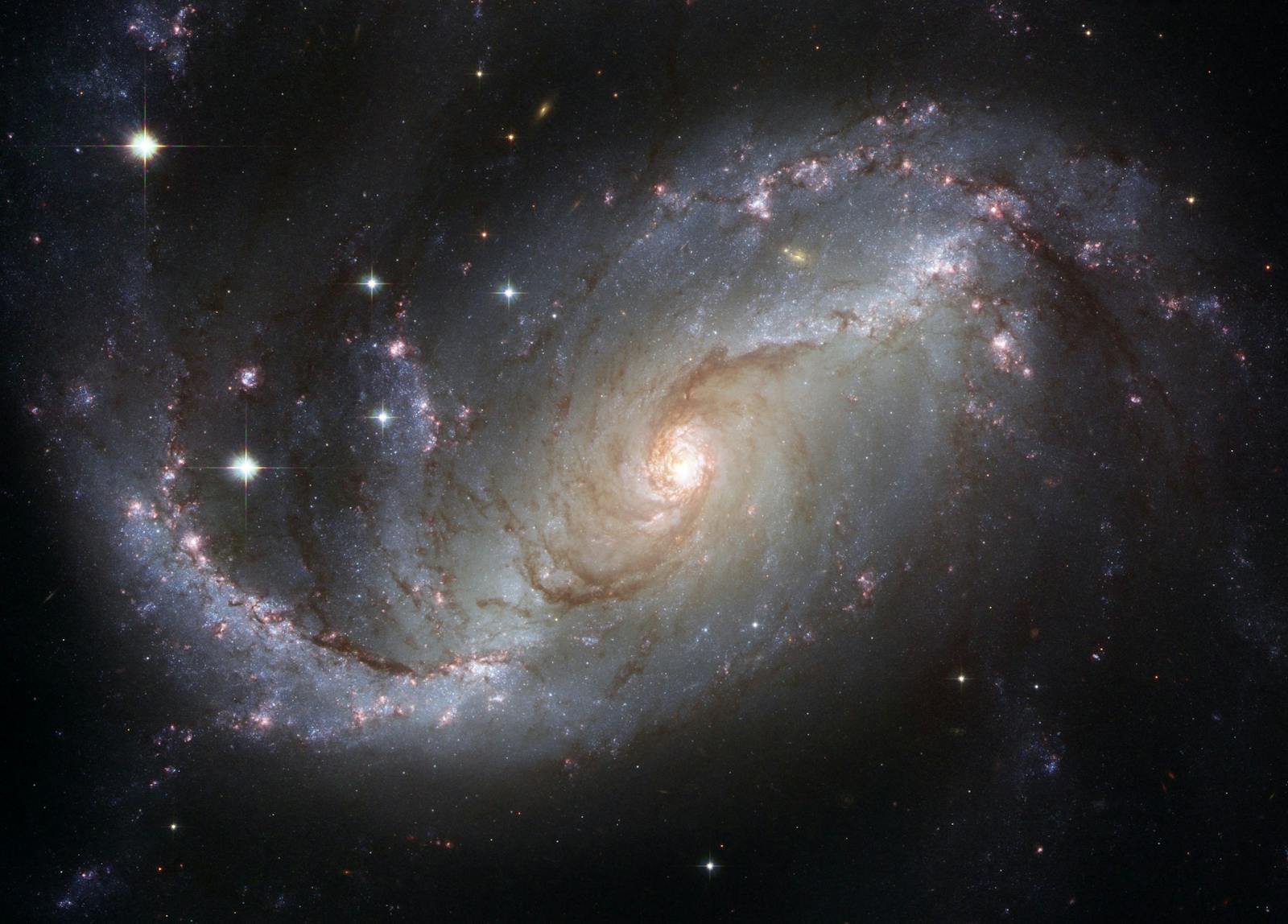
In a groundbreaking discovery, astronomers have traced a mysterious fast radio burst (FRB) to the outskirts of an ancient, dead galaxy, challenging previous beliefs about the origins of these cosmic events. The findings, detailed in two studies led by Northwestern University and McGill University, suggest that FRBs may not solely originate from regions of active star formation as previously thought. FRB 20240209A was first detected in February 2024 by the Canadian Hydrogen Intensity Mapping Experiment (CHIME).
The burst flared up multiple times between February and July 2024, with six pulses also detected by an outrigger telescope located 60 kilometers from CHIME’s main station. This allowed astronomers to pinpoint the FRB’s precise location in the sky. Using telescopes at the W.M. Keck and Gemini observatories, researchers explored the FRB’s surrounding environment.
They discovered that the burst originated at the edge of an 11.3 billion-year-old neighboring galaxy, located just 2 billion light-years from Earth.
Ancient galaxy’s outskirts host FRB
The galaxy was found to be extremely luminous and massive, with a mass 100 billion times that of our sun.
It seems to be the most massive FRB host galaxy to date,” said Tarraneh Eftekhari, who led one of the studies. It’s among some of the most massive galaxies out there.
Surprisingly, FRB 20240209A was traced to the outskirts of its home galaxy, 130,000 light-years from the galaxy’s center, where few other stars exist. This marks only the second time an FRB has been found at the outer fringes of a galaxy, with the first being detected in the spiral galaxy Messier 81 (M81) in 2022.
“This CHIME FRB could be a twin of the M81 event,” said Wen-fai Fong, a senior author on both studies. “It is far from its home galaxy, and the population of stars in its home galaxy is extremely old. It’s making us rethink our standard FRB progenitor models and turning to more exotic formation channels, which is exciting.”
The McGill-led study suggests that the new FRB may have originated within a dense globular cluster, where magnetars could form through alternative mechanisms, such as the merger of two neutron stars or the collapse of a white dwarf under its own gravity.
It’s clear that there’s still a lot of exciting discovery space when it comes to FRBs,” Eftekhari said, “and that their environments could hold the key to unlocking their secrets.”
The studies were supported by various organizations, including the Gordon & Betty Moore Foundation, NASA, the National Science Foundation, and the Trottier Space Institute at McGill.

Johannah Lopez is a versatile professional who seamlessly navigates two worlds. By day, she excels as a SaaS freelance writer, crafting informative and persuasive content for tech companies. By night, she showcases her vibrant personality and customer service skills as a part-time bartender. Johannah's ability to blend her writing expertise with her social finesse makes her a well-rounded and engaging storyteller in any setting.