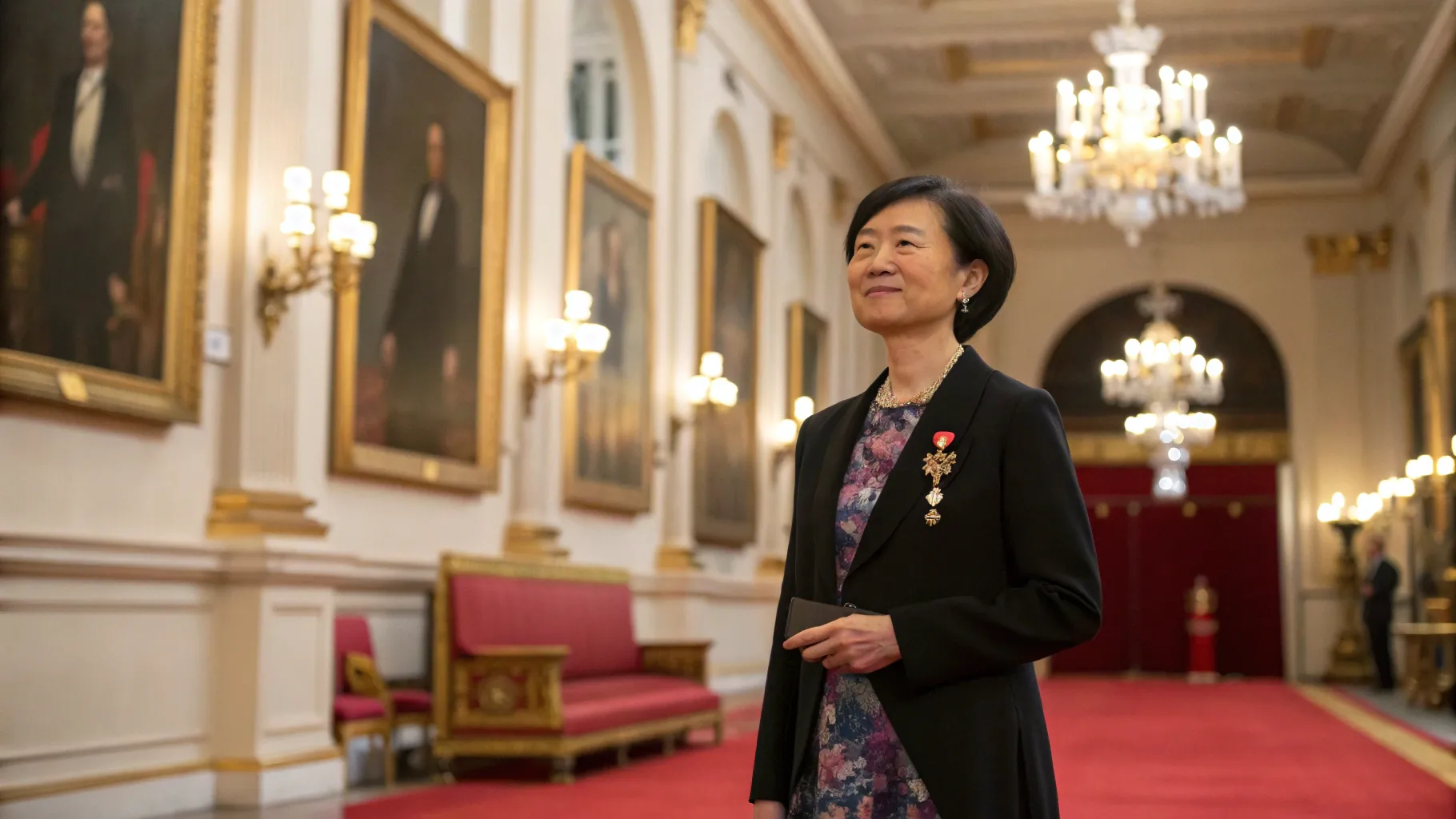
Professor Fei-Fei Li, a leading figure in artificial intelligence, will receive a top engineering honor from the King, recognizing her influence on modern computing. The decision highlights her role in advancing computer vision and shaping public debate on responsible AI. The ceremony is expected to be held in the United Kingdom, with organizers citing her decades of work in the field.
Why This Matters Now
The award comes as AI systems move from research labs to daily life. Governments, companies, and universities are racing to set rules, invest in talent, and assess risk. Honoring a researcher known for both technical breakthroughs and human-centered values signals a growing focus on impact and ethics. It also places academic leadership at the center of a field increasingly driven by industry.
Background on Fei-Fei Li
Li serves as a professor at Stanford University and co-founded its Institute for Human-Centered Artificial Intelligence. She previously led AI efforts at a major tech company, helping bring machine learning tools to business users. Her research focuses on computer vision, which helps machines interpret images and video.
Li is widely associated with ImageNet, a project that built a large dataset to train and test vision systems. ImageNet provided millions of labeled images that helped researchers build and compare algorithms. The effort accelerated progress in deep learning and helped set standards for measuring results.
- ImageNet includes more than 14 million labeled images.
- The dataset enabled rapid gains in image recognition accuracy in the 2010s.
- Its influence spans academic research and real-world applications.
The Significance of the Honor
Engineering awards presented by the monarch are rare and highly selective. They recognize contributions that change practice, enable new industries, or improve public life. By recognizing an AI scientist, the honor reflects how software and data now sit at the heart of engineering. It also acknowledges the role of datasets and benchmarks as core infrastructure in research.
Colleagues point to Li’s long record of building communities and resources that others can use. Her work has helped standardize how the field measures progress. That, in turn, has made it easier for new teams to contribute and compare results.
Impact on Industry and Society
Advances in vision systems affect many sectors. Health care uses AI to read scans and flag early signs of disease. Cars rely on perception models to understand roads and obstacles. Retail and agriculture use image tools for inventory and crop analysis. Li has often argued that such tools should be designed with people in mind, weighing benefits and harms.
Her public comments have stressed privacy, fairness, and safety. She has supported stronger testing, clear accountability, and better data practices. Supporters say this approach helps build trust. Critics warn that benchmarks can push narrow goals and miss real-world complexity. Both camps agree that guardrails and transparency are needed as models spread across services.
What the Honor Signals for AI
The recognition suggests a few near-term shifts:
- Research Investment: Expect more funding for datasets, tools, and evaluation methods that help turn lab work into reliable systems.
- Education: Universities may expand training that blends technical skills with policy, ethics, and social impact.
- Standards: Industry and governments could adopt clearer measures for safety and performance, informed by academic benchmarks.
Such steps aim to create AI that is useful, fair, and dependable. They also reflect growing pressure to prove real-world value without causing harm.
Looking Back, Looking Ahead
The arc of computer vision over the past 15 years tracks closely with the rise of large datasets and modern neural networks. ImageNet helped kickstart that wave, and Li’s leadership shaped how researchers build, test, and share models. Today, similar ideas guide areas like language, robotics, and multimodal systems.
As AI becomes embedded in critical services, leaders face hard choices on deployment, risk, and public trust. Honoring a scientist known for technical progress and social responsibility highlights those priorities. It also raises expectations for how future systems are built and governed.
Professor Li’s forthcoming award marks a moment for the field to reflect on its path and its duties. The immediate takeaway is clear: engineering excellence now includes not only performance, but also care for people and society. Watch for new standards, training programs, and public commitments as institutions respond to that message.

Deanna Ritchie is a managing editor at DevX. She has a degree in English Literature. She has written 2000+ articles on getting out of debt and mastering your finances. She has edited over 60,000 articles in her life. She has a passion for helping writers inspire others through their words. Deanna has also been an editor at Entrepreneur Magazine and ReadWrite.