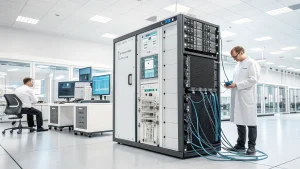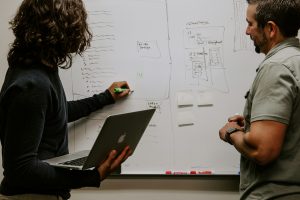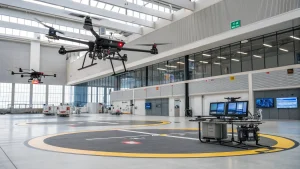
Godrej Enterprises Group in India is using artificial intelligence to improve workflows and cut costs at its factories. Vijay Balakrishnan, chief digital and information officer at Godrej & Boyce, an engineering company that is part of Godrej Enterprises Group, said AI is working well to make factory operations better. Balakrishnan said that even though there is no big commercial use for AI in consumer markets yet, the technology is making big progress in industrial settings.
Using AI in manufacturing is helping to make operations more efficient and reduce costs. Godrej’s move is part of a wider trend of using advanced technologies to stay competitive and drive innovation in the industry. Many companies are looking to AI and automation to improve efficiency and productivity.
However, there are challenges in getting workers to accept these changes. About a third of U.S. workers surveyed recently think AI will lead to fewer jobs in the future.
AI boosts factory workflows
Manufacturing leaders met at a conference in Texas last week to discuss ways to address these concerns. Some strategies include using technologies to speed up boring tasks, like picking up parts or reading through lots of business documents. In some cases, the technology has even allowed factories to run shifts without human supervision, which could lead to a shorter work week.
For example, John Deere is using AI to help its engineers read through warranty claims much faster. This frees up time for them to work on other problems. Deere is also encouraging workers to experiment with automation in a safe way, like naming a robot “Cranky” because it picks up cranks and puts them on the line.
Procter & Gamble is using robotics to run a four-hour night shift without people at a factory in Germany. This has allowed them to switch to a four-day work week with two 10-hour days, which lowers costs and gives employees a better work-life balance. By taking these steps, companies like Godrej, Deere, and P&G are showing how manufacturers can use AI and automation in ways that benefit both the company and its workers, creating a more productive and engaging workplace.
Image Credits: Photo by Alexander Tsang on Unsplash

Cameron is a highly regarded contributor in the rapidly evolving fields of artificial intelligence (AI) and machine learning. His articles delve into the theoretical underpinnings of AI, the practical applications of machine learning across industries, ethical considerations of autonomous systems, and the societal impacts of these disruptive technologies.