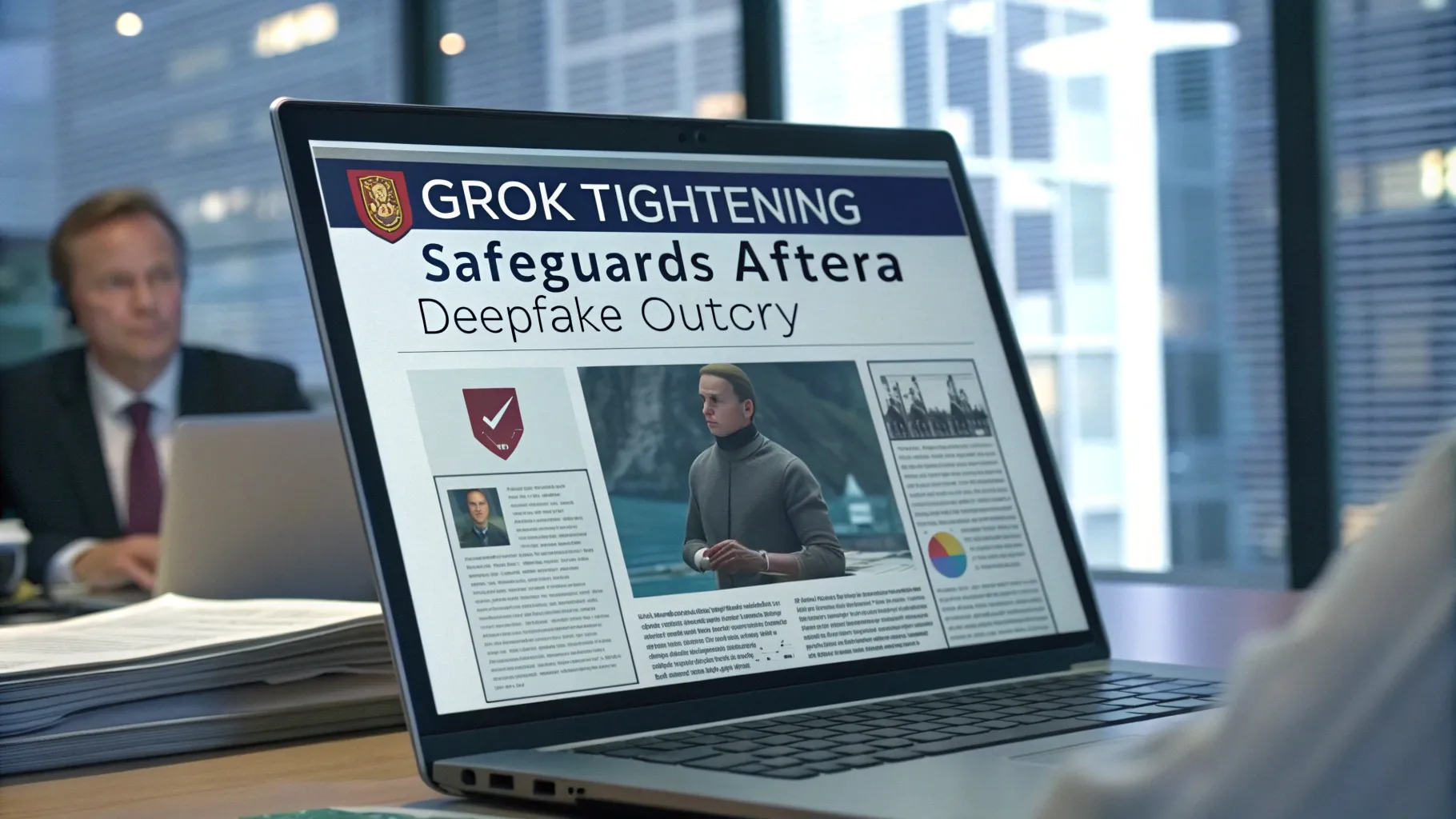
Grok’s operators moved to tighten safeguards after public anger over reports that the AI tool was used to strip clothing from images of women and children. The change, confirmed this week, comes as policymakers and child-safety groups warn that “nudified” deepfakes are spreading fast and harming victims. The company did not detail the full scope of the adjustments, but said efforts focus on blocking misuse and improving detection.
The step arrives amid growing scrutiny of AI image systems across social media and private forums. Lawmakers in several countries are drafting or advancing rules targeting nonconsensual deepfakes, including those depicting minors. Tech firms say they are racing to keep pace with fast-evolving manipulation tools that can warp photos in seconds.
What Changed and Why It Matters
The company said it was restricting features and tightening filters tied to image editing and generation. It is also increasing enforcement against users who attempt to create sexualized content without consent, especially content involving minors. Engineers are testing new classifiers designed to detect nudification attempts before images are produced.
“Move follows outcry over use of Grok to digitally remove clothing from images of women and children.”
Safety advocates argue that such guardrails are overdue. Nonconsensual intimate imagery has long plagued online platforms. AI now lowers the barrier for abusers, who can create convincing fakes from everyday photos. Victims often face harassment, extortion, and long-term trauma when doctored images spread.
A Rapidly Escalating Problem
Deepfake tools that remove clothing are not new, but they are getting easier to use and harder to detect. Even low-quality outputs can devastate reputations. Child-protection organizations say they are fielding more reports of AI-altered images featuring minors. Many cases never reach law enforcement, either due to fear or the volume of content.
Researchers have urged companies to deploy layered defenses. These include proactive screening, metadata checks, watermarks, and user reporting pathways that can trigger swift takedowns. Rights groups also call for partnerships with independent auditors who can test systems for failure modes.
Balancing Safety and Speech
The move raises familiar questions about the line between safety and expression. Civil liberties groups warn that overly broad filters might remove legitimate uses, such as medical, educational, or artistic content. They push for clear policies, transparent enforcement data, and appeals when content is removed in error.
Industry experts say the goal is precision. Tools should block sexualized edits of real people without consent, while allowing lawful research and news reporting that may involve sensitive imagery. That balance is difficult, but experts argue it is achievable with well-tuned models and oversight.
How Platforms Are Responding
Major platforms have begun adopting stronger rules against synthetic sexual content. Some now ban AI-generated intimate imagery of real people without consent. Others are rolling out provenance tags and watermarking to help users evaluate whether an image is machine-made or edited.
- Stricter filters on sexualized edits and prompts.
- Automated detection of nudification patterns.
- Faster removal pathways and repeat-offender bans.
- Education for users on reporting and consent.
Legal action is also expanding. Several U.S. states and European countries are crafting or updating laws addressing nonconsensual deepfakes, with enhanced penalties for content involving minors. Regulators are pressing companies to act quickly when they receive credible reports.
What Comes Next for Grok
The company says it will continue to refine safeguards and consult external experts. It plans to publish more detail on tools, enforcement metrics, and user reporting outcomes. Victim-support groups are urging regular transparency reports and a dedicated hotline for urgent child-safety cases.
Technical measures under review include stronger prompt blocking, improved face and body detection to identify risky transformations, and default restrictions on editing real-person images. External researchers have called for red-team testing that simulates sophisticated attempts to bypass filters.
The latest action signals a shift in how AI firms manage image-editing risks. The pressure will not ease soon. Victims, parents, and teachers want faster removal and real accountability. Policymakers want clearer rules. Developers want standards that protect safety without overblocking legitimate use. The next few months will show whether these tighter controls reduce harm, and whether industry and regulators can move in step to keep abuse in check.

A seasoned technology executive with a proven record of developing and executing innovative strategies to scale high-growth SaaS platforms and enterprise solutions. As a hands-on CTO and systems architect, he combines technical excellence with visionary leadership to drive organizational success.