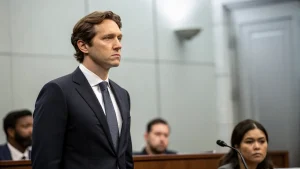
Cody Roberts avoided up to two years in prison and a $5,000 fine after entering a guilty plea in a recent court proceeding. The decision limits his punishment and closes a case that could have carried far steeper penalties. The outcome highlights how plea agreements shape criminal justice outcomes and raises questions about proportional sentencing and accountability.
What Happened and Why It Matters
Cody Roberts avoided as much as two years in prison and a $5,000 fine by pleading guilty.
The case turned on a standard but powerful feature of the U.S. legal system: plea bargaining. By admitting guilt, defendants often receive a lower sentencing range or avoid certain counts. In this instance, the plea removed exposure to the maximum term and fine that could have followed a trial conviction.
Judges must still accept a plea and determine the sentence. But prosecutors and defense attorneys commonly negotiate terms that narrow the issues, reduce uncertainty, and save court resources.
Background: How Plea Deals Work
Plea agreements resolve most criminal cases in the United States. Reports from the Bureau of Justice Statistics have long shown that a large majority of convictions result from guilty pleas rather than jury verdicts. These agreements trade the risk of trial for a measure of certainty. Defendants give up the chance of acquittal, but often gain reduced penalties. The state avoids lengthy litigation, while victims and communities receive a faster resolution.
Sentencing guidelines, statutory maximums, and charging decisions frame these deals. While the exact terms in Roberts’s case were not disclosed publicly here, the stated exposure—two years and a $5,000 fine—sets a clear benchmark for what was at stake.
Legal and Practical Implications
The plea shields Roberts from the harsher end of the sentencing range. It also means the evidence will not be tested at trial. For some observers, that can limit transparency. For others, it is a practical outcome in a system with crowded dockets and finite resources.
Defense attorneys often argue that a negotiated plea can reflect the conduct more precisely than broad initial charges. Prosecutors weigh the strength of evidence, witness availability, and the public interest in swift resolution. Judges consider fairness, deterrence, and public safety at sentencing.
What Stakeholders Consider
- Certainty: Pleas reduce the risk of a higher sentence after trial.
- Speed: Cases close faster, cutting costs for courts and parties.
- Accountability: A formal admission of guilt can carry conditions such as probation, restitution, or community service.
- Transparency: Without a trial, fewer facts enter the public record.
Victims and communities may value the admission of wrongdoing and the stability that comes with finality. Others may prefer the fact-finding of a trial, even if it extends the process.
Sentencing Factors and Possible Next Steps
After a guilty plea, judges assess factors such as the nature of the offense, any prior record, statements from those affected, and the defendant’s acceptance of responsibility. These can influence whether the court imposes probation, a short custodial term, fines, or other conditions.
If the plea includes a recommendation, the judge may follow it but is not required to do so. Any sentence must remain within legal limits. If probation is ordered, compliance conditions can include counseling, employment requirements, or barred contact with specific parties.
Wider Trends and Ongoing Debates
Legal scholars and advocacy groups continue to debate the reach of plea bargaining. Supporters say it keeps courts functioning and produces fair outcomes in routine cases. Critics warn that the pressure to avoid high maximum penalties can push some defendants to plead even when they might prevail at trial.
Policymakers in several states have reviewed charging policies, discovery rules, and sentencing frameworks to reduce disparities and improve trust. Data collection on plea practices remains uneven, which can make broad comparisons difficult.
The Roberts case fits a common pattern: a guilty plea that caps risk and brings closure. The final sentence will show how the court balances efficiency, accountability, and public interest. Observers will watch for the terms the judge sets and whether they include supervision, treatment, or other conditions. The outcome will add one more data point to a system where negotiated resolutions are the norm, and where debates over fairness and transparency continue.

Rashan is a seasoned technology journalist and visionary leader serving as the Editor-in-Chief of DevX.com, a leading online publication focused on software development, programming languages, and emerging technologies. With his deep expertise in the tech industry and her passion for empowering developers, Rashan has transformed DevX.com into a vibrant hub of knowledge and innovation. Reach out to Rashan at [email protected]