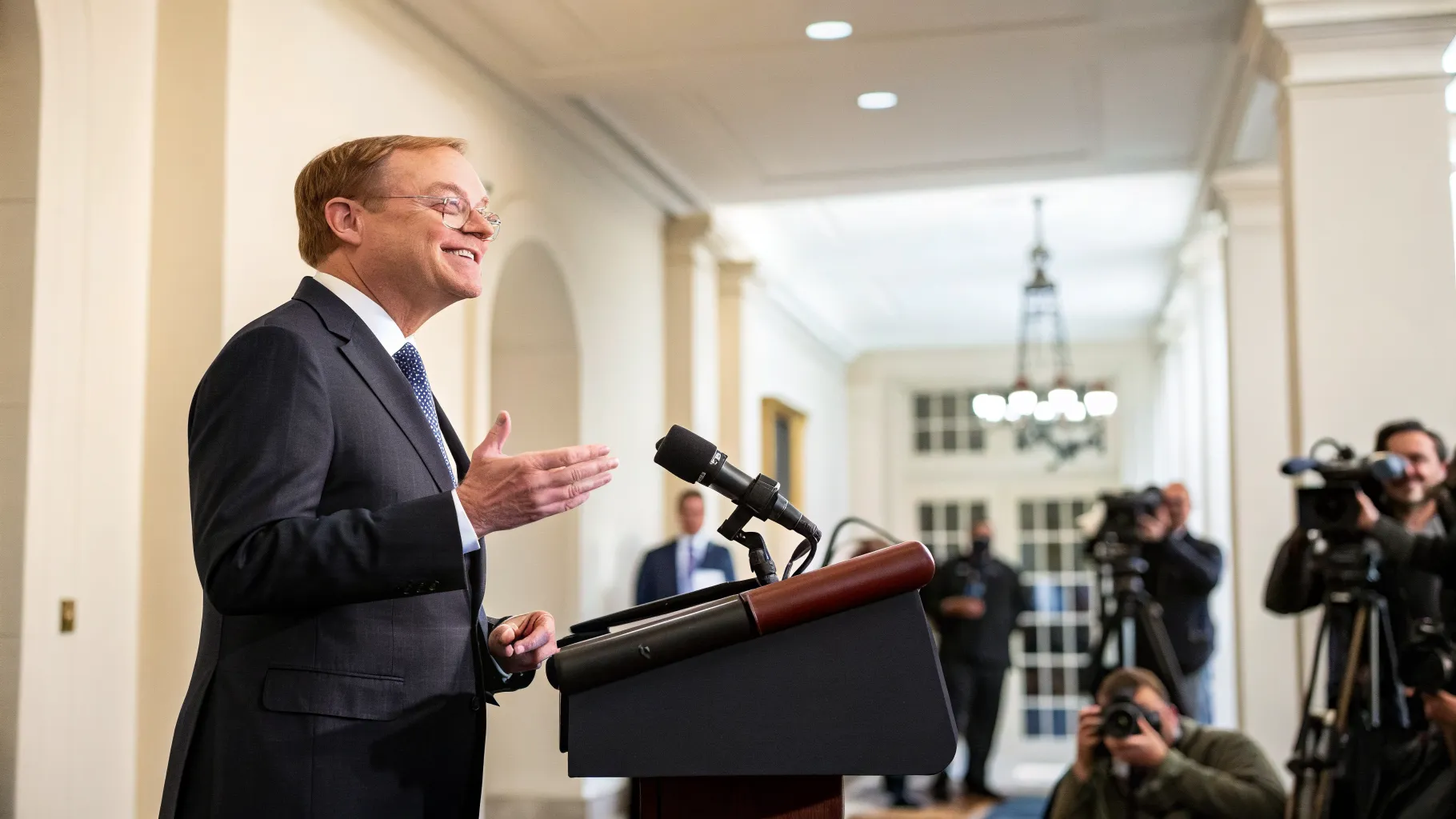
National Economic Council Director Kevin Hassett called for action against New York Federal Reserve researchers after they reported that American businesses and consumers bear most tariff costs. The comments came Wednesday amid continuing debate over the impact of tariffs put in place under President Donald Trump. The clash spotlights both the economic stakes and the tension between political leaders and independent research arms of the Federal Reserve System.
Hassett’s criticism centered on a study concluding that U.S. firms and households shoulder about 90% of tariff expenses. The figure challenges a core claim by some administration officials that foreign exporters absorb much of the burden. It also revives scrutiny of trade policy outcomes as companies navigate higher import prices and supply chain shifts.
What Hassett Said
Researchers at the New York Federal Reserve who produced a study finding American businesses and consumers are shouldering 90% of the cost of President Donald Trump’s tariffs should be “disciplined.”
Hassett did not specify what “disciplined” should mean in practice. His remark suggested he believes the analysis either misrepresented the policy’s effects or failed to account for broader benefits, such as leverage in trade talks. The White House has often argued that tariffs strengthened U.S. negotiating power and supported domestic industries.
How We Got Here
The United States raised tariffs on steel and aluminum in 2018 and followed with rounds of duties on Chinese imports. Trade partners responded with their own measures. Import costs rose for products ranging from machinery to consumer electronics.
- Steel and aluminum duties began in early 2018.
- Multiple waves of tariffs on Chinese goods followed through 2019.
- Some exclusions and partial rollbacks later narrowed the scope.
Independent studies during this period, including work published by New York Fed economists, found high pass-through of tariffs into U.S. import prices. The research suggested that importers paid the duties and that much of the cost reached consumers through higher shelf prices. The 90% estimate reflects that view of cost incidence.
What the Data Suggest
Tariffs function as taxes on imports. When a tariff is levied, the importer pays the duty at the border. If suppliers do not cut factory prices to offset the duty, the importer either absorbs the hit or raises prices. Many economists found limited foreign price cuts in key tariff categories during the first years of the policy. That pattern points to heavier costs for U.S. buyers.
Business surveys echoed this pressure. Firms reported higher input costs and, in some cases, delayed investment. Consumer effects varied by product. Durable goods using many imported parts saw clearer price increases. Some companies switched suppliers or sought waivers, which softened but did not remove the added expense.
Pushback and Independence Concerns
Hassett’s call for discipline drew attention because the Federal Reserve’s research arms are designed to operate with independence from day-to-day politics. Central bank researchers routinely publish work that may conflict with current policies. Supporters of that model say independent analysis helps the public assess tradeoffs without political filter.
Critics of the New York Fed paper argue that tariff costs should be weighed against broader goals, such as supply chain resilience or fairer trade practices. They also contend that some foreign producers have offered discounts, and that longer-term gains may follow from re-shoring production. Those claims remain debated and depend on how firms and trading partners adjust over time.
Industry Impact and Outlook
Manufacturers that rely on imported inputs faced the sharpest near-term hit. Smaller firms with thin margins struggled to absorb duties and often lifted prices. Larger companies used hedging, contract terms, or supplier switches to manage increases. Agriculture felt pain from retaliation, and aid programs sought to offset lost sales.
Looking ahead, three questions will shape outcomes:
- How much pricing power do U.S. firms have to pass costs to consumers?
- Will foreign suppliers cut prices more if demand weakens?
- Do policy shifts reduce or expand tariff coverage this year?
If tariffs remain in place, most analysts expect continued pass-through into domestic prices, though the rate can change with exchange rates, demand, and competition. If duties ease, import costs would likely fall, but some supply chains may already be locked into new, potentially higher-cost routes.
Hassett’s remarks mark a rare public rebuke of central bank researchers and sharpen the fight over who pays for tariffs. The evidence to date points to large costs for U.S. businesses and households, though supporters of the policy maintain it advances strategic aims. The next phase will hinge on policy choices, corporate sourcing decisions, and whether fresh data confirms or challenges the 90% estimate. Readers should watch for updated research, any changes in tariff rates or exemptions, and how companies price new contracts in the coming quarters.

Rashan is a seasoned technology journalist and visionary leader serving as the Editor-in-Chief of DevX.com, a leading online publication focused on software development, programming languages, and emerging technologies. With his deep expertise in the tech industry and her passion for empowering developers, Rashan has transformed DevX.com into a vibrant hub of knowledge and innovation. Reach out to Rashan at [email protected]