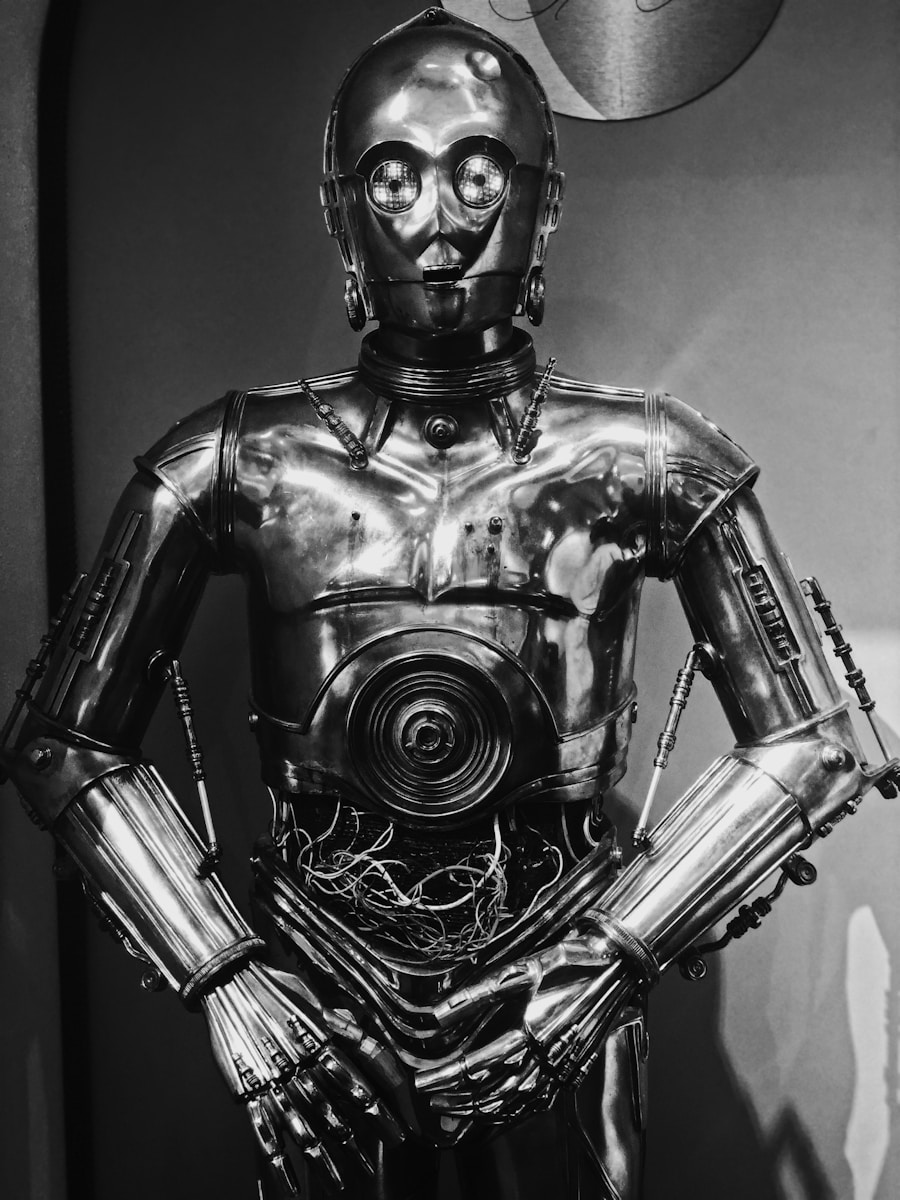
I recently had the opportunity to witness something truly remarkable: a robot that looks, moves, and feels like a human being. This isn’t science fiction anymore—it’s happening right now in a lab in Wrocław, Poland, where Clone Robotics has unveiled their Protoclone, a humanoid robot powered by artificial muscles, bones, and even a beating heart.
What makes this development so fascinating isn’t just the technical achievement, but the philosophy behind it. Instead of building robots with traditional motors and wires, Clone Robotics has taken inspiration from nature’s most versatile design: us.
The Breakthrough: Artificial Muscles That Actually Work
At the core of Protoclone’s design is a revolutionary approach to movement. While most humanoid robots today rely on motors, Clone Robotics has developed artificial muscles called Myofibers. These hydraulic muscles can lift more than 300 times their own weight and contract in under 50 milliseconds—nearly matching human capability.
The origin story is fascinating. It began with Lucas, now Clone’s CTO, experimenting with the McKibben muscle design—a pneumatic artificial muscle originally created by physicist Joseph McKibben to help his daughter who had lost the use of her hands. But air-powered muscles proved too weak, so the team switched to hydraulics, using water instead of air to power their creation.
This single decision to use synthetic muscles instead of motors changes everything about how the robot functions. While competitors like Tesla’s robots have 30-60 degrees of freedom, Protoclone has over 200, allowing for much more natural movement.
More Human Than Machine
What I found most impressive about Protoclone is how thoroughly it mimics human anatomy:
- A complete skeleton with over 200 bones
- More than 1,000 Myofiber muscles
- A hydraulic “heart” that pumps fluid throughout the system
- Over 500 sensors across the body, including 320 pressure sensors
- Four depth cameras in the head for vision
The robot’s bones are 3D printed from lightweight polymers, with muscles attached at anatomically accurate points. This gives it natural motion and range that traditional robots simply can’t match.
Inside its ribcage sits a valve system—almost like synthetic organs—and at its core, a hydraulic pump that pushes fluid into the artificial muscles. The water serves a dual purpose: powering movement and cooling the system, just like our blood does.
The Challenges Ahead
Despite these impressive achievements, Protoclone still faces significant hurdles. Currently, it hangs from cables from the ceiling because it hasn’t mastered walking yet. Teaching a bipedal robot to balance is one of robotics’ most difficult challenges—humans have complex systems involving our inner ears and brain that took evolution millions of years to perfect.
The team is working on their next generation, Clone Alpha, which they hope will walk independently. They’re using neural networks and physics simulators where thousands of virtual androids can train in parallel, learning through trial and error.
The bigger question isn’t about technology but purpose. What’s the point of building a human-like body and brain? According to Dhanush, Clone Robotics’ CEO, they envision these robots as human companions that complement our lives—helping with household tasks, learning our preferences, and making our lives easier.
The Future of Human-Robot Coexistence
There’s something profound about the decision to make robots that mirror our own limitations. Clone Robotics could have built something stronger or more durable, but they chose to create machines with similar physical constraints to humans.
This approach makes sense when you consider safety and coexistence. A robot with human-like capabilities and limitations is less threatening than an indestructible super-machine. If we share the same weaknesses, we might feel more comfortable sharing our spaces with them.
Will these human-like robots become part of our daily lives? It’s too early to say for certain, but the technology is advancing rapidly. Clone Robotics plans to add skin to future models and eventually faces with 40 facial muscles capable of replicating human expressions.
What’s clear is that we’re entering a new era of robotics—one where the line between human and machine becomes increasingly blurred. Whether that’s exciting or unsettling depends on your perspective, but it’s happening regardless of how we feel about it.
Frequently Asked Questions
Q: How does Protoclone’s movement system differ from other humanoid robots?
Unlike most humanoid robots that use motors, Protoclone uses hydraulic artificial muscles called Myofibers. These muscles contract when filled with water pressure, similar to how human muscles work. This gives Protoclone over 200 degrees of freedom compared to the 30-60 found in motor-driven robots.
Q: Can Protoclone walk on its own yet?
Not yet. Currently, Protoclone still hangs from cables from the ceiling. Teaching a two-legged robot to balance and walk is extremely challenging. The team is working on their next generation, Clone Alpha, which they hope will walk independently.
Q: What powers Protoclone’s movements?
Protoclone is powered by a hydraulic system. A pump (functioning like a heart) pushes water through the robot’s artificial muscles, causing them to contract. The water also serves to cool the system, similar to how blood regulates temperature in humans.
Q: What kind of intelligence does Protoclone have?
Protoclone uses an NVIDIA Jetson chip as its “brain,” which processes inputs from hundreds of sensors throughout its body. The company is training foundation models that control vision, movement, and reactions in real-time. Future versions may include specialized processing units in different body parts, similar to how humans have neural clusters throughout the body.
Q: Why make robots that mimic human limitations rather than creating something stronger?
The human form represents a universal design that can operate in environments built for humans. Additionally, robots with similar physical constraints to humans may be safer to live alongside. The goal isn’t to create something superhuman but rather a complementary companion that fits naturally into human spaces and activities.