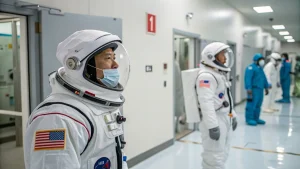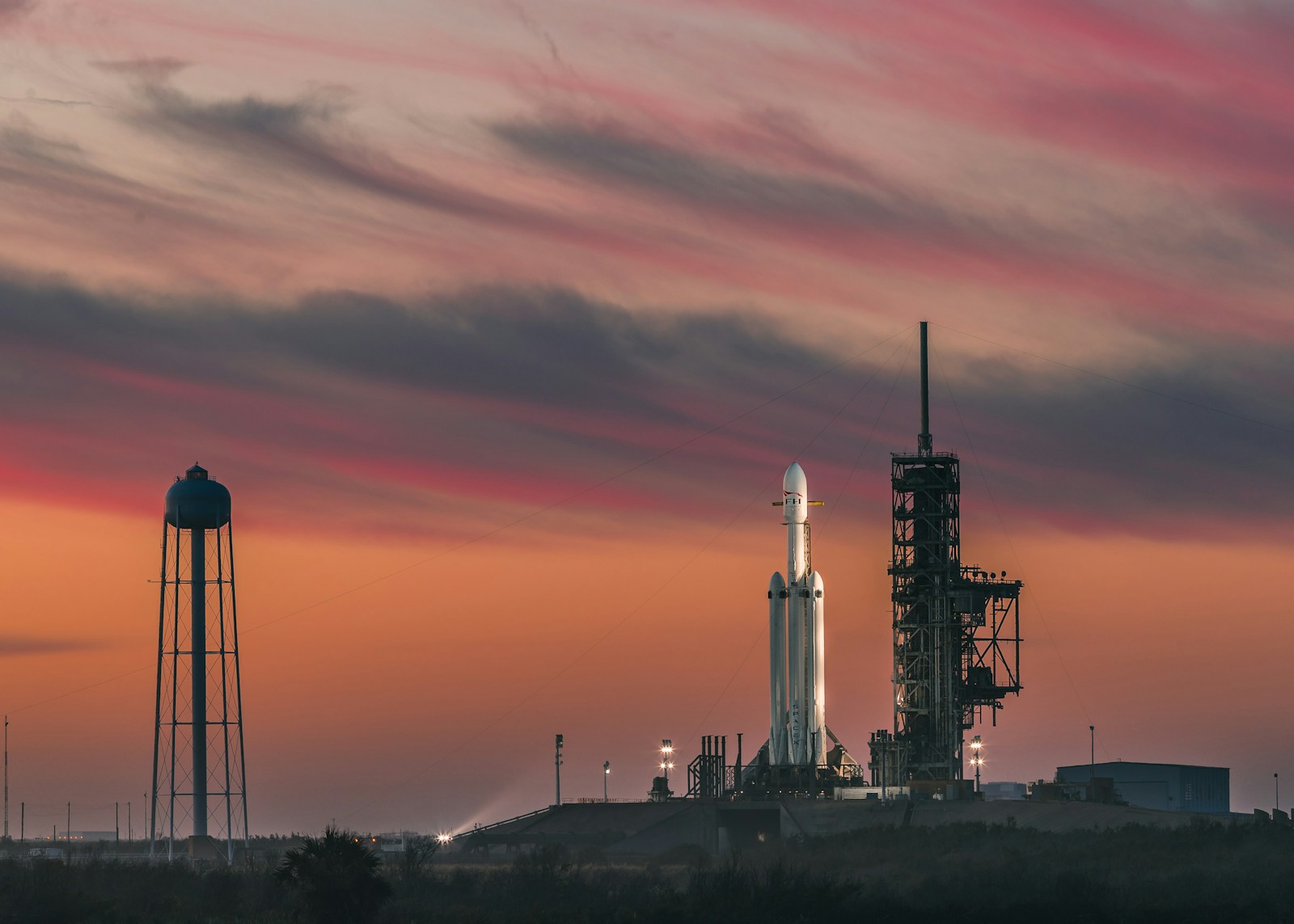
A four-person crew comprising American, Japanese, and Russian astronauts successfully launched from NASA’s Kennedy Space Center, heading to the International Space Station (ISS). The mission marks the latest crew rotation for the orbiting laboratory.
The international team will take over duties from the current ISS occupants who began their mission in March. Those astronauts were sent as replacements for two NASA crew members who encountered unexpected delays in their return schedule.
Mission Details
The rocket carrying the multinational crew lifted off from Florida’s Kennedy Space Center, beginning their journey to the space station. This launch continues NASA’s partnership with international space agencies, maintaining the continuous human presence aboard the ISS that has lasted for over two decades.
The current crew being replaced had been serving as substitutes, stepping in after two NASA astronauts became stranded on the station longer than planned. Those astronauts had faced technical issues that prevented their scheduled return to Earth.
International Collaboration
This mission highlights the ongoing cooperation between the United States, Japan, and Russia in space exploration, despite geopolitical tensions on Earth. The diverse crew composition demonstrates how space programs continue to function as a rare area of international collaboration.
The space station has maintained an uninterrupted human presence since November 2000, with crews typically rotating every six months. This system ensures continuous scientific research and maintenance of the orbital laboratory.
Crew rotations involve careful planning and coordination between international partners to maintain proper staffing levels and expertise aboard the station. Each new crew undergoes extensive training together before launch to ensure they can work effectively as a team in the challenging environment of space.
Previous Crew Situation
The March mission that sent the current occupants to the ISS was organized as an emergency response to an unexpected situation. When two NASA astronauts couldn’t return as scheduled, space agencies had to quickly arrange for replacements to maintain proper staffing levels on the station.
Such flexibility in crewing arrangements demonstrates the complex logistics involved in managing the space station. Agencies must be prepared to adjust schedules and personnel assignments when technical or other issues arise.
The departing crew will return to Earth after handing over responsibilities to the new arrivals, completing the regular rotation cycle that keeps the space station operational year-round.
As the new crew settles in, they will continue the scientific research, maintenance tasks, and technology demonstrations that make the International Space Station a unique laboratory for advancing human knowledge and preparing for future space exploration.

Rashan is a seasoned technology journalist and visionary leader serving as the Editor-in-Chief of DevX.com, a leading online publication focused on software development, programming languages, and emerging technologies. With his deep expertise in the tech industry and her passion for empowering developers, Rashan has transformed DevX.com into a vibrant hub of knowledge and innovation. Reach out to Rashan at [email protected]