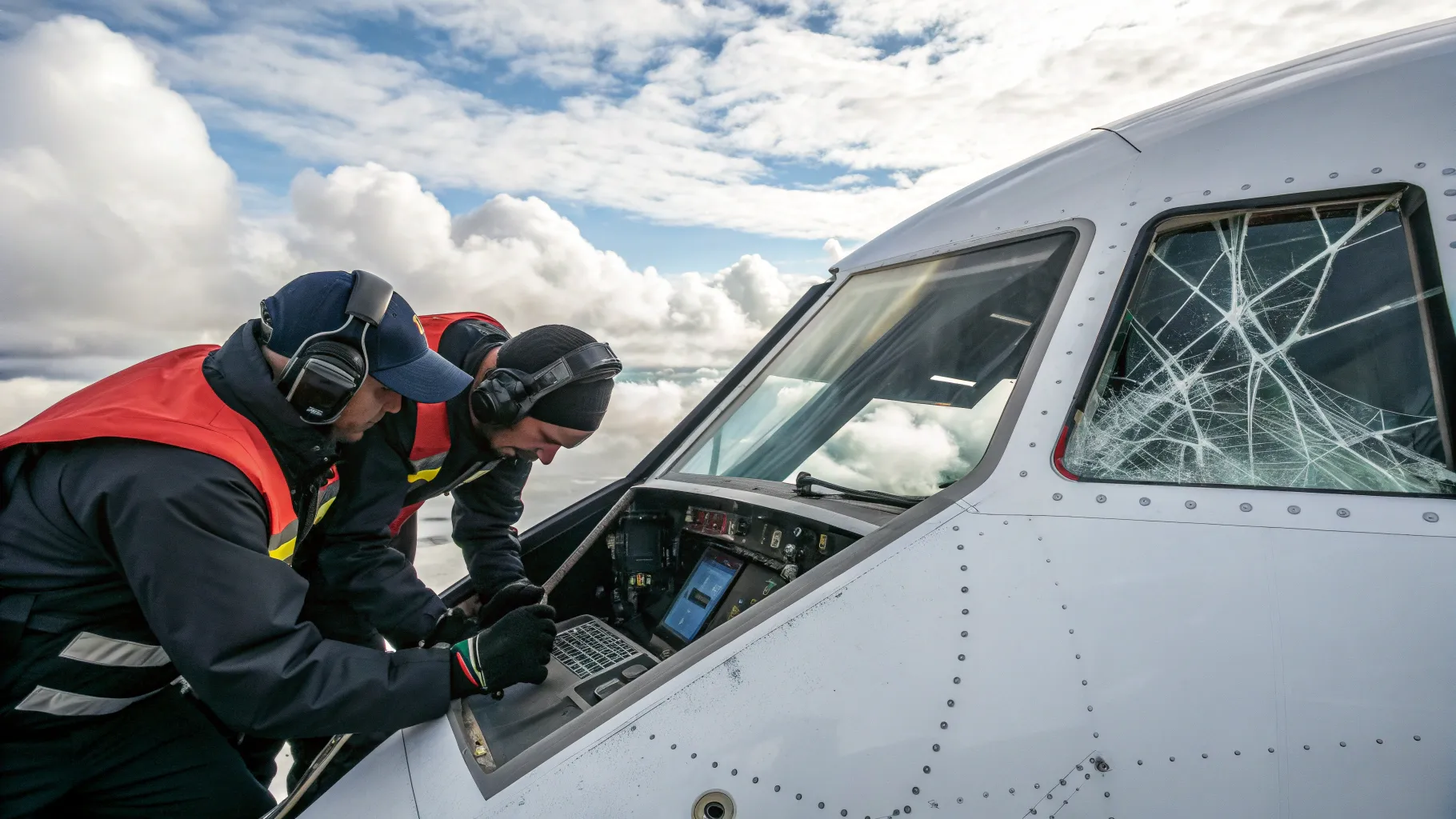
A cracked windshield on a Boeing 737 Max at cruising altitude has prompted a federal investigation, raising fresh questions about in-flight safety and aircraft maintenance. Authorities are gathering records and physical evidence to learn what happened and whether the issue points to a wider risk. The incident occurred above 30,000 feet, though officials have not released a timeline or location. No cause has been identified.
“Government investigators are gathering data to confirm what exactly cracked the windshield of a 737 Max aircraft at above 30,000 feet.”
The inquiry centers on the flight deck window system, a critical part that endures pressure changes, temperature swings, and high-speed airflow. While cockpit windows are designed with multiple layers and heaters, failures are rare. The review will look at operating conditions, maintenance history, materials, and any damage detected before takeoff.
What Investigators Are Examining
Federal teams are expected to collect flight data, audio, and crew statements. They will also analyze the windshield structure, which includes laminated glass and electrical elements for heating and anti-ice functions. Investigators will want to know if the crack began inside the layers, at an edge, or from an external impact.
Experts say that a crack at high altitude can stem from several sources. Some are operational, and others are related to parts or repairs. The investigative steps will likely include lab tests of the pane and a close review of maintenance logs for recent replacements or work on the window frame.
- Thermal stress from windshield heaters cycling on and off
- Manufacturing or material defect within the laminated layers
- Minor impact from debris or hail earlier in the flight path
- Improper installation or a flaw in a prior repair
- Pressure-related fatigue along an edge or fastener
Pilots are trained to handle such events. Procedures call for donning oxygen masks if needed, controlling pressurization, and diverting if the crack spreads. Cockpit windows are engineered to resist sudden failure, and most cracks do not lead to loss of pressurization.
Safety Context and Past Incidents
The 737 Max has faced close oversight in recent years. The model was grounded worldwide in 2019 after two fatal crashes linked to flight control software. It returned to service after design and training changes. In 2024, a separate issue involving a panel on certain Max 9 jets led to inspections and new quality checks for production. Those cases are distinct from windshield integrity, but they shape public scrutiny and regulatory attention.
Cockpit window cracks are not unique to one aircraft type. Reports across airlines show they happen on various jets, often without injuries. Because windshields are layered and heated, stress can build where glass meets metal. That is why inspection intervals and replacement criteria are strict.
Operational Impact and Industry Response
Airlines typically remove an aircraft from service after a windshield crack and replace the pane before flying again. Parts availability and maintenance capacity can affect how long a jet sits on the ground. Regulators may issue safety alerts if they see a pattern across fleets. For now, officials have not described a trend tied to the 737 Max windshield system.
Unions representing pilots often push for fast reporting and transparent updates. They emphasize that early notice helps crews prepare and helps technicians spot warning signs. Maintenance groups also track heater performance, as uneven heating can trigger thermal stress.
What Comes Next
Investigators will try to identify the origin point of the crack and the sequence that followed. If the cause is clear, they may recommend inspections, part changes, or revised procedures. If the cause remains uncertain, they could call for data collection across carriers to look for common factors.
A few outcomes are possible:
- No broader action if the issue is isolated
- Targeted checks on specific windshield batches or heaters
- Expanded maintenance guidance for window installations
- Temporary flight-line inspections to validate fleet health
The case highlights the value of conservative design in flight deck windows and the importance of record-keeping. Even a small flaw can grow under high pressure and temperature swings. Clear logs help teams connect the dots faster.
As the inquiry proceeds, airlines and crews will watch for any directives. The key questions are whether a defect, an installation issue, or operational stress caused the crack. The answer will guide any fix and shape future checks.
For passengers, there is no immediate change to travel plans. For the industry, the incident is another reminder that small parts matter. The next update will signal if this was a one-off or a problem that calls for wider action.

A seasoned technology executive with a proven record of developing and executing innovative strategies to scale high-growth SaaS platforms and enterprise solutions. As a hands-on CTO and systems architect, he combines technical excellence with visionary leadership to drive organizational success.