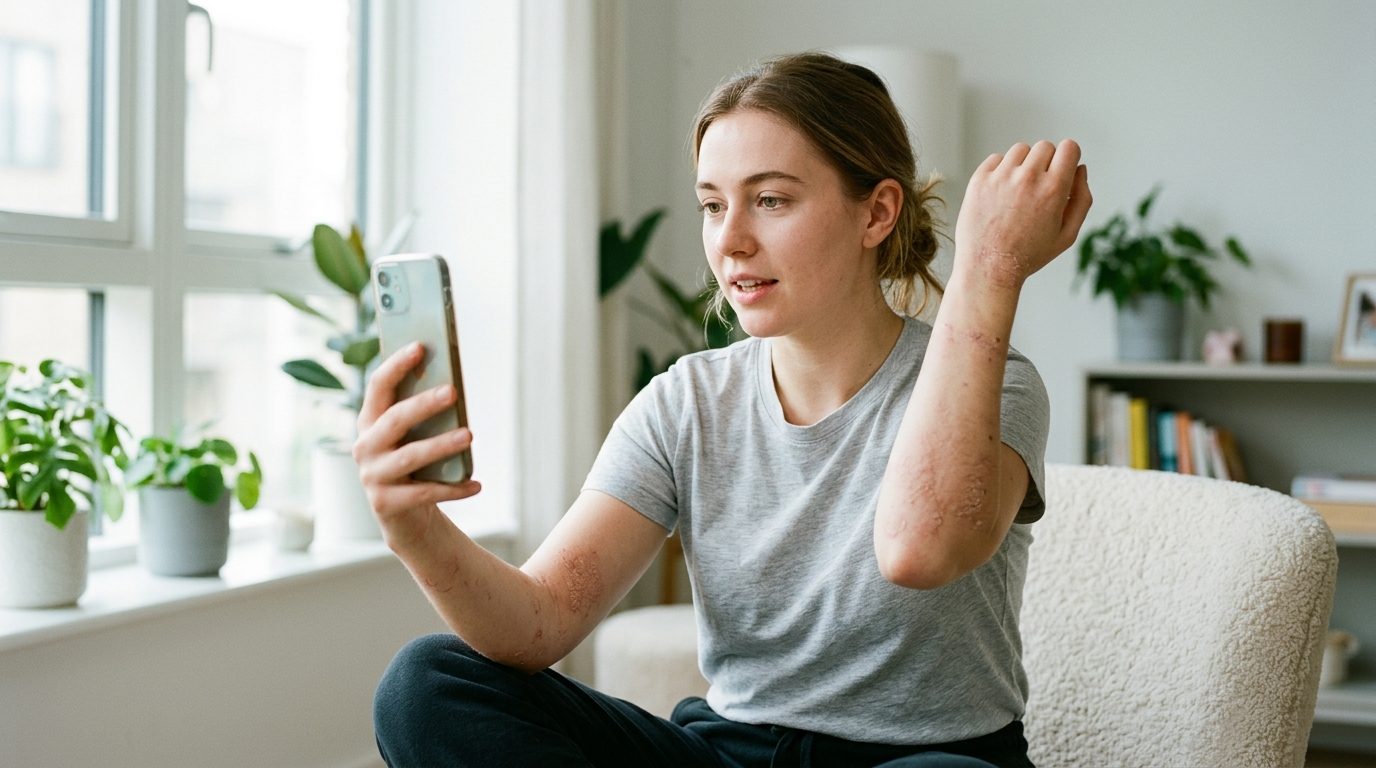
Josie North is sharing her experience with recurring eczema flare-ups on TikTok, giving viewers a personal look at a skin condition she has faced since 2021.
Her posts place a visible, long-term health issue before a broad social media audience. They also show how people increasingly use short videos to record symptoms and discuss daily life with chronic conditions.
A Personal Record of a Persistent Condition
Eczema is often marked by periods when symptoms become more severe. These episodes are commonly known as flare-ups. North’s videos focus on how those episodes appear on her skin.
North has dealt with the condition for about five years. Her decision to post about it creates a public record of an experience that can change over time.
The available information does not identify the cause of her eczema, its severity, or any treatment she may receive. It also does not establish how often flare-ups occur. Those details matter because eczema can affect each person differently.
TikTok Brings Skin Conditions Into View
TikTok allows users to share health experiences quickly and in visual form. For skin conditions, that format can make symptoms easier to see than a written description would.
Such posts may help other people feel less isolated, especially when a condition changes their appearance. Public discussion can also challenge the idea that affected skin should remain hidden.
North’s posts may serve several purposes for viewers:
- Showing what an eczema flare-up can look like
- Recording one person’s experience over time
- Encouraging discussion about visible skin conditions
- Helping viewers recognize that symptoms may recur
However, one person’s account cannot explain every case. Images alone may not show the full physical or emotional effect of a flare-up.
Personal Testimony Is Not Medical Guidance
Health posts can offer recognition and peer support, but they have clear limits. A personal video does not provide a diagnosis, and another viewer’s symptoms may have a different cause.
Short-form platforms can also strip away medical context. Viewers may not know whether a creator has received professional care, what treatments were considered, or whether other health factors are involved.
North’s content should therefore be understood as personal testimony rather than clinical advice. People concerned about their own skin symptoms should seek guidance from a qualified health professional instead of relying on social media comparisons.
Visibility Can Carry Benefits and Risks
Posting visible symptoms can invite empathy and useful discussion. It can also expose creators to unwanted advice, appearance-based comments, or false claims about cures.
That tension is central to online health storytelling. Creators can raise awareness while audiences remain responsible for separating lived experience from verified medical information.
North’s TikTok posts offer a direct view of living with recurring eczema since 2021. Their wider value lies in visibility and shared experience, not universal answers. Future posts may provide more detail about her symptoms and their impact, but careful viewing remains important whenever personal health stories circulate online.

A seasoned technology executive with a proven record of developing and executing innovative strategies to scale high-growth SaaS platforms and enterprise solutions. As a hands-on CTO and systems architect, he combines technical excellence with visionary leadership to drive organizational success.