Climate change is driving many parts of the Earth system beyond a tipping point. We need urgent action now to protect glaciers, snow and ice. Vote now for meaningful change #climateelection2024 #Elections2024 #climateemergency https://t.co/bPJ4cXqRJd
— Prof. Bethan Davies (@AntarcticGlacie) July 2, 2024
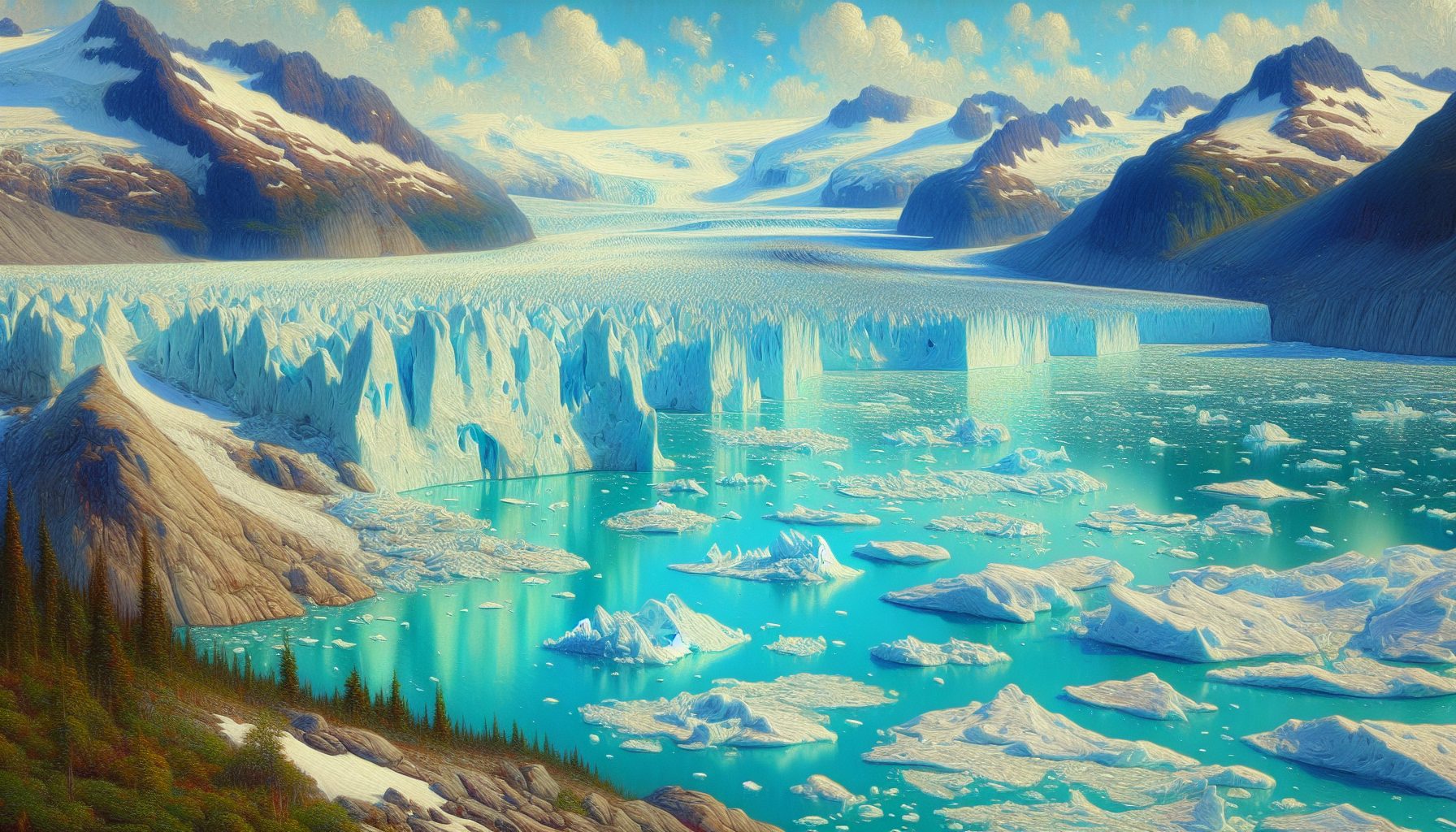
Glaciers on a major Alaskan ice field are melting twice as fast as recorded over a decade ago, with researchers describing the rate of ice loss as “incredibly worrying.” The research, led by scientists at Newcastle University in the United Kingdom, identified that the ice volume on the Juneau Icefield has dramatically decreased since 2010 compared to previous decades. Juneau Icefield, located 2,000 feet north of Juneau and extending through the border with British Columbia, is the fifth-largest ice field in North America. Researchers looked at historical data to determine three distinct periods where ice volume significantly changed.
From 1770 to 1979, Juneau Icefield’s glacier volume loss remained consistent, losing 0.65-1.01 kilometers cubed per year. From 1979 to 2010, the ice volume loss increased to 3.08-3.72 kilometers cubed per year. Between 2010 and 2020, Juneau Icefield’s glacier volume loss accelerated to 5.91 kilometers cubed per year.
One of Alaska's largest icefield is melting twice as quick as it did beforehttps://t.co/2oVTckerAn
— Prof. Bethan Davies (@AntarcticGlacie) July 2, 2024
Juneau Ice Field, one of North America’s largest areas of interconnected glaciers, is melting twice as quickly as it did before 2010
All told, the ice field has shed a quarter of its volume since the late 18th century@zhonggg reports: https://t.co/uetR0vzPul
— Adam Vaughan (@adamvaughan_uk) July 2, 2024
“It’s incredibly worrying that our research found a rapid acceleration since the early 21st century in the rate of glacier loss across the Juneau Icefield,” said Dr. Bethan Davies, study leader and lecturer at Newcastle University.
Alarming glacier loss acceleration
❄️ Passing through Trient glacier this summer? ❄️
Come and take part in this participatory science effort and measure the 2 ablation stakes! 📱🚩🧊https://t.co/8LMS5xDPzT
In 2023, collected data shows that Trient glacier has thinned by 1.42m at ~3100 m! 🔥@VAW_glaciology pic.twitter.com/Knm0dpHp9K
— Melaine Le Roy (@subfossilguy) July 1, 2024
Davies explained that Alaskan ice fields, which are predominantly flat and plateau-like, are particularly vulnerable to accelerated melt as the climate warms. This is because ice loss occurs across the entire surface, thus affecting a much larger area. The study highlighted that since 1770, 108 of Juneau Icefield’s glaciers have disappeared completely.
Mapping in 2019 showed that every glacier in the region has thinned. “As glacier thinning on the Juneau plateau continues and ice retreats to lower levels and warmer air, the feedback processes this sets in motion are likely to prevent future glacier regrowth,” Davies stated, suggesting that this will potentially push glaciers “beyond a tipping point into irreversible recession.”
This alarming trend underscores the urgency of addressing climate change to potentially mitigate further glacial loss and its wide-reaching environmental impacts. The findings call for comprehensive strategies to reduce carbon emissions and enhance efforts in climate change adaptation.
Experts warn that without immediate action, the consequences of these changes could be catastrophic not only for Alaska but for the global environment. As glaciers continue to melt, they contribute to rising sea levels and significant environmental changes, impacting ecosystems and human communities alike.

Johannah Lopez is a versatile professional who seamlessly navigates two worlds. By day, she excels as a SaaS freelance writer, crafting informative and persuasive content for tech companies. By night, she showcases her vibrant personality and customer service skills as a part-time bartender. Johannah's ability to blend her writing expertise with her social finesse makes her a well-rounded and engaging storyteller in any setting.