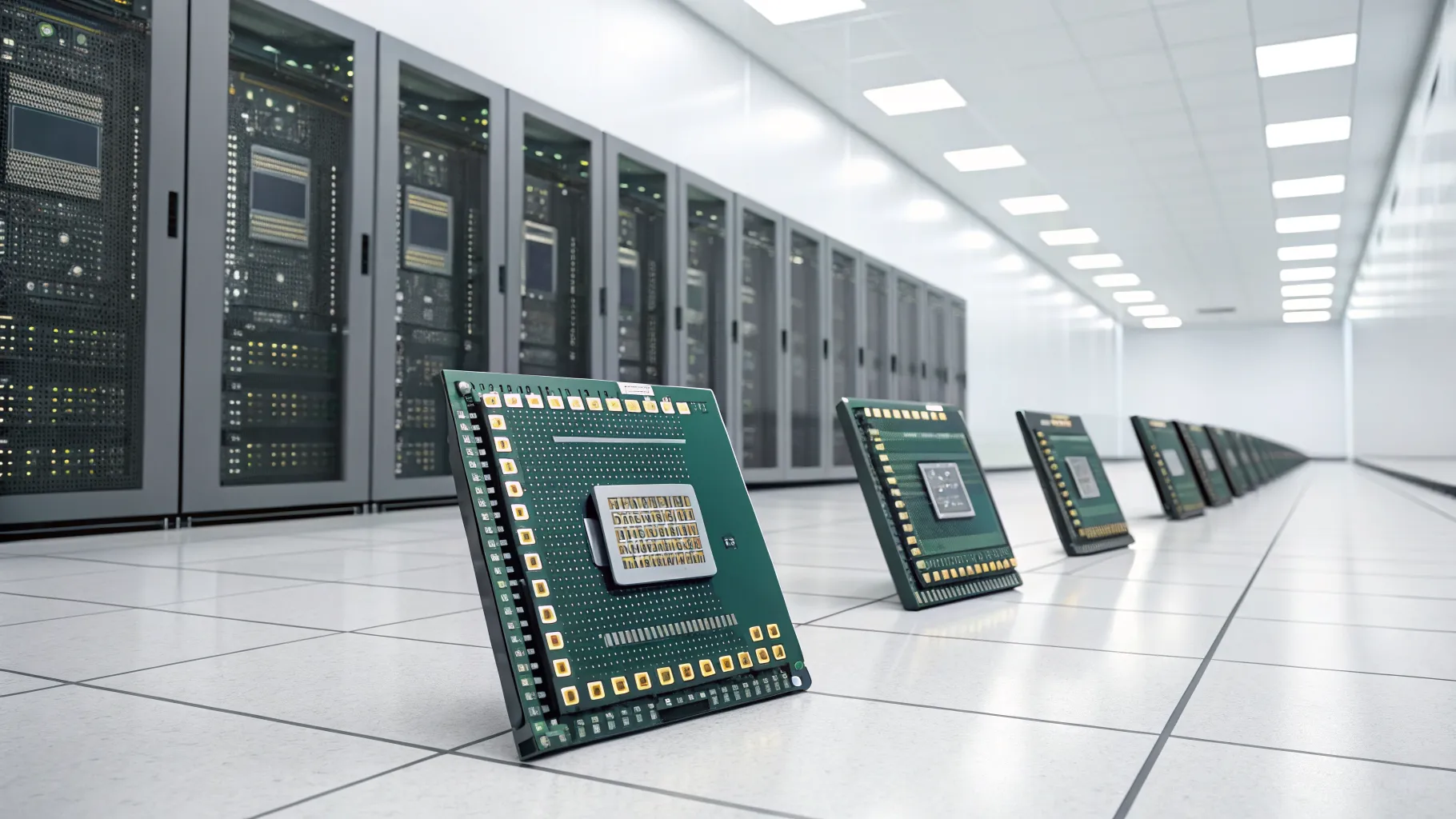
Meta signaled a faster push into custom artificial intelligence hardware, saying its MTIA chips will remain at the core of its infrastructure and that four new generations are on the way within two years. The plan points to a bid to control costs, scale services, and lessen dependence on third-party suppliers as AI demand climbs.
What Meta Said
“MTIA custom silicon remains central to our AI infrastructure strategy, with four new generations of MTIA chips forthcoming in the next two years.”
The statement sets a rapid release tempo. Four generations in two years suggests shorter design cycles and quick iteration based on real-world workloads, including recommendation engines and generative models.
Background: Why Custom AI Chips Matter
Big tech firms have raced to build in-house accelerators to match their own software and data needs. Custom silicon can target specific tasks, like recommendation ranking or model inference, and reduce the total cost per query. It can also ease pressure on supply chains that have centered on a few GPU makers.
Meta introduced MTIA to support both training and inference across its platforms. By tuning chips to its models and data centers, the company seeks better performance per watt and tighter control of upgrade cycles. The approach mirrors efforts by other firms that see hardware, software, and data working as one stack.
Costs, Capacity, and Control
The economics of AI at scale are driving the shift. Training and serving large models can cost billions in compute, power, and networking. Custom chips can cut unit costs when deployed in volume, especially for steady, high-throughput tasks.
Control also matters. In-house designs can align with data center layouts, cooling, and networking choices. They can reduce delays tied to external supply shortages and help plan capacity years ahead.
Risks and Execution Challenges
Shipping four generations in two years is ambitious. Success will hinge on design yields, manufacturing partners, and packaging. Any slip in fabrication or validation can ripple across data center plans.
Software is another hurdle. To gain benefits, compilers, kernels, and frameworks must map cleanly to the new chips. Engineers need stable tools so models run as expected. Third-party developers may also look for clear documentation and migration paths.
Industry Impact and Competitive Pressure
A faster MTIA roadmap raises pressure on suppliers and rivals. If Meta proves strong price-performance for core workloads, it may shift more inference and even parts of training off general-purpose GPUs. That could reduce exposure to spot shortages and price swings.
It may also influence network and storage designs. Purpose-built accelerators often need high-bandwidth links, fast memory hierarchies, and efficient load balancing. Vendors tied to those parts of the stack will watch closely.
What to Watch Next
- Performance claims and benchmarks for the next MTIA versions.
- Power efficiency gains and total cost of ownership.
- Software tooling, including PyTorch support and kernel maturity.
- Manufacturing partners, process nodes, and packaging advances.
- How much AI inference and training shifts to MTIA inside Meta’s data centers.
Outlook
The pledge of four MTIA generations in two years points to a tight loop between hardware design and production workloads. If Meta meets that pace, it could lower costs for ranking, recommendations, and generative features across its apps. It could also gain flexibility in scaling new models without waiting on external supply.
The outcome will rest on execution in silicon, software, and operations. For now, the message is clear: custom accelerators are not a side project, but a core part of Meta’s AI plan. The next disclosures on performance, power, and deployment scale will show how far this strategy can go.

A seasoned technology executive with a proven record of developing and executing innovative strategies to scale high-growth SaaS platforms and enterprise solutions. As a hands-on CTO and systems architect, he combines technical excellence with visionary leadership to drive organizational success.