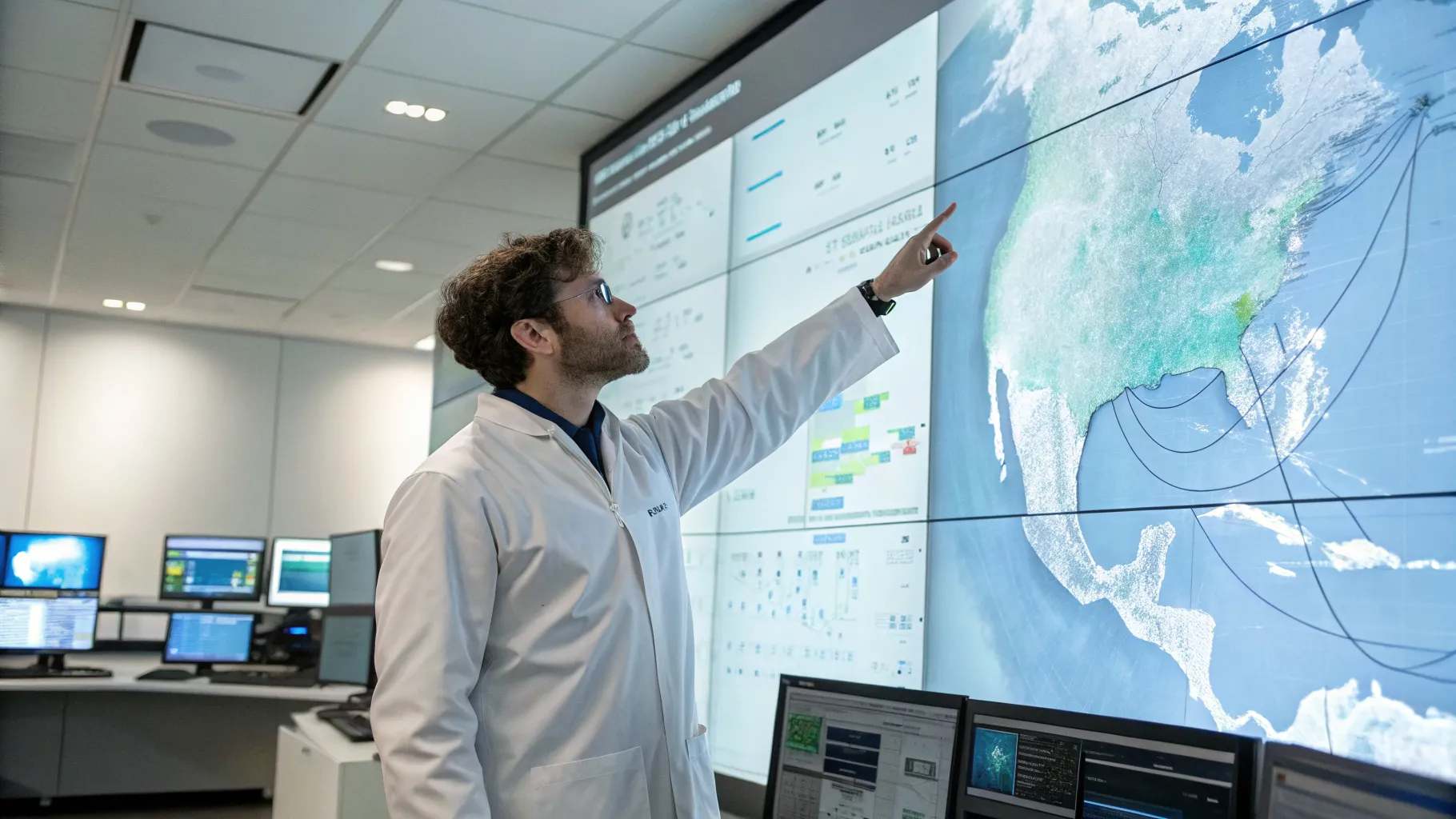
MIT research scientist Judah Cohen has taken top honors in a major forecasting challenge, highlighting a fresh approach to predicting weather several weeks ahead. His machine learning model, which blends signals from the Arctic with modern data methods, won first place in the 2025 AI WeatherQuest subseasonal forecasting competition organized by the European Centre for Medium-Range Weather Forecasts (ECMWF).
The result matters for energy planners, farmers, insurers, and public agencies that need guidance for the period between regular forecasts and seasonal outlooks. It also spotlights how climate indicators from the far north can help improve planning for heat, cold, storms, and drought.
MIT research scientist Judah Cohen is using machine learning and Arctic climate indicators to improve subseasonal weather forecasting.
His model won first place in the 2025 AI WeatherQuest subseasonal forecasting competition, held by the European Centre for Medium-Range Weather Forecasts.
Why Subseasonal Forecasts Matter
Subseasonal forecasts target the two-to-six-week window. This period is difficult. Daily weather models lose skill after about 10 days. Seasonal outlooks are too coarse for many decisions. The gap leaves cities and companies exposed to surprise swings.
Better guidance in this window can cut risks. Utilities can position crews and plan fuel. Farmers can time planting and protect crops. Health systems can prepare for heat waves or cold snaps. Firms across sectors can manage supply chains with fewer shocks.
The Arctic Signal
Cohen’s work centers on the idea that the Arctic sends early hints about mid-latitude shifts. Changes in sea ice, snow cover, and stratospheric winds often precede swings in temperature and storm tracks weeks later. These patterns can affect North America, Europe, and Asia.
In simple terms, the state of the Arctic can set the stage. When the polar circulation weakens, cold air can spill south. When it tightens, warmth can build farther north. Using these cues with machine learning can turn faint signals into useful guidance.
Machine Learning Meets Climate Physics
Machine learning can detect subtle links in large datasets. But weather is not just numbers. The approach behind the winning model pairs data methods with physical insight on Arctic teleconnections. That mix can improve stability and reduce false alarms.
The ECMWF competition setting matters. Competitions use common datasets and scoring rules. They compare models against the same targets. A first-place finish suggests the method performs well under shared tests, not just in one-off trials.
Implications for Users
More accurate subseasonal guidance could change planning routines:
- Energy: Better demand and wind forecasts help balance grids.
- Agriculture: Early warnings aid irrigation and harvest timing.
- Insurance: Improved risk signals refine pricing and reserves.
- Public safety: Agencies can stage resources ahead of extremes.
Still, limits remain. The atmosphere is chaotic. Skill varies by region, season, and event type. Users need probabilities, not yes-or-no calls. Blending statistical models with physics-based forecasts can add resilience, but it will not remove uncertainty.
How This Fits Global Efforts
Weather centers worldwide are investing in subseasonal research. ECMWF, national services, and universities are testing hybrid systems that combine machine learning with traditional models. Shared benchmarks, such as the AI WeatherQuest contest, help researchers check progress and spot gaps.
Arctic change adds urgency. As ice and snow trends shift, old patterns may weaken or change sign. Approaches that learn from current data and keep physical checks may adapt faster than fixed methods.
What to Watch Next
The path ahead is practical. Can the model maintain skill across seasons and regions? Will it integrate smoothly with operations at weather services? Can forecasters explain the signals in plain language for public use?
Clear communication will be key. Users need lead times, confidence levels, and simple decision guides. If those pieces come together, the gains from this win could reach far beyond a single contest.
Cohen’s victory signals momentum for data-informed, Arctic-aware forecasting. The next tests will be in real-world planning, where weeks of notice can save money, protect health, and steady critical systems.

Rashan is a seasoned technology journalist and visionary leader serving as the Editor-in-Chief of DevX.com, a leading online publication focused on software development, programming languages, and emerging technologies. With his deep expertise in the tech industry and her passion for empowering developers, Rashan has transformed DevX.com into a vibrant hub of knowledge and innovation. Reach out to Rashan at [email protected]