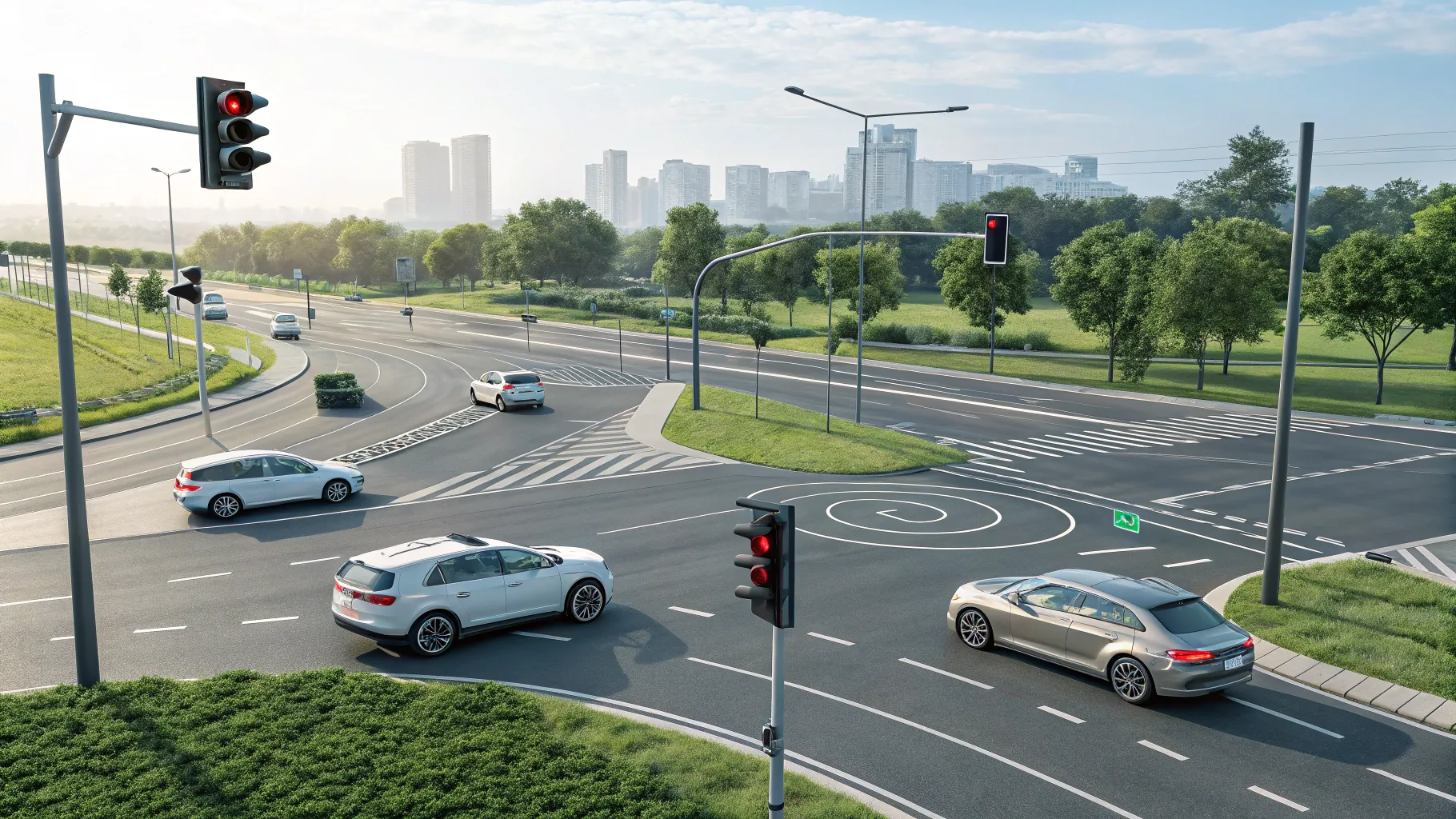
New research from MIT reports that smarter “co-driving” techniques could cut carbon dioxide emissions at intersections without slowing traffic or compromising safety. The study points to intelligent speed controls near traffic lights as a promising tool for cities.
The research addresses a common urban problem: stop-and-go driving that wastes fuel and adds pollution. It proposes that small speed adjustments, coordinated with signals, can keep cars moving smoothly through lights, lowering emissions while keeping people moving.
What the Research Says
Implementing co-driving techniques, like the use of intelligent speed controls to mitigate congestion at traffic lights, can significantly reduce intersection carbon dioxide emissions without impacting traffic throughput or safety, according to new MIT research.
The finding suggests that benefits can be achieved without trade-offs that often concern drivers and city officials. Throughput remains steady, and safety is not diminished, according to the study’s conclusion.
How Co-Driving Works
Co-driving refers to vehicles and infrastructure sharing guidance so drivers approach lights at speeds that avoid hard braking and idling. It can work with simple dashboard prompts, connected vehicle alerts, or adaptive cruise settings that modulate speed.
At its core, the method reduces sharp accelerations and stops, which are linked to higher fuel use and higher emissions. The result is gentler flow through intersections.
Why Intersections Matter
Intersections often concentrate congestion. Cars idle while waiting for lights, and then surge forward. That cycle wastes energy. Urban planners have long targeted signal timing and turn lanes to address the problem. Co-driving adds another lever by tackling driver behavior and speed choice between signals.
Cities have tested related ideas, such as giving drivers “green light” speed advisories and smoothing platoons of cars along corridors. The new research strengthens the case that advising drivers to adjust speed can deliver environmental gains without hurting mobility.
Safety and Throughput Considerations
Any tool that nudges driver speed raises questions about safety and fairness. The study’s main claim is clear: reductions in emissions do not come at the cost of safety or throughput. That will be a key message for agencies weighing adoption.
Experts often note that changes must be easy to follow and not distract drivers. Clear in-car guidance, consistent signals, and optional use can help maintain trust.
What Cities Could Do Next
Transportation departments could start with low-risk pilots on corridors with frequent stops. They can measure emissions, travel times, and crash patterns before and after deployment. Collaboration with transit and freight operators could widen the impact.
- Start with voluntary speed advisories tied to signal timing.
- Focus on corridors with high idling and frequent light cycles.
- Share results with the public and adjust settings based on feedback.
Equity, Privacy, and Adoption
Officials will also need to address questions about data use and equitable access. Systems should not require expensive new cars or apps. Simple roadside signs and standard vehicle displays can broaden reach. Data collected for speed advice should be limited and protected.
A Path to Scaled Impact
If results hold at scale, co-driving could complement existing tools like signal coordination and congestion pricing. It may also pair with cleaner vehicles by cutting emissions from the large share of cars still using gasoline.
Future work could examine how different driving cultures, weather, or heavy vehicles affect outcomes. Researchers may also test how well the approach performs with buses and delivery fleets that make frequent stops.
The study’s message is straightforward: smarter speed guidance near lights can help cut emissions while keeping roads safe and efficient. Cities looking for practical climate steps now have another option to test. Watch for pilot programs that publish clear before-and-after data and engage drivers early. Those moves will show whether co-driving can deliver cleaner air on busy streets without slowing anyone down.

Rashan is a seasoned technology journalist and visionary leader serving as the Editor-in-Chief of DevX.com, a leading online publication focused on software development, programming languages, and emerging technologies. With his deep expertise in the tech industry and her passion for empowering developers, Rashan has transformed DevX.com into a vibrant hub of knowledge and innovation. Reach out to Rashan at [email protected]