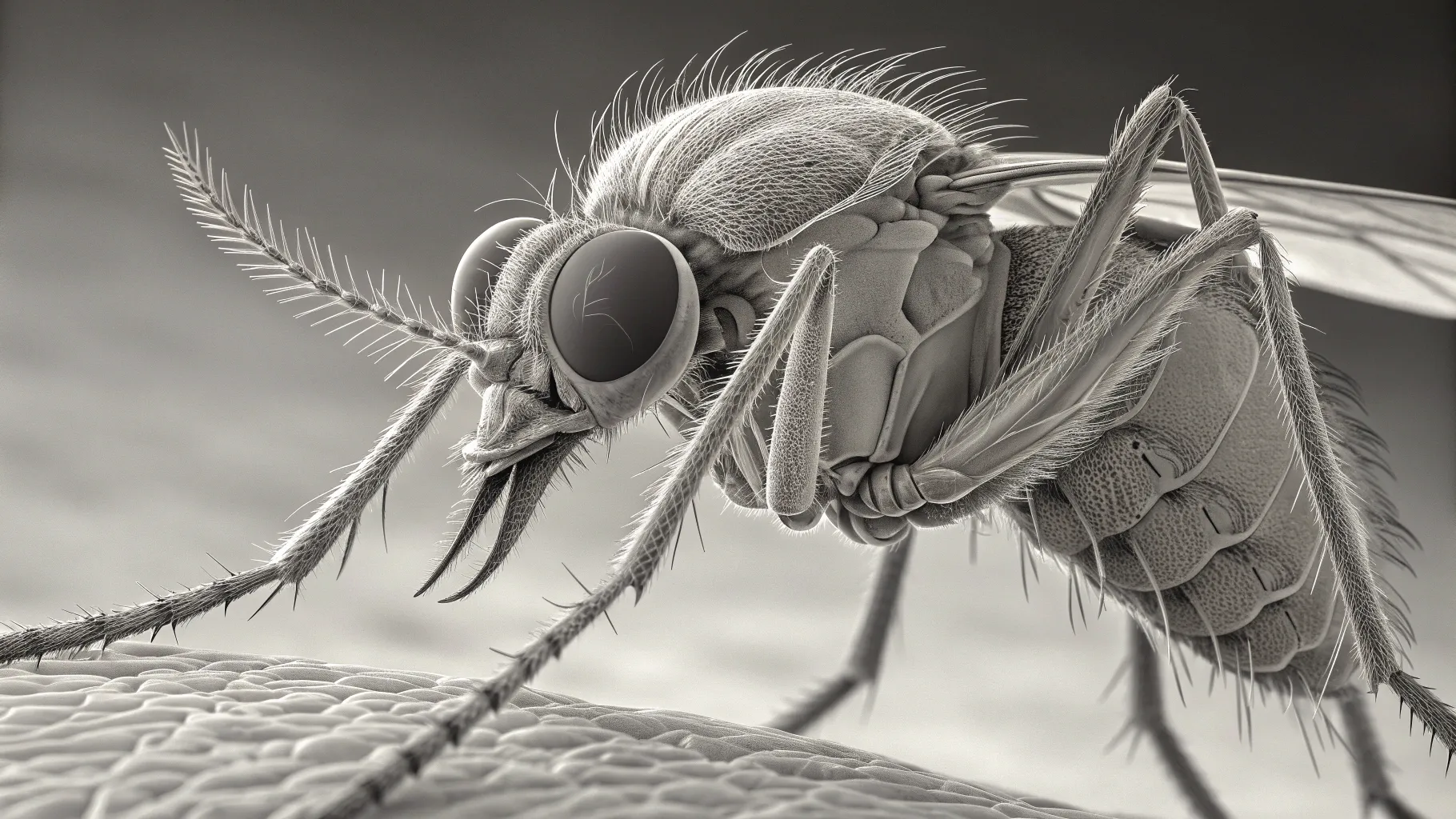
Engineers seeking to print at smaller scales say they have found a clue in an unlikely place: the mouthpart of a female mosquito. The team reports that studying the insect’s proboscis could help make 3D printer nozzles narrower without clogging or loss of strength. The work highlights a growing trend of looking to biology for new engineering ideas.
The effort centers on how to move viscous materials through tiny channels with precision. Researchers say a mosquito’s feeding tube offers hints on shape, flexibility, and flow. The discovery could influence nozzles used in medical devices, electronics, and micromanufacturing.
Background: Nature-Inspired Design Meets Additive Manufacturing
Biomimicry has guided engineers for years, from aircraft wings shaped like bird feathers to swimsuits modeled on shark skin. 3D printing, now used in labs and factories, faces limits when pushing nozzle sizes down. As nozzles shrink, friction rises and materials can shear, clog, or flow unevenly.
Researchers often study natural structures that manage fluids efficiently at small scales. Insects, plant veins, and capillaries show how geometry and material properties help fluids move through narrow passages. That is the design space engineers are trying to adapt for industrial use.
The Mosquito Model
“When engineers struggled to make 3D printer nozzles narrow enough for their needs, they turned to nature and found the proboscis of a female mosquito had exactly the properties they needed.”
The mosquito proboscis is built to transport liquid through a very fine tube. Its shape appears to balance stiffness and flexibility while allowing steady flow. Engineers studying this structure hope to translate similar features into nozzle geometries and material choices that work at tiny scales.
They are interested in how small changes in taper, wall thickness, and surface texture could reduce drag and maintain smooth flow. The aim is to produce finer filaments with less force and fewer jams, even with thicker inks or resins.
How It Could Change 3D Printing
Smaller, more reliable nozzles could push 3D printing into new territory. Micro-scale parts for sensors, medical implants, and compact electronics depend on lines measured in microns. Consistent flow through narrow tips is key for accuracy and repeatability.
- Higher resolution prints without sacrificing speed.
- Less clogging and downtime on production lines.
- Use of new materials that were too thick for prior nozzles.
Such gains could lower waste and improve part quality. In health care, for example, precise deposition could help produce micro-needles, soft scaffolds, or drug-delivery devices that need fine detail.
Expert Views and Open Questions
Supporters of the approach say biology offers proven solutions to hard design problems. They point out that natural systems handle tiny flows under strict energy limits, a parallel to manufacturing constraints.
Others urge caution. Copying a shape from nature does not guarantee success in a factory setting. Materials used in printers face high temperatures, abrasive fillers, and long duty cycles. A mosquito-inspired shape may need new alloys, coatings, or ceramics to survive industrial wear.
There is also the question of scaling. What works at the size of an insect may behave differently in a tool head pushing thick paste or molten polymer. Testing across materials and use cases will be essential.
What Testing Might Show
Engineers will likely compare conventional conical nozzles against bioinspired designs under the same conditions. Key measures include pressure needed for a given flow rate, clog frequency, tip longevity, and line width control on complex paths.
If the new geometry cuts required pressure while keeping line width steady, it could reduce energy use and improve accuracy. If wear rates remain low, the design may be ready for pilot production.
Industry Impact and Next Steps
Suppliers of industrial printers and specialty nozzles may be early adopters if results hold up. Tool heads for ceramics, conductive inks, or bio-inks could benefit the most, since those materials challenge today’s tips.
The next stage is likely a mix of computational modeling and lab trials. Simulation can explore how changes in taper and surface finish affect flow, while printing runs reveal real-world limits. If performance improves, standards bodies and manufacturers could begin to define testing methods for micro-nozzles.
This research adds to a broader movement that looks to living systems for design guidance. By studying how a mosquito moves liquid through a narrow channel, engineers hope to print smaller, cleaner lines with fewer failures.
The coming months should bring early data on flow, durability, and resolution. If results are strong, expect prototype nozzles to reach select labs and pilot lines. Watch for whether the idea scales across materials and whether it cuts downtime. Those outcomes will decide if the mosquito-inspired tip becomes a staple of next-generation 3D printing.

Rashan is a seasoned technology journalist and visionary leader serving as the Editor-in-Chief of DevX.com, a leading online publication focused on software development, programming languages, and emerging technologies. With his deep expertise in the tech industry and her passion for empowering developers, Rashan has transformed DevX.com into a vibrant hub of knowledge and innovation. Reach out to Rashan at [email protected]