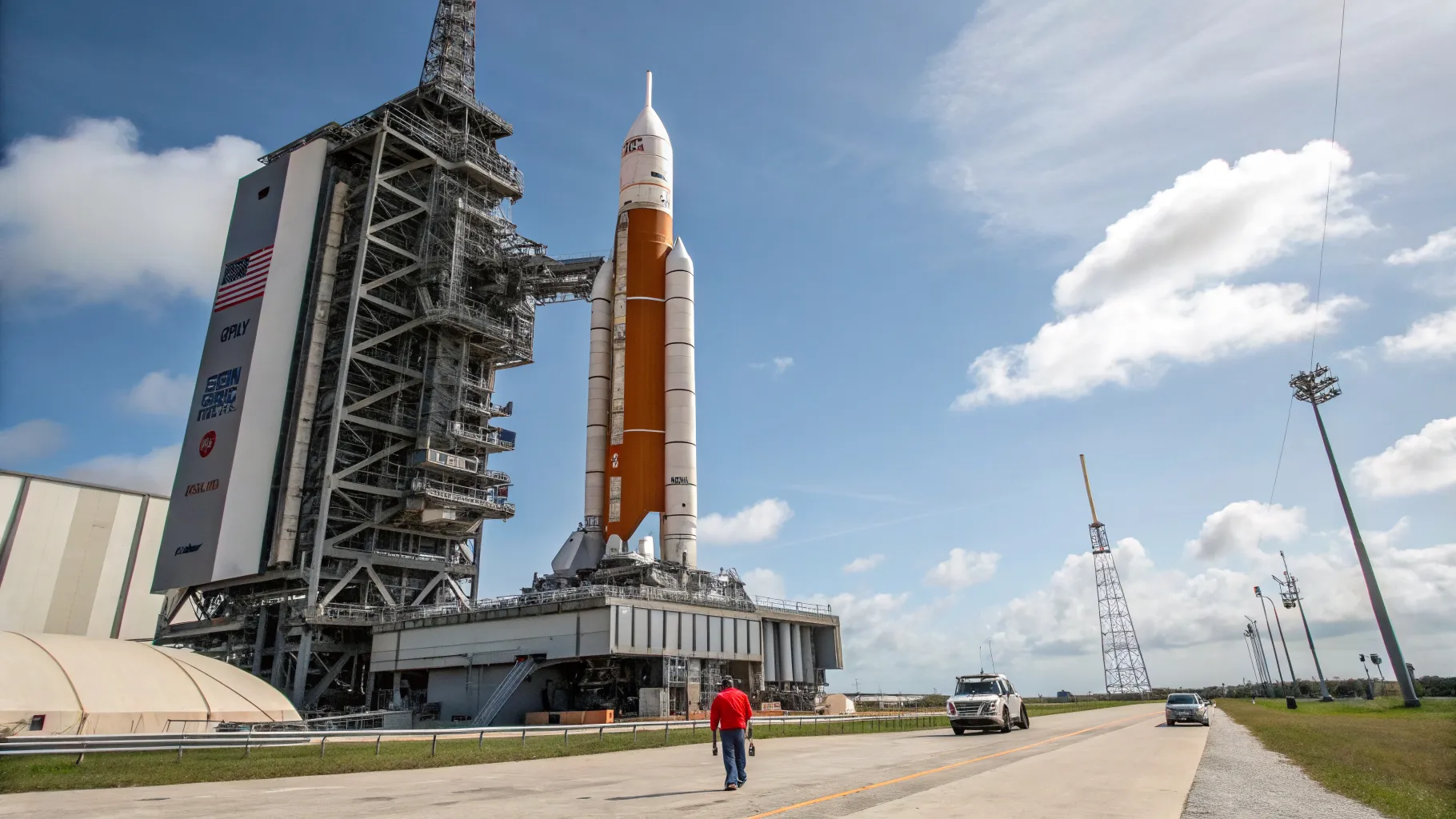
NASA has delayed the crewed Artemis II mission after engineers found a problem with the Space Launch System’s helium flow, shifting the planned launch from March 6 to April at Kennedy Space Center in Florida. The pause gives teams time to inspect and repair the issue on the rocket that is set to send four astronauts on a loop around the Moon, the first such flight in more than 50 years.
“A failure in the helium flow of the SLS rocket has prompted NASA to delay the Artemis II moon mission. Rather than March 6, the launch is now targeted for April.”
Why the Helium System Matters
Helium is used across modern launch vehicles to purge lines, keep propellant systems clean, and pressurize tanks and valves. On SLS, stable helium flow helps prepare the core stage and engines for ignition and protects sensitive hardware from contaminants or trapped gases. Any failure can halt a countdown because the margins for safety are strict.
Engineers will now trace the fault to its source. That could involve a faulty valve, a leak in ground equipment, or a software or sensor issue in the pressurization loops. Even a small leak can cause erratic readings and force a stand-down.
Background on Artemis II
Artemis II is a 10-day mission designed to test life support, navigation, and communications systems with a human crew aboard NASA’s Orion spacecraft. The crew includes Commander Reid Wiseman, Pilot Victor Glover, Mission Specialist Christina Koch, and Mission Specialist Jeremy Hansen of the Canadian Space Agency. Their flight will swing around the Moon and return to Earth, paving the way for a later landing mission.
The SLS rocket has flown once before on Artemis I in 2022, sending Orion on an uncrewed trip around the Moon. That mission verified the heat shield, propulsion, and deep-space operations. A crewed flight adds new risks, which is why even minor system concerns draw quick attention.
What We Know About the Delay
NASA has not reported damage to other systems. The change from March 6 to April signals a short-term technical hold rather than a long slip. Launch schedules are strongly tied to crew timelines, Moon alignment, and range availability, so a one-month move is a common window to complete checks and retest the helium lines.
- Issue: Helium flow failure on SLS.
- Original target: March 6.
- New target: April.
- Location: Launch Complex 39B, Kennedy Space Center.
Industry and Safety Implications
Helium-related holds are not rare in rocketry. Similar concerns have paused launches for SpaceX, United Launch Alliance, and others. The systems are intricate, and any irregular pressure can cascade into larger problems if not addressed early.
For a crew mission, NASA’s tolerance for risk is low. Each delay adds cost and pressure on schedules, but it also reflects a safety-first culture. The agency’s leaders have stressed that protecting the crew comes before launch dates. A cautious approach now can prevent far longer stand-downs later.
What This Means for the Crew and Program
The Artemis II astronauts continue training on spacecraft procedures, splashdown recovery, and emergency responses. Any extra time lets them rehearse more scenarios and refine timelines with mission control. Ground teams can also run additional integrated tests, improving confidence in the rocket and the Orion spacecraft.
The delay could ripple slightly into hardware processing for later missions, but NASA has not signaled major program changes. Suppliers and international partners will track the repair plan closely as they plan for future Artemis milestones.
What Comes Next
In the coming days, engineers are expected to complete inspections, isolate the fault, and run functional tests of the helium system. That will likely include pressurization checks, leak tests, and full countdown simulations without fueling. If results meet criteria, NASA can proceed toward an April launch attempt.
Key markers to watch include a root-cause report, confirmation that no other subsystems were affected, and a successful integrated test of the ground and flight helium hardware. The path back to the pad will be guided by clear data and standard review boards.
NASA’s decision reflects a simple message: the mission flies when the rocket is ready. The helium issue is fixable, and the short delay suggests the team is acting with caution and control. If repairs hold and tests pass, Artemis II could launch in April, sending a human crew around the Moon and taking the next step in America’s return to deep space.

Rashan is a seasoned technology journalist and visionary leader serving as the Editor-in-Chief of DevX.com, a leading online publication focused on software development, programming languages, and emerging technologies. With his deep expertise in the tech industry and her passion for empowering developers, Rashan has transformed DevX.com into a vibrant hub of knowledge and innovation. Reach out to Rashan at [email protected]