NASA’s Parker Solar Probe has once again made a close approach to the Sun, flying through the solar corona at a speed of 430,000 miles per hour. On March 22, 2025, the probe completed its 23rd close encounter with the Sun, reaching a proximity of just 3.8 million miles from the solar surface. During this flyby, the spacecraft matched its previous top speed of 430,000 miles per hour.
All four of Parker’s scientific instruments were operational during the flyby, allowing the probe to collect data from within the Sun’s outer atmosphere. The spacecraft operated autonomously during its closest approach. It has been confirmed to function normally during contact with mission controllers at the Johns Hopkins Applied Physics Laboratory in Maryland, where it was designed and built. Parker will transmit health and science data to Earth on Tuesday, March 25.
Parker probe’s 23rd solar encounter
This mission is significant for our understanding of solar activity. Scientists anticipate that this new data will provide insights into solar wind, space weather, and the Sun’s overall behavior—factors that can impact satellites, astronauts, and power grids on Earth.
The measurements from this flyby, combined with data still being analyzed from the December approach, are expected to facilitate scientific discoveries. The Parker Solar Probe, launched in 2018, is the first mission to enter the Sun’s outer atmosphere. It was designed to help scientists examine the Sun up close, using its heat shield to protect its instruments from extreme conditions.
Over its seven-year mission, Parker will perform multiple close flybys, gathering data that may unlock mysteries about our closest star.
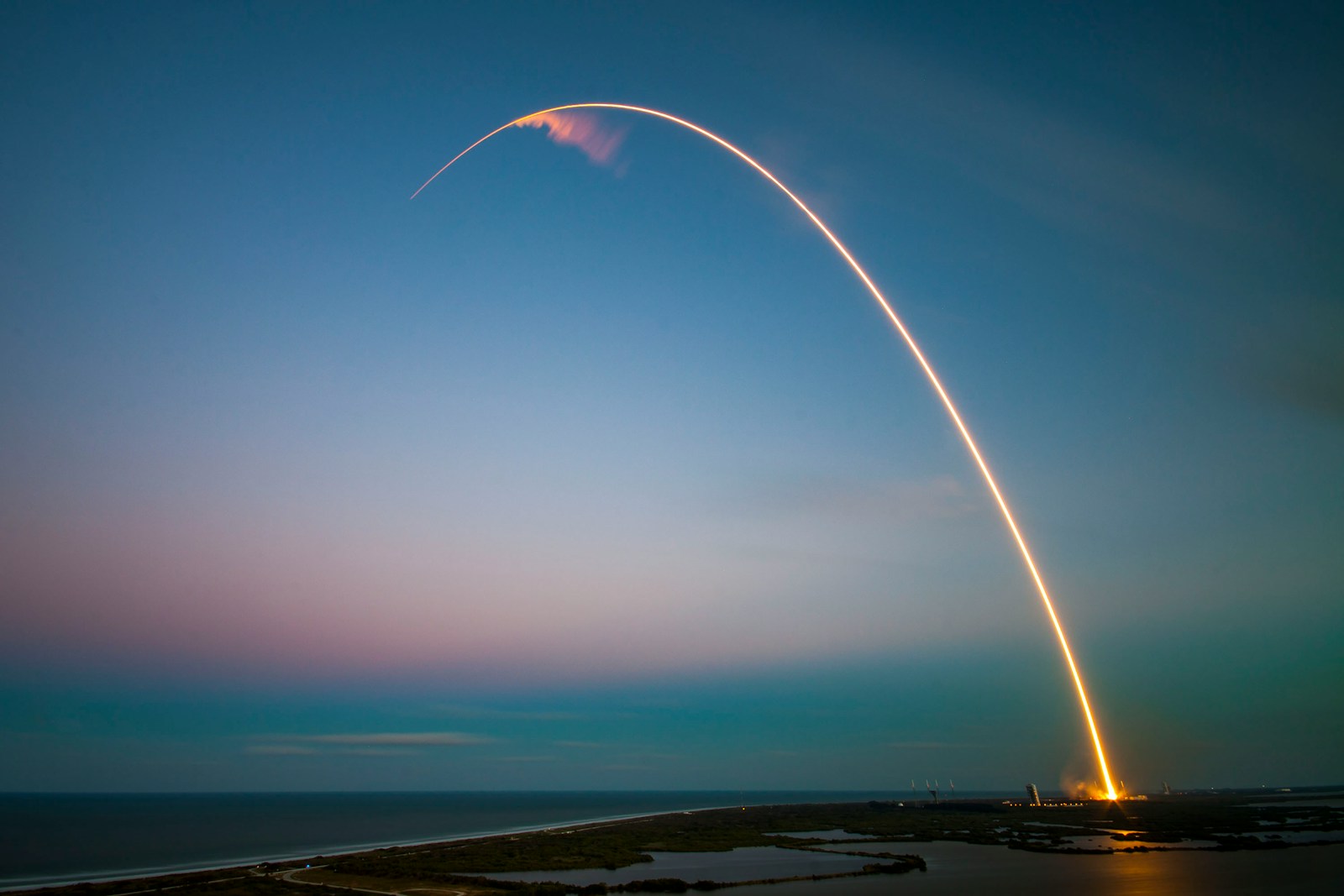
Image Credits: Photo by SpaceX on Unsplash

Cameron is a highly regarded contributor in the rapidly evolving fields of artificial intelligence (AI) and machine learning. His articles delve into the theoretical underpinnings of AI, the practical applications of machine learning across industries, ethical considerations of autonomous systems, and the societal impacts of these disruptive technologies.