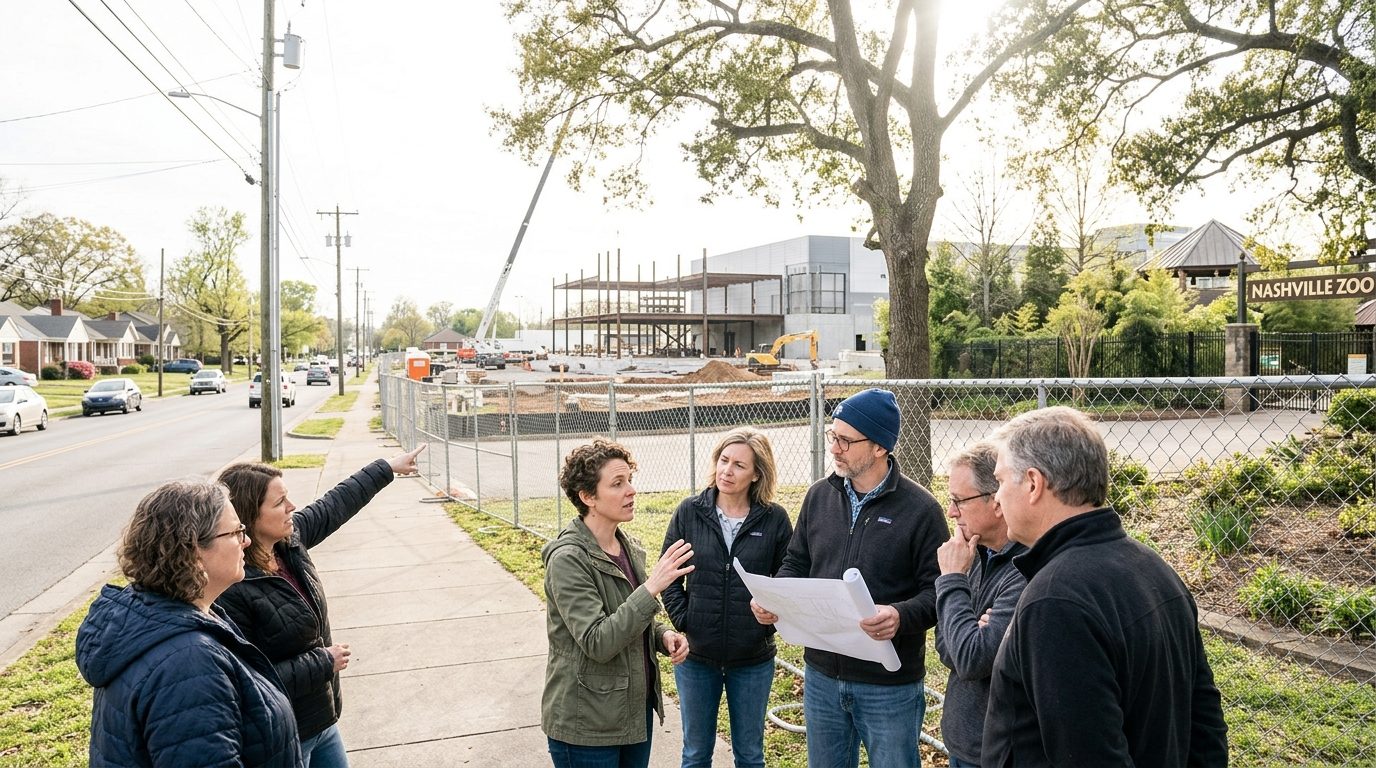
A proposed data center beside the Nashville Zoo is drawing public attention as residents question how the project could affect nearby homes, roads, utilities and wildlife.
Metro Nashville Council members Rollin Horton and Jeff Eslick have discussed the community’s reaction to the plan. The debate places local officials between potential economic development and concerns about land use near a major public attraction.
Residents Seek More Project Details
Data centers house computer systems that store and process digital information. Although these facilities may appear similar to warehouses, their operations can require substantial electricity, cooling equipment and backup power systems.
Those demands often shape public debate over proposed sites. Neighbors may seek details about noise, water use, power infrastructure, construction traffic and the building’s size.
The location next to the Nashville Zoo adds another concern. Residents and officials may examine whether construction or daily operations could affect zoo visitors, nearby animals or surrounding neighborhoods.
Horton and Eslick’s discussion of resident reaction shows that public acceptance will be an important part of the local review. However, the available information does not establish the project’s final design, approval status or construction schedule.
Location Raises Land-Use Questions
The dispute reflects a wider challenge for growing cities. Data centers support internet services, business software and cloud storage, but they also need suitable industrial land and dependable utility connections.
A site near a well-known civic destination can face added scrutiny. Nashville Zoo attracts families and visitors, while nearby residents may view the surrounding area as different from a traditional industrial district.
Key issues likely to influence the public discussion include:
- The distance between the facility, homes and zoo property
- Expected electricity and water demand
- Noise from cooling systems and backup generators
- Traffic during construction and regular operations
- Visual screening, building height and outdoor lighting
Each issue could be addressed through planning conditions, design changes or operating limits. Whether those measures would satisfy residents depends on the final proposal and the evidence presented during public review.
Council Members Face a Balancing Test
Horton and Eslick have a role in explaining the proposal, gathering public feedback and assessing whether existing land-use rules protect the surrounding area. Their positions could also shape how residents understand the project’s costs and benefits.
Supporters of data center development often point to investment, tax revenue and digital infrastructure. Critics may question whether those gains justify heavy utility use or possible effects on neighboring properties.
The number and quality of permanent jobs may also receive attention. Data centers can involve major construction spending, but residents may ask how many long-term positions would remain after the facility opens.
Public Review Will Shape Next Steps
Clear project documents will be central to the debate. Site plans, environmental studies, utility estimates and noise projections could help officials test claims from both supporters and opponents.
Residents will also need accessible opportunities to comment before major decisions are made. Early public meetings can identify problems while changes are still possible, rather than after approvals are complete.
The proposal’s future will depend on its design, zoning requirements and response to community concerns. For Nashville leaders, the larger test is whether economic growth can proceed without weakening trust in local planning. The next details released about utility demand, noise controls and the site plan will likely determine how that judgment develops.

Kirstie a technology news reporter at DevX. She reports on emerging technologies and startups waiting to skyrocket.