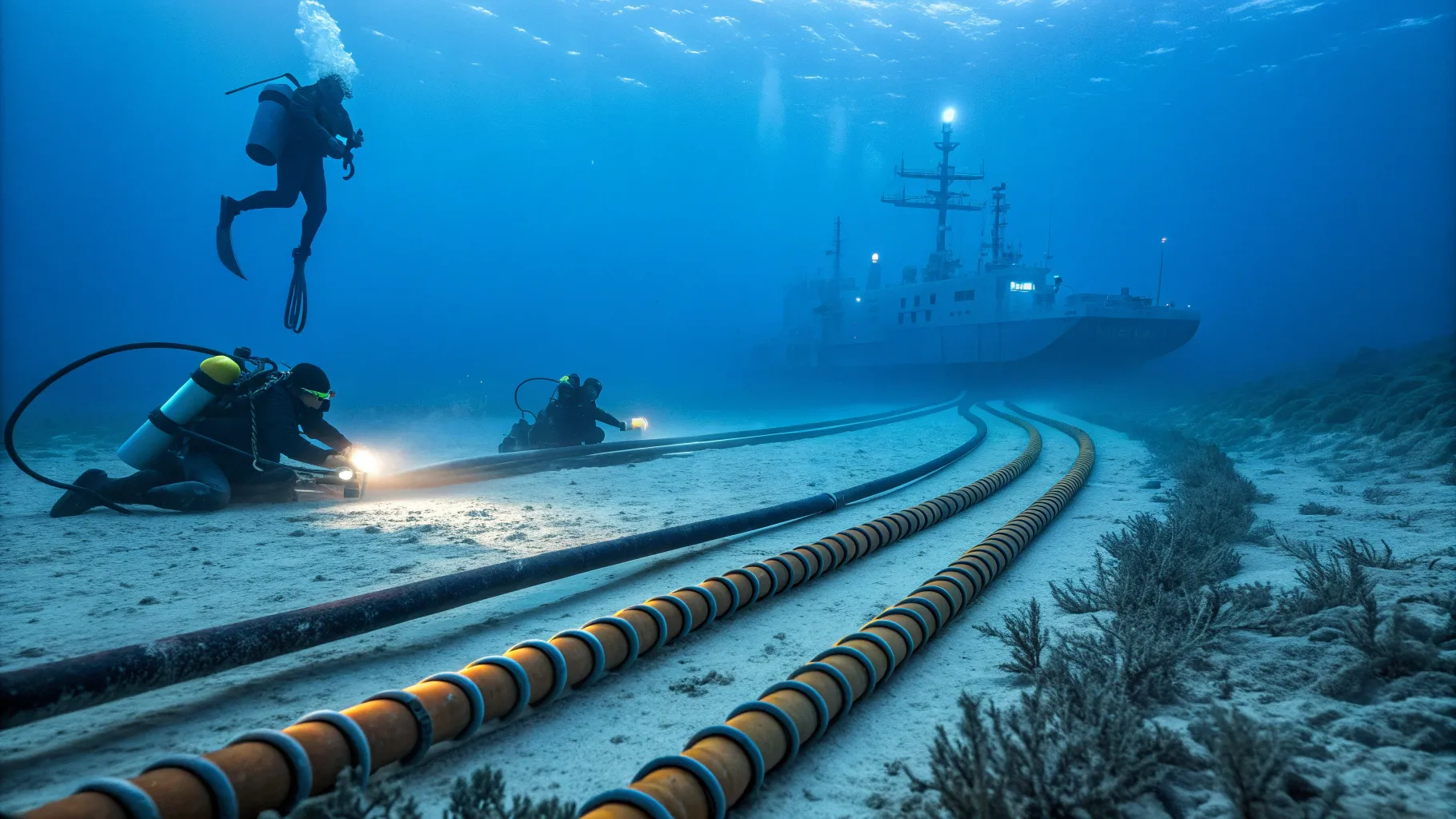
Governments and utilities are rushing to protect the vast network of critical systems running across the seabed as recent accidents and suspected sabotage expose weak points. From Europe’s North Sea to the Pacific, officials are mapping assets, improving monitoring, and updating rules to keep power, data, and fuel flowing.
The stakes are high. These links keep economies running, connect islands to mainland grids, and enable global internet traffic. A presenter summed up the scale of what lies out of sight, beneath the waves:
There are all kinds of critical infrastructure lying beneath the surface of our oceans – road and rail tunnels connecting land masses, pipelines for oil and gas, power cables connecting islands and countries, underwater research stations, and submerged dams and hydroelectric installations.
The rising focus follows a string of incidents, including damage to gas pipelines in the Baltic Sea in 2023 and repeated cuts to subsea cables serving the Shetland Islands and parts of Asia.
Why Undersea Networks Matter
Modern life depends on seabed systems. More than 95% of intercontinental internet traffic travels on fiber-optic cables under the ocean. Power interconnectors trade electricity between countries, smoothing prices and backing up grids. Pipelines move oil and gas from offshore fields to shore. Tunnels carry passengers and freight under busy straits.
These links reduce energy costs, improve resilience, and speed cross-border commerce. The Channel Tunnel alone handles millions of passengers and significant freight each year. Similar, newer links tie together Nordic and continental power markets and deliver wind energy from offshore farms to homes and factories.
Rising Risks: Nature, Negligence, and Malice
Threats range from storms and seabed shifts to fishing gear, ship anchors, and deliberate interference. Warming waters and stronger storms can expose or move buried cables and pipelines. Busier shipping lanes add collision risks.
- Accidental damage: Dragged anchors and trawl nets account for many cable breaks worldwide.
- Geohazards: Subsea landslides and earthquakes can sever long routes in minutes.
- Intentional harm: Investigators linked several recent breaks to human activity under review by national authorities.
Even brief outages can ripple across borders. Cable cuts may slow internet traffic and disrupt payments. Pipeline or power link failures can lift energy prices and force grid operators to reroute flows at short notice.
How Industry Is Responding
Network owners are adding redundancy and smarter monitoring. Many new cables follow diverse paths to avoid single points of failure. Operators now use seabed sensors, fiber sensing, and satellite ship-tracking to spot threats early and dispatch repair ships faster.
Energy firms are reinforcing burial standards near busy coasts and installing rock armor where currents scour trenches. Grid operators are coordinating patrols with coast guards in choke points and labeling safety zones on nautical charts.
Insurance markets are also adapting. Underwriters are asking for detailed route surveys, better maintenance records, and contingency plans before pricing policies for long spans in crowded waters.
Policy Shifts and Security Coordination
European states have launched joint task forces to map critical seabed assets and share alerts. Some are drafting rules to require incident reporting within hours and to tighten access around landing stations and converter sites. Similar efforts are underway in Asia and North America, where regulators are reviewing permit conditions for new routes and offshore wind connections.
Military and civilian agencies are training together on underwater surveillance. Patrols now focus on high-value corridors that carry clusters of cables and interconnectors. Officials say better visibility can deter tampering and speed response when alarms trigger.
What Comes Next
Demand for seabed capacity is set to grow. New data centers, cloud services, and 5G backhaul need more fiber pairs across oceans. Offshore wind buildouts will add hundreds of kilometers of high-voltage cables to grids this decade. Oil and gas pipelines in mature basins require life-extension work as assets age.
That growth brings more exposure. Experts point to three priorities: map and classify assets by criticality, build diverse routes and backups, and rehearse joint responses to shorten outages.
The push to secure undersea lifelines is gaining pace because the cost of failure is rising. The next phase will test whether industry and governments can harden networks faster than hazards grow. Readers should watch for tighter reporting rules, more diverse routes on new projects, and improved public updates when incidents occur. Together, these steps can keep essential links safe, even when trouble strikes far below the surface.

Rashan is a seasoned technology journalist and visionary leader serving as the Editor-in-Chief of DevX.com, a leading online publication focused on software development, programming languages, and emerging technologies. With his deep expertise in the tech industry and her passion for empowering developers, Rashan has transformed DevX.com into a vibrant hub of knowledge and innovation. Reach out to Rashan at [email protected]