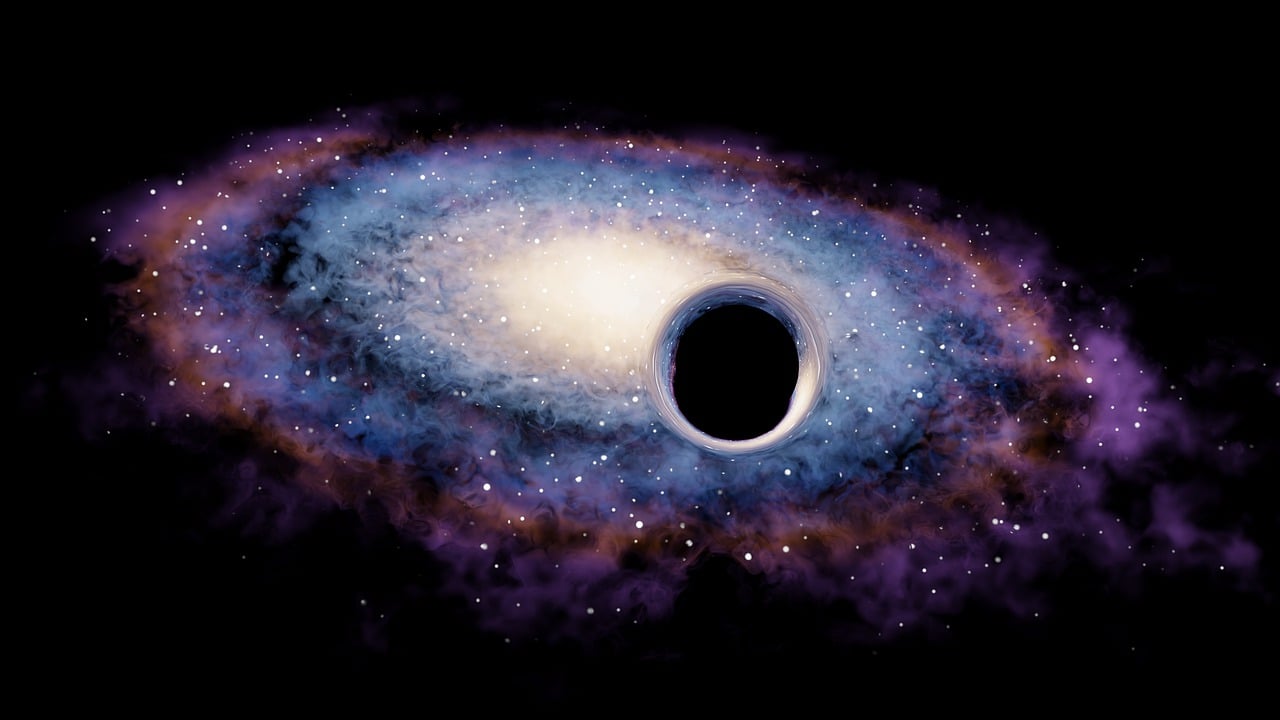
Astronomers have discovered new evidence supporting the existence of intermediate-mass black holes. These cosmic bodies bridge the gap between stellar-mass and supermassive black holes. The discovery was made by a team led by Assistant Professor Karan Jani at Vanderbilt University.
They analyzed data from the LIGO and Virgo detectors. These instruments detected gravitational waves from the mergers of black holes with masses ranging from 100 to 300 times that of the sun. “Black holes are the ultimate cosmic fossils,” Jani said.
“The masses of black holes reported in this new analysis have remained highly speculative in astronomy. This new population of black holes opens an unprecedented window into the very first stars that lit up our universe.”
To further understand these intermediate-mass black holes, Jani’s lab plans to utilize the upcoming LISA mission. Set to launch in the late 2030s, LISA will be able to track these black holes years before they merge.
This will offer a deeper understanding of their formation and evolution. The team published a series of studies in The Astrophysical Journal.
Evidence for elusive black holes
One study, led by Krystal Ruiz-Rocha, explored the characteristics of these black holes. Another, led by Shobhit Ranjan, examined their recoil dynamics. The research also used artificial intelligence models to ensure the accuracy of the detected signals.
Postdoctoral fellow Chayan Chatterjee showcased the robustness of these models. “We hope this research strengthens the case for intermediate-mass black holes as the most exciting source across the network of gravitational-wave detectors from Earth to space,” said Ruiz-Rocha. “Each new detection brings us closer to understanding the origin of these black holes and why they fall into this mysterious mass range.”
Looking ahead, the team aims to explore how detectors on the moon could further illuminate the environments in which these black holes exist.
This lunar-based approach could reveal details unattainable with Earth-based detectors. Jani will also participate in a NASA-sponsored study to identify key lunar locations for future scientific exploration. His work will contribute to the understanding of solar physics, space weather, and fundamental physics.
“This is an exciting moment in history—not just to study black holes, but to bring scientific frontiers together with the new era of space and lunar exploration,” Jani said. “We have a rare opportunity to train the next generation of students whose discoveries will be shaped by, and made from, the moon.”

Rashan is a seasoned technology journalist and visionary leader serving as the Editor-in-Chief of DevX.com, a leading online publication focused on software development, programming languages, and emerging technologies. With his deep expertise in the tech industry and her passion for empowering developers, Rashan has transformed DevX.com into a vibrant hub of knowledge and innovation. Reach out to Rashan at [email protected]