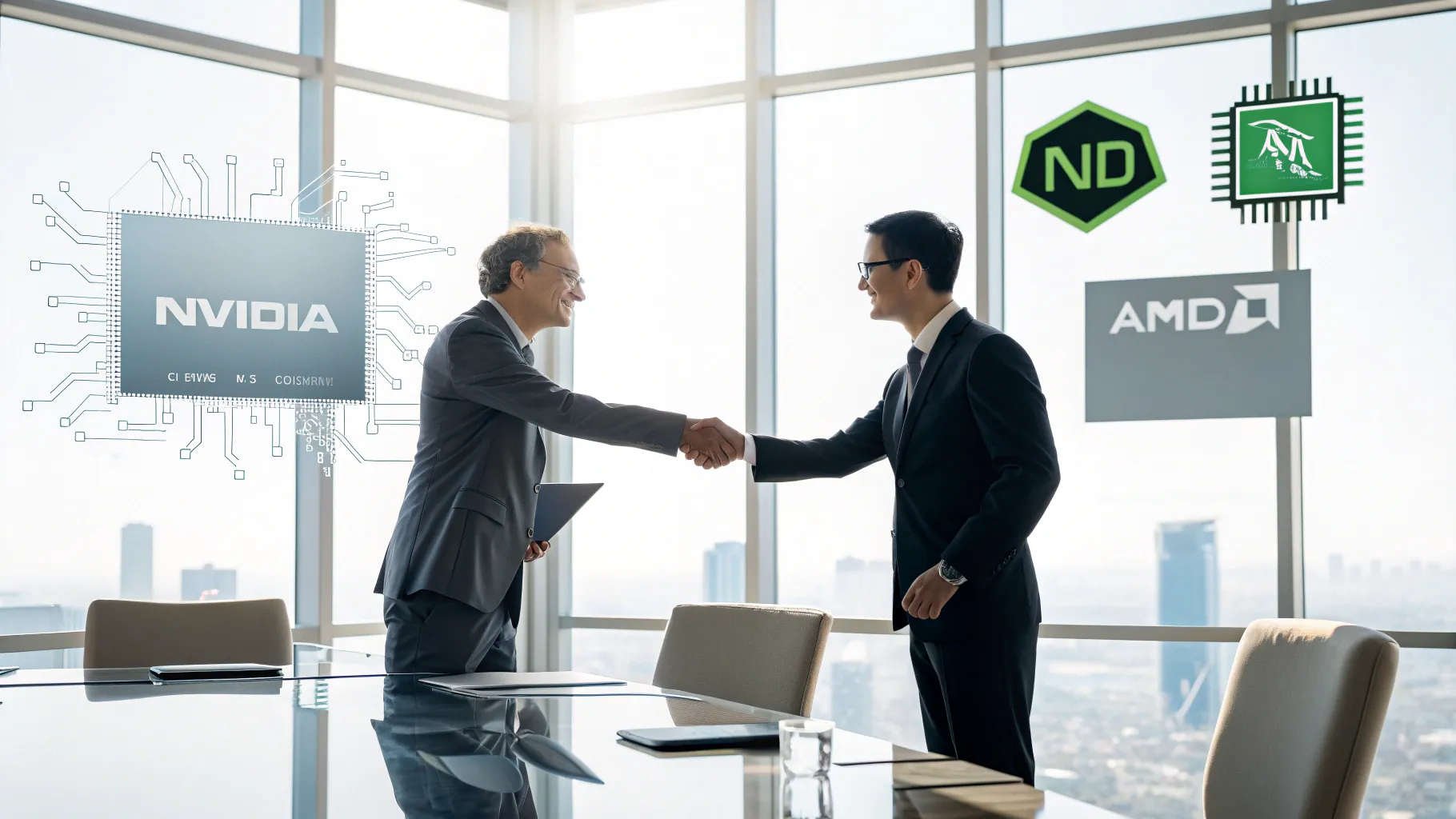
The dynamics of the global AI chip market have taken a significant turn as Nvidia and AMD have reportedly reached an agreement with the U.S. government to pay a 15% tariff on their high-end AI chip sales to China. This development, reported by the Financial Times citing anonymous sources, marks a shift in the U.S. approach to controlling advanced technology exports.
For years, the narrative surrounding AI chip exports to China centered on national security concerns. Now, economic considerations appear to be taking precedence as the U.S. government implements a revenue-sharing model instead of outright export restrictions.
The New Licensing Agreement
Under the reported arrangement, both Nvidia and AMD will receive licenses to sell their advanced AI chips to Chinese customers. In exchange, they must pay 15% of the revenue generated from these sales to the U.S. government. This compromise allows the companies to maintain access to the lucrative Chinese market while giving U.S. authorities a financial stake in the transactions.
The agreement represents a notable policy shift. Rather than blocking sales of cutting-edge AI technology to China completely, the U.S. government has opted for a model that both generates revenue and maintains some level of oversight on technology transfers.
Market Implications
China represents one of the largest and fastest-growing markets for AI chips globally. For Nvidia, which dominates the AI chip sector with its graphics processing units (GPUs), maintaining access to Chinese customers is critical for business growth. AMD, though a smaller player in the AI chip space, similarly benefits from continued access to Chinese buyers.
The 15% tariff will likely impact pricing strategies and profit margins for both companies. Whether they absorb these costs or pass them on to Chinese customers remains to be seen. Either approach could affect their competitive position against local Chinese chip manufacturers like Huawei, which has been developing its own AI chips.
Geopolitical Context
This arrangement comes amid ongoing tensions between the U.S. and China over technology leadership. Previous U.S. administrations implemented strict export controls on advanced semiconductor technology to China, citing national security risks. These controls included restrictions on chips that could be used for military applications or surveillance systems.
The new tariff-based approach suggests a more nuanced strategy that balances security concerns with economic interests. By allowing sales but taking a percentage of revenue, the U.S. government maintains some control while also benefiting financially from China’s AI development.
This policy shift may also reflect recognition that complete blockage of technology flow to China has proven difficult and potentially counterproductive, as it accelerates China’s efforts to develop domestic alternatives.
Industry Response
Neither Nvidia nor AMD has publicly confirmed the agreement. Industry analysts suggest that while the 15% tariff represents an additional cost burden, access to the Chinese market likely outweighs this expense for both companies.
The arrangement could set a precedent for how the U.S. manages exports of other advanced technologies to China. Rather than binary allow/deny decisions, a revenue-sharing model might become more common for sensitive technologies.
For Chinese tech companies that rely on U.S.-designed chips for their AI systems, the agreement provides more certainty about continued access to essential components, albeit at potentially higher prices.
The global semiconductor industry will be watching closely to see how this arrangement affects market dynamics, pricing structures, and the ongoing competition between U.S. and Chinese technology ecosystems. This tariff-based approach may signal a new chapter in how advanced technologies move across increasingly complex geopolitical boundaries.

Rashan is a seasoned technology journalist and visionary leader serving as the Editor-in-Chief of DevX.com, a leading online publication focused on software development, programming languages, and emerging technologies. With his deep expertise in the tech industry and her passion for empowering developers, Rashan has transformed DevX.com into a vibrant hub of knowledge and innovation. Reach out to Rashan at [email protected]