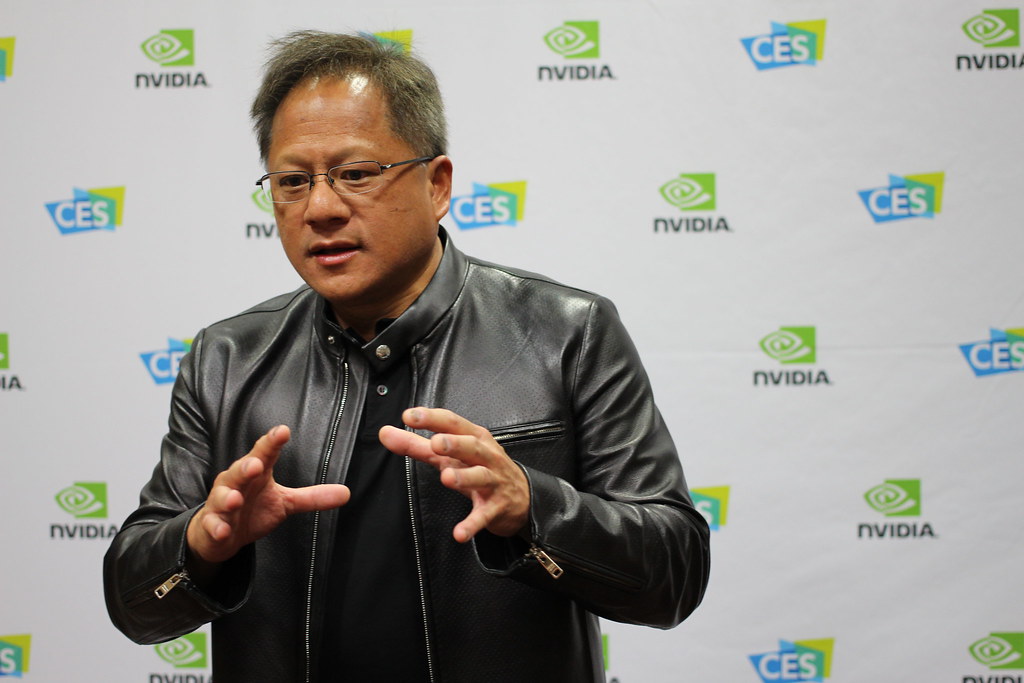
Our founder and CEO Jensen Huang kicked off #CES2025 with a news-packed keynote that included new products to advance gaming, autonomous vehicles, robotics, and agentic #AI. @CES
Catch up on the latest announcements and watch the replay: https://t.co/dZatkjFUu2
— NVIDIA (@nvidia) January 7, 2025
Jen-Hsun Huang, the CEO of Nvidia, has made a remarkable claim that the company has managed to reduce the cost of computing by a staggering one million times over the past two decades. This statement highlights Nvidia’s relentless efforts to develop increasingly powerful GPUs, drawing a comparison to Moore’s Law, which traditionally predicted that the number of transistors on microchips would double roughly every two years, resulting in enhanced performance and lower relative costs. Although modern graphics cards may seem more expensive compared to their predecessors, the computational power they offer has grown exponentially.
Announcing NVIDIA Project DIGITS, a personal AI supercomputer that’s powered by the NVIDIA GB10 Superchip and based on #NVIDIAGraceBlackwell architecture. https://t.co/KTemx5PYND
Preconfigured with the NVIDIA AI software stack, developers, researchers, data scientists and… pic.twitter.com/h6GRSMxHGp
— NVIDIA (@nvidia) January 7, 2025
For example, the GeForce 6800 Ultra from 2005 delivered 6.4 GFLOPS of performance, while the more recent RTX 4060 boasts an impressive 15,100 GFLOPS of processing power. This advancement represents a massive leap in efficiency and capability, which Huang believes justifies his bold claim about the reduction in computing costs. During a Q&A session following his keynote address, Huang stressed the significance of Nvidia’s advancements in the field of machine learning, emphasizing how the decreased cost of computing has made it possible to utilize AI for tackling complex problems.
🎧 The first NVIDIA AI Podcast of 2025 is here. 🎧
Listen to Ming-Yu Liu, VP of research at NVIDIA, discuss why WFMs & the new #NVIDIACosmos platform are key to advancing physical #AI in various industries like robotics & autonomous vehicles 🔑https://t.co/LiAU87ApKG pic.twitter.com/tbcunxdF7p
— NVIDIA AI (@NVIDIAAI) January 7, 2025
Nvidia’s impact on computing cost
“The reason Moore’s Law was so important in the history of the chip is that it drove down computing costs,” Huang stated. “In the course of the last 20 years, we’ve driven the marginal cost of computing down by one million times.”
🔴 𝙇𝙞𝙫𝙚 𝙉𝙤𝙬: Watch NVIDIA's #CES2025 Keynote for the latest in creator advancements.
📺: https://t.co/WPLks9bK3x pic.twitter.com/rgNlgo4HoH
— NVIDIA Studio (@NVIDIAStudio) January 7, 2025
Huang highlighted the immense potential of affordable computational power, emphasizing its role in driving innovation in AI, from practical applications to creative endeavors like digital artwork.
This surge in GPU capability has established these components as crucial elements in modern technology, effectively shaping the future of artificial intelligence and computing. While Huang did not provide detailed calculations to support his claims, the overall trend of increasing performance per dollar is clear. Since the introduction of the modern GPU, the cost-to-performance ratio has improved dramatically, consistently progressing towards more affordable and powerful computing solutions.
As Nvidia continues to push the boundaries of what’s possible with GPU technology, their innovations remain at the forefront of the tech industry’s most significant developments. With the rapid pace of advancements, the future of computing appears to be heavily influenced by these strides in GPU technology, solidifying their importance in both consumer and enterprise applications.

Johannah Lopez is a versatile professional who seamlessly navigates two worlds. By day, she excels as a SaaS freelance writer, crafting informative and persuasive content for tech companies. By night, she showcases her vibrant personality and customer service skills as a part-time bartender. Johannah's ability to blend her writing expertise with her social finesse makes her a well-rounded and engaging storyteller in any setting.