As data centers scale to feed AI and cloud workloads, a once-simple wiring choice has become a strategic decision. Engineers are rethinking where copper ends and where optics begin. The question carries new urgency as networks jump from 400G to 800G and prepare for 1.6T speeds across large facilities.
“Copper interconnects are out, and optical is in?”
The line reflects a growing debate across server rooms and boardrooms. Hyperscalers, equipment makers, and chip vendors are weighing cost, power, reach, and operational factors. The answer is not a clean handoff. It is a shifting split of duties between two very different media.
Background: A Divide at Higher Speeds
For years, copper ruled inside servers and racks, while optics linked rows and buildings. That model held as Ethernet moved to 100G and 200G. Now, 400G and 800G have pushed electrical signaling, often 112G PAM4 per lane, to physical limits over distance. New 200G-per-lane technology is next, raising the bar again.
Optical modules have moved into mainstream roles at top-of-rack and spine layers. Hyperscalers began 800G rollouts in 2023 and 2024, with suppliers shipping high volumes of pluggable transceivers. Co-packaged optics, which place lasers near switching silicon, are in trials. The goal is to curb power and losses from long electrical traces and heavy copper bundles.
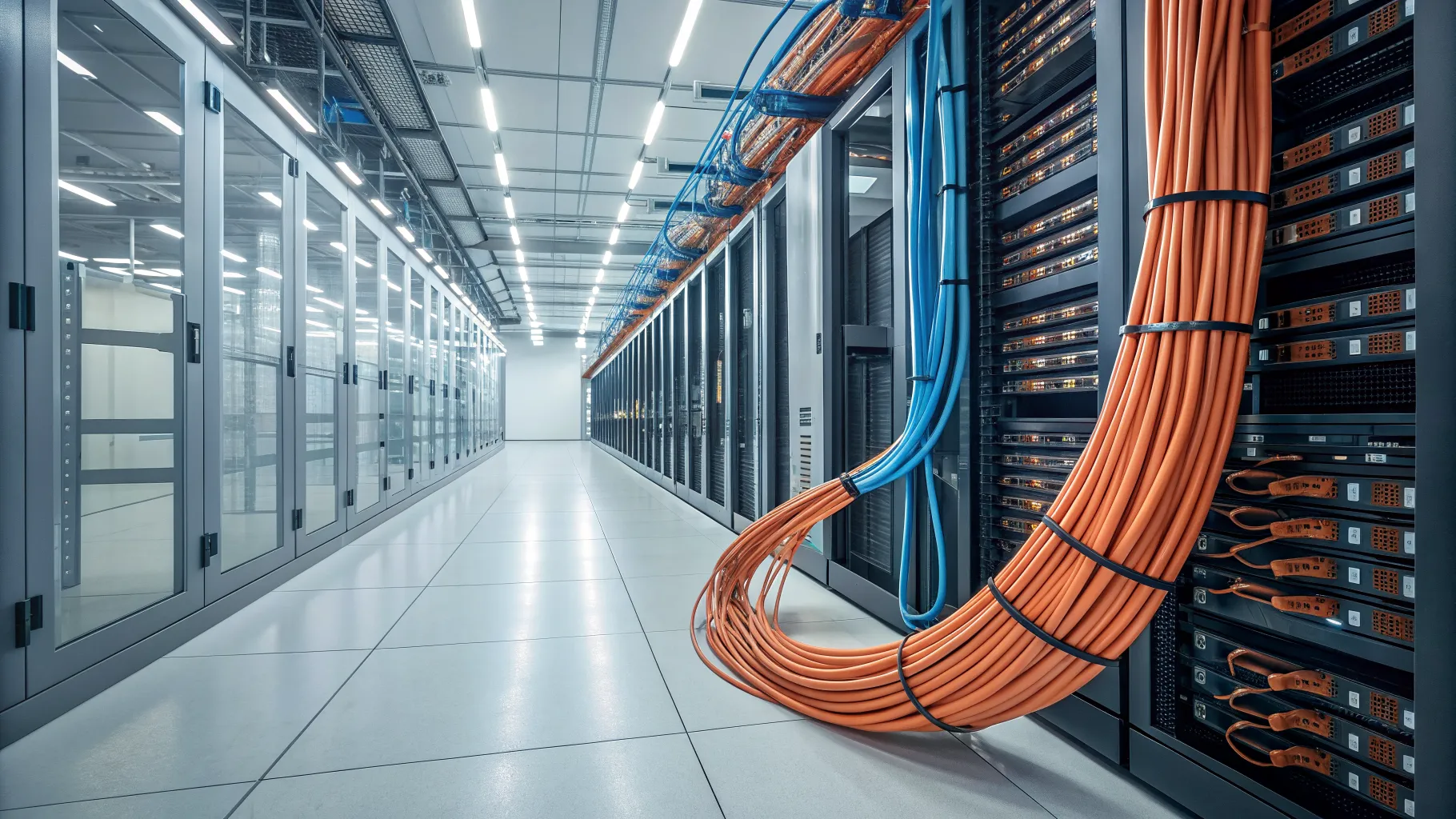
Copper is not gone. It remains vital on printed circuit boards, short backplanes, and direct-attach cables under a few meters. Active electrical cables and retimers extend reach, but they add cost and power. As facilities densify, cabling bulk and airflow limits also affect choices.
What Is Driving the Shift
Three forces are changing interconnect decisions. First, AI training clusters concentrate thousands of accelerators. East-west traffic surges, and every watt matters. Second, link speeds are rising fast. The step from 400G to 800G is underway, with 1.6T on the horizon. Third, operators want simpler operations. Thick copper bundles are hard to manage across crowded racks.
At very high line rates, electrical channels need more equalization and retimers to stay error-free. That drives up latency and power per bit. Optical links can hold signal quality over longer distances without bulky cables. Suppliers have improved optical power efficiency, though modules still draw notable watts per port.
Where Copper Still Holds
Copper keeps an edge where links are short and costs must stay low. Inside a server or within the same rack, it remains standard. Direct-attach copper often serves links up to 2–3 meters at 400G, depending on design and cable gauge. Active copper can stretch farther, with a power penalty.
For PCIe, CXL, and backplane connections, board traces and short cable assemblies remain practical. They offer tight integration, known reliability, and reuse of existing designs. Technicians also value copper for quick swaps and straightforward testing inside racks.
- Use copper for backplanes, mezzanine cards, and very short rack links.
- Use optics between racks, at top-of-rack to spine, and across rows.
- Mix approaches with active copper or active optical where budgets demand.
Optics Gain Ground in the Fabric
At the fabric layer, 400G and 800G optics now connect top-of-rack switches to spines and superspines. Pluggable modules, including DR4 and SR8 variants, cover reaches from tens to hundreds of meters. Linear-drive optics aim to remove DSPs in some designs, cutting power and cost.
Co-packaged optics promise shorter electrical paths and fewer retimers on switch ASICs. They also raise new challenges in manufacturing, repair, and supply chains. Operators must balance lower channel loss against practical issues like field replacement and laser reliability.
What to Watch Next
Standards bodies and vendors are aligning on 200G-per-lane signaling for 1.6T Ethernet. As lanes double in speed, copper reach will tighten again. Designers may add more retimers, consider active copper more often, or shift additional tiers to optics.
Inside the server, PCIe speeds are climbing. Experiments with optical PCIe and CXL over optics are underway, but costs and serviceability remain hurdles. In the near term, copper is likely to stay inside the box and the rack, with optics handling the rest of the fabric.
Procurement teams are also recalculating total cost. The price of transceivers, the power draw of DSPs, and savings from easier cabling all factor in. Fewer, thinner cables can simplify airflow and reduce installation time at scale.
The debate is not about declaring a winner. It is about placing each medium where it performs best. Copper stays close to the chips. Optics span the distances that copper strains to reach at new speeds.
For readers tracking this shift, key signals include 800G deployment rates, early 1.6T trials, progress on co-packaged optics, and availability of active copper at acceptable power. As those milestones arrive, the split between copper and optical will keep moving—one rack unit at a time.

Rashan is a seasoned technology journalist and visionary leader serving as the Editor-in-Chief of DevX.com, a leading online publication focused on software development, programming languages, and emerging technologies. With his deep expertise in the tech industry and her passion for empowering developers, Rashan has transformed DevX.com into a vibrant hub of knowledge and innovation. Reach out to Rashan at [email protected]