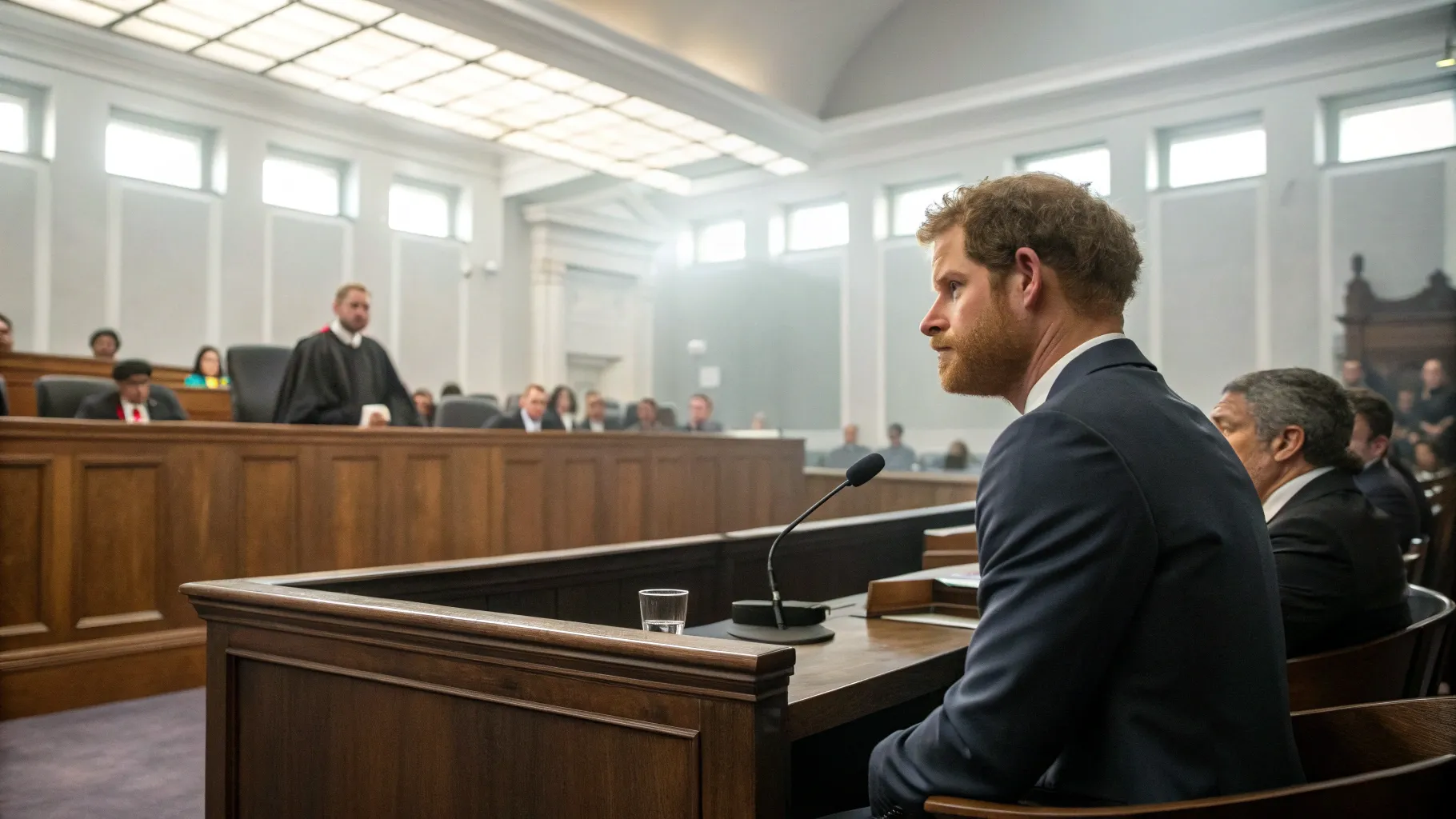
Prince Harry appeared in a London courtroom on Wednesday to give evidence in his case against the publisher of the Daily Mail, alleging unlawful information gathering. The high-profile testimony marks a rare moment for a senior royal to take the stand in an ongoing legal fight over privacy and press conduct. The lawsuit adds to a series of battles over how British tabloids have obtained stories about public figures.
Prince Harry provided evidence from the witness box of a London court on Wednesday as part of his lawsuit against the publisher of the Daily Mail over allegations of unlawful information gathering.
Background on the Case
The claim targets Associated Newspapers Limited, the company behind the Daily Mail and Mail on Sunday. The case centers on alleged unlawful methods used to obtain private information. Such claims in the UK have previously included phone hacking, deception to access records, and other intrusive tactics. The publisher has denied wrongdoing in similar matters and maintains it gathers news lawfully.
Britain’s press has faced scrutiny for more than a decade over reporting practices. The phone hacking scandal of the early 2010s led to a public inquiry and a wave of civil claims. Public figures, celebrities, and private citizens have since brought cases alleging privacy breaches. Many claims settled, while others went to trial, shaping a patchwork of case law on privacy and misuse of private information.
Prince Harry has been an outspoken critic of tabloid methods, arguing they caused harm to him and his family. His decision to testify underscores his push to challenge press practices through the courts rather than only through public statements.
What’s at Stake
At issue is whether reporters or private investigators acted unlawfully and whether the publisher bears responsibility. If the court finds wrongdoing, the outcome could lead to damages and fresh scrutiny of editorial oversight. A ruling in the publisher’s favor could strengthen defenses that investigative reporting can proceed under existing legal safeguards.
Associated Newspapers has argued, in past hearings, that claims rely on speculation or are out of time. Claimants say patterns of conduct support their allegations, citing story details they claim could only come from intrusive methods. The court will weigh evidence, including records, payments, and any testimony from journalists or third parties.
Key Allegations in Focus
- Claims that private information was obtained without consent for news stories.
- Disputes over whether methods, if used, were unlawful or justified by public interest.
- Arguments about the timing of claims and the availability of proof.
Legal and Industry Implications
Testimony from a senior royal draws attention to the balance between privacy rights and press freedom. Legal experts note that such appearances can add weight to a claim but do not decide the case on their own. The court will test each allegation with documentary evidence and witness statements.
For media outlets, the case arrives as newsrooms face pressure to maintain aggressive reporting while complying with privacy and data laws. Editors argue that strong reporting serves the public interest, especially on issues involving public figures. Privacy advocates counter that stories built on intrusions can cause lasting harm and erode trust.
If the court sets clear findings on methods and oversight, publishers may revise practices, record-keeping, and approvals for sensitive investigations. Insurers and legal teams will also watch the outcome, as costs and risk assessments can shift with each decision.
Broader Context and What Comes Next
This lawsuit sits within a larger effort by public figures to use civil courts to challenge tabloid practices. Some claimants have secured settlements; others have pursued trials to seek findings of fact. The pattern shows a legal system slowly defining the boundaries of privacy and journalistic method.
The court will continue to hear evidence before any ruling. A judgment could address the credibility of witnesses, the reliability of newsroom records, and whether a public interest defense applies. Appeals are possible, which could extend the timeline.
For readers, the case raises questions about how stories are sourced and where ethical lines should be drawn. For the press, it serves as a test of internal controls and the clarity of editorial decisions on sensitive targets.
Prince Harry’s testimony signals that challenges to tabloid methods are not fading. The next steps will turn on the strength of the evidence and the court’s legal analysis. Observers should watch for findings on specific newsgathering tactics, any guidance on time limits for claims, and how judges balance privacy against the public’s right to know.

Rashan is a seasoned technology journalist and visionary leader serving as the Editor-in-Chief of DevX.com, a leading online publication focused on software development, programming languages, and emerging technologies. With his deep expertise in the tech industry and her passion for empowering developers, Rashan has transformed DevX.com into a vibrant hub of knowledge and innovation. Reach out to Rashan at [email protected]