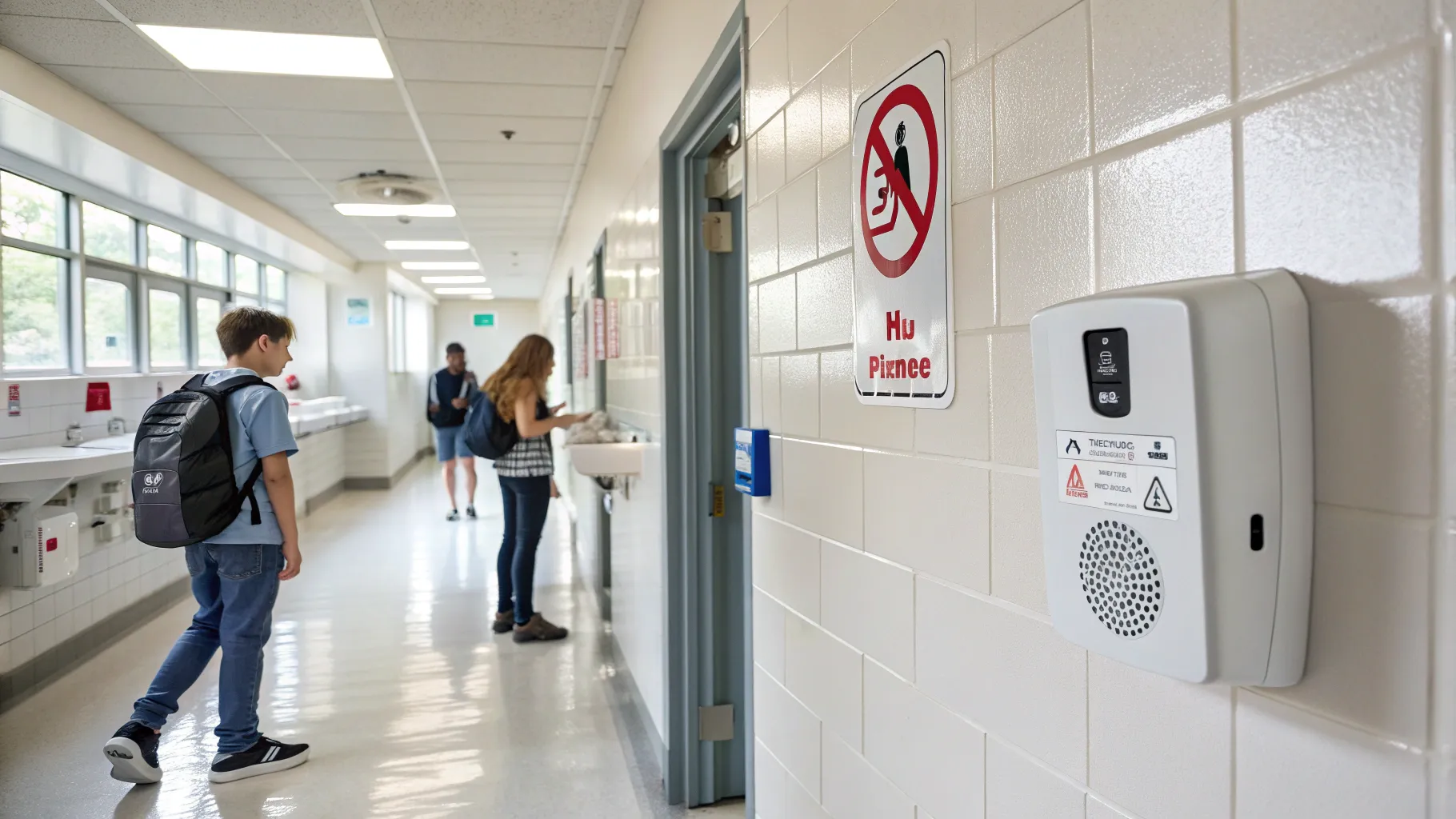
School districts across the United States are installing vape-detection devices in student bathrooms to curb nicotine and cannabis use during the school day. The push has accelerated this year as administrators look for quick ways to address rising youth vaping, growing safety worries, and parent pressure to act. Backers say the technology deters vaping and restores order. Critics warn it expands surveillance in sensitive spaces and may punish students without addressing addiction.
“Schools in the US are installing vape-detection tech in bathrooms to thwart student nicotine and cannabis use. A new investigation reveals the impact of using spying to solve a problem.”
Why Schools Are Turning to Sensors
Youth vaping surged over the past decade, helped by flavored products and discreet devices. While national surveys show some declines since 2019, many districts report persistent use on campus, especially in bathrooms where staff cannot easily supervise. Principals describe frequent class disruptions and health incidents tied to high-potency THC or nicotine.
Vape sensors—sold by companies such as Soter Technologies and IPVideo—do not record video. They track particles, chemicals linked to vaping aerosols, and sometimes sudden noise spikes. When they detect possible vaping, they send an alert to staff. The goal is to respond quickly and discourage use in shared spaces.
- Typical device price: about $1,000–$1,500 per unit, plus software and maintenance fees.
- Placement: bathrooms, locker rooms, and secluded hallways.
- Alerts: email, text, or dashboard notifications to administrators or security.
Effectiveness: Early Wins, Lingering Doubts
Several districts report fewer vaping incidents where sensors are installed. Some track a drop in bathroom closures and fewer student complaints about haze or odors. A few schools say they recovered fewer vape pens during sweeps after adding detectors.
But measuring success is tricky. Alerts can spike at first as students test limits and then decline as behavior shifts. False positives—triggered by aerosols from sprays or fog from e-cigarettes used outside the door—remain a challenge. Vendors update software to reduce misfires, yet administrators concede the systems are not flawless.
Public-health experts say technology alone cannot address nicotine dependence. They argue that without counseling and cessation support, students may shift locations or vape outside school hours, avoiding detection but not the habit.
Privacy, Trust, and the Bathroom Line
Bathroom monitoring raises sensitive questions. While sensors do not use cameras and many do not include always-on microphones, privacy advocates say bathroom alerts can still feel invasive. They worry that real-time notifications may lead to searches or confrontations that escalate.
Civil liberties groups point to student rights under the Fourth Amendment and state laws. Schools have more leeway on searches, but policies must be reasonable and consistently applied. Clear rules about when staff can enter a bathroom, how to confirm an alert, and how to document outcomes are central to lowering risk.
Some districts publish their sensor policies, limit alert recipients, and ban audio recording. Others post signs informing students of detection devices, aiming to deter use and increase transparency.
Discipline and Equity Concerns
Disciplinary data around vaping often mirror wider school discipline patterns. Advocates warn that technology can intensify disparities if alerts lead to frequent stops of certain groups of students. Districts that pair detection with education and progressive discipline report fewer suspensions and better follow-up.
Experts recommend alternatives to punishment, including brief intervention, counseling, and referrals to quit resources. Schools that offer nicotine replacement therapy through nurses, with parent consent, report better engagement from students who want to quit.
Cost, Contracts, and What Schools Get
Budgets matter. A mid-size high school might install dozens of sensors, plus annual software fees. Districts often tap safety funds or federal relief dollars. Procurement contracts should specify data retention, who can access alerts, and how the district will evaluate results. Some agreements allow pilots to test effectiveness before district-wide rollout.
Technology can help identify hotspots, but districts still need staff to respond, investigate, and document incidents. Without training, a surge of alerts can strain principals, nurses, and security teams already juggling attendance, mental health, and classroom support.
What Comes Next
The next phase appears to be mixed strategies: targeted sensors in high-traffic bathrooms, stronger education on vaping risks, and on-site support for quitting. State lawmakers are also weighing rules on sensor use, data handling, and notification requirements, aiming to balance safety and privacy.
Parents want safer bathrooms. Students want trust and help, not only consequences. Administrators want tools that work and hold up to legal scrutiny. The likely path forward blends technology with clear policies and health services.
For now, schools report early deterrence and fewer on-campus incidents in some cases, tempered by accuracy questions and rights concerns. The key tests ahead are fairness, transparency, and whether students actually stop using nicotine and cannabis, not only move it out of sight. Districts planning new systems should set public metrics, publish policies, and tie detection to real support for quitting. That is the measure families and students will watch in the months ahead.

Rashan is a seasoned technology journalist and visionary leader serving as the Editor-in-Chief of DevX.com, a leading online publication focused on software development, programming languages, and emerging technologies. With his deep expertise in the tech industry and her passion for empowering developers, Rashan has transformed DevX.com into a vibrant hub of knowledge and innovation. Reach out to Rashan at [email protected]