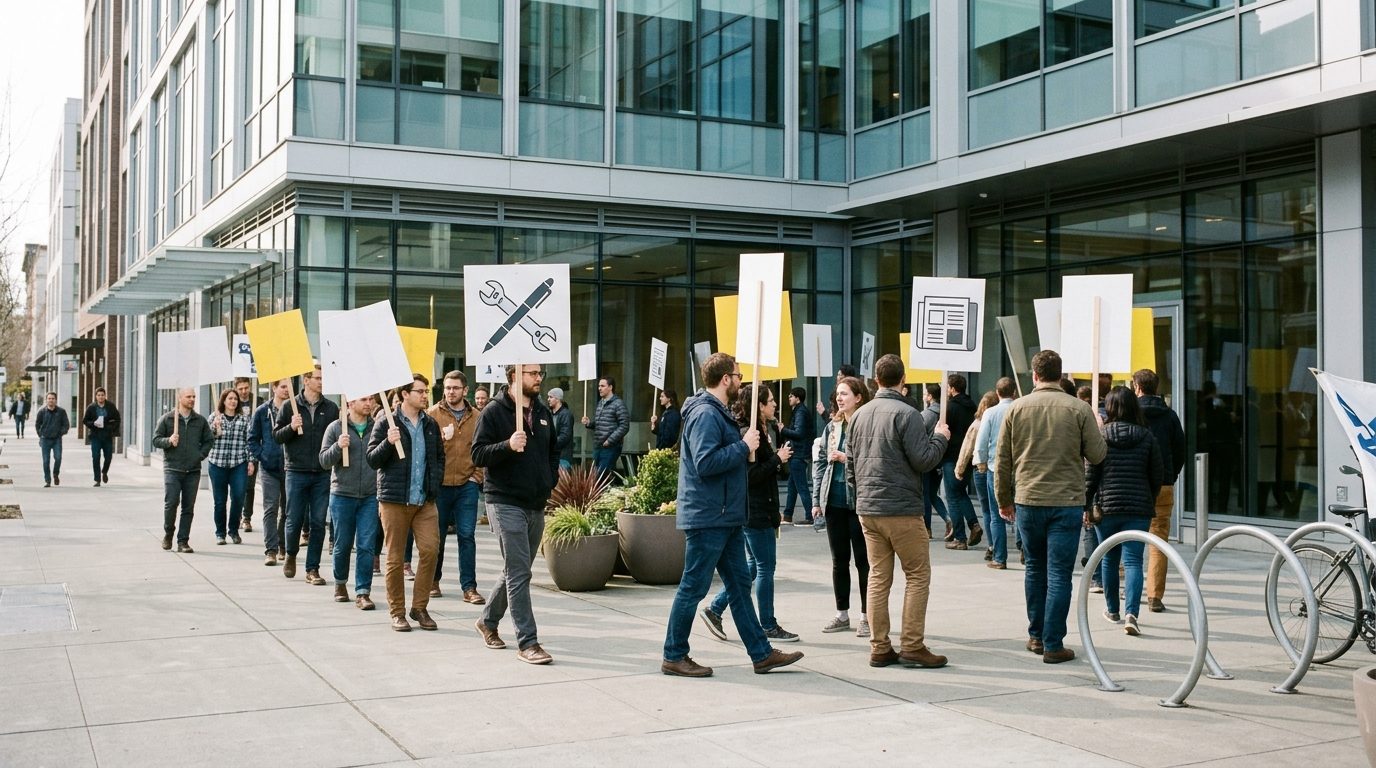
Seattle Times Union members held a lunchtime picket outside the newspaper’s offices Wednesday, pressing the company to guarantee that artificial intelligence will not replace newsroom jobs.
The labor action in Seattle centers on the scope of workplace protections. The company has agreed that AI will not interview sources or write stories. Union members say that pledge leaves copy editors, photographers, and other newsroom employees exposed.
Union Seeks Protection for Every Role
The picket reflects a dispute over how broadly an AI employment guarantee should apply. The union wants protections that cover the newsroom as a whole, not only reporting and writing duties.
The union is calling on the company to guarantee that “AI won’t replace any newsroom jobs.”
Copy editors check facts, improve clarity, write headlines, and help prevent errors. Photographers document events and provide visual evidence from communities. Both roles influence the accuracy and credibility of news coverage.
Under the company’s current commitment, two central reporting tasks are protected:
- AI will not interview sources.
- AI will not write news stories.
Union members argue that these limits do not address every possible use of automation. AI systems can also process images, suggest headlines, summarize material, and assist with editing. Those functions could affect staffing even if machines never conduct interviews or produce finished articles.
Company Pledge Sets Some Boundaries
The Seattle Times has accepted limits on AI’s role in gathering and writing news. That position preserves human responsibility for interviewing sources and producing articles, two duties central to journalism.
However, the available agreement does not guarantee employment protection for each newsroom position. That distinction is driving the disagreement.
The company’s pledge may allow managers to use AI for support work while keeping people responsible for final publication. The union’s demand goes further by focusing on jobs, rather than specific tasks.
The two positions reveal a key question for news organizations: Should AI rules regulate what software may do, or should they also prevent staff reductions linked to its use?
Newsroom Quality Is Part of the Debate
The dispute carries consequences for readers as well as employees. Interviews require judgment, follow-up questions, and an ability to assess a source’s credibility. Photography also depends on timing, access, context, and ethical choices.
Copy editing provides another safeguard. Editors can catch unsupported claims, confusing passages, legal risks, and factual inconsistencies before publication. Automated tools may assist with routine checks, but they can also produce errors or miss context.
Supporters of workplace AI say software can reduce repetitive duties and give journalists more time for reporting. Labor groups often counter that efficiency claims can lead to fewer positions, heavier workloads, and weaker oversight without clear contractual limits.
Negotiations Could Shape Future AI Use
The lunchtime picket signals that the union views employment guarantees as an urgent bargaining issue. It also shows that a ban on AI-written stories may not settle wider concerns about newsroom automation.
Future discussions will likely need to define which jobs and tasks are covered. Other key issues may include human review, disclosure, staff training, and whether workers have a voice before new systems are deployed.
For now, the Seattle Times has drawn a line around interviews and story writing, while the union is seeking a wider barrier against job replacement. The next outcome to watch is whether the company extends its pledge to copy editors, photographers, and other newsroom staff.

Kirstie a technology news reporter at DevX. She reports on emerging technologies and startups waiting to skyrocket.