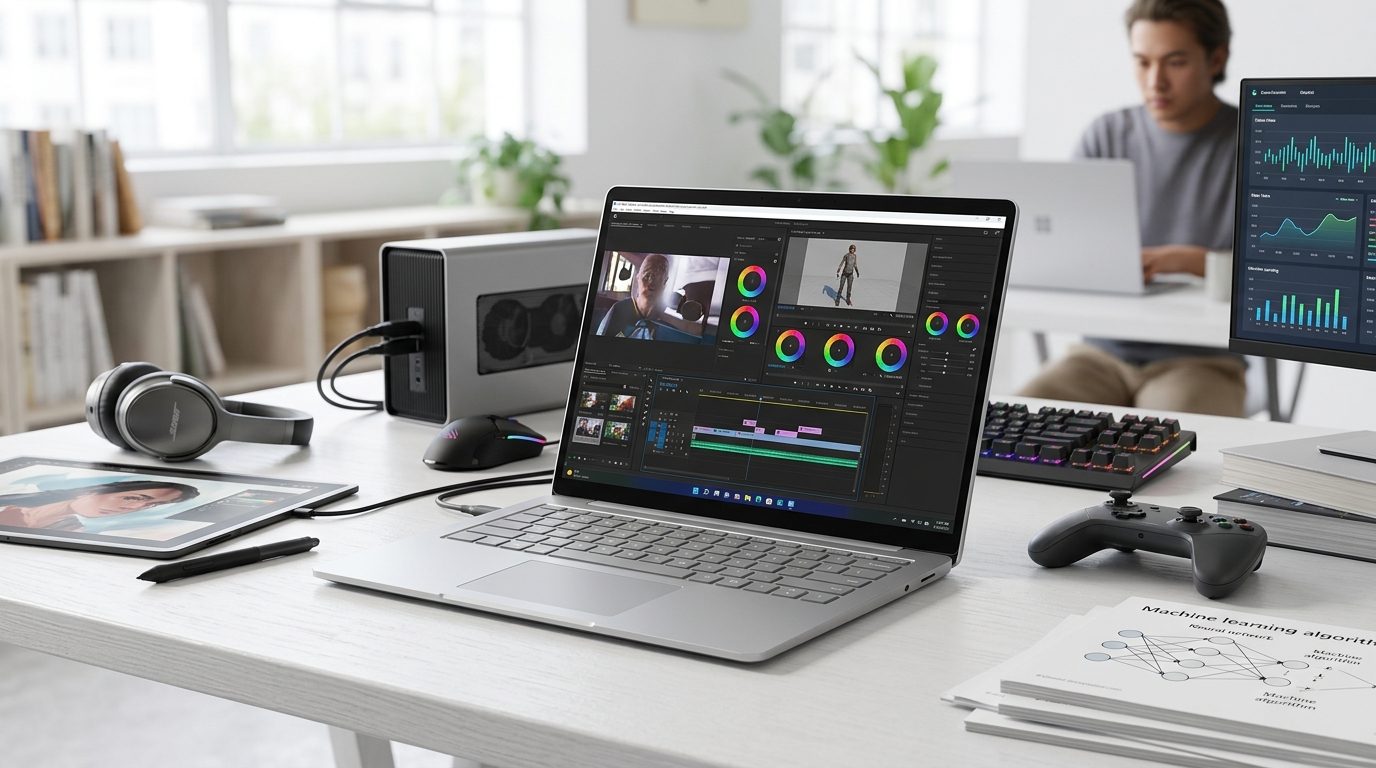
Surface Ultra is being positioned as a high-performance device for creative work, gaming, and artificial intelligence, placing wide demands on its hardware and software.
The product’s stated focus suggests an effort to serve users who often need powerful computers. However, key details remain undisclosed, including processor options, graphics performance, memory, battery life, price, and availability.
Three Demanding Uses in One Device
Creative software, modern games, and AI tools can place different strains on a computer. Serving all three groups may require careful choices involving speed, cooling, display quality, and power use.
“The Surface Ultra is designed to handle creative workloads, gaming, and AI.”
Creative professionals often need strong processing and graphics performance for video editing, 3D design, animation, and high-resolution images. Display accuracy and storage speed can also affect daily work.
Gaming adds another set of requirements. Players may expect high frame rates, responsive controls, and stable performance during long sessions. Those features can increase heat and reduce battery life in portable devices.
AI tasks may involve local image generation, text processing, audio tools, or software assistants. Some of these jobs benefit from dedicated neural processing hardware. Others still depend heavily on central or graphics processors.
Performance Claims Need Supporting Details
The broad design claim gives Surface Ultra a clear market position, but it does not establish how well the device performs. Independent testing will be needed to measure results under sustained workloads.
Several details will shape how buyers assess the product:
- Processor, graphics, and AI acceleration hardware
- Memory capacity and storage options
- Screen resolution, color accuracy, and refresh rate
- Cooling performance under extended use
- Battery life, weight, price, and repair options
These factors matter because high peak speeds do not always translate into steady performance. Thin computers may reduce processor speed as internal temperatures rise. AI and gaming tasks can make that trade-off more visible.
A Crowded Premium Computer Market
Surface products have generally competed through close integration between hardware, Windows, touch input, and productivity software. An Ultra model aimed at heavier workloads could extend that approach to customers who might otherwise choose gaming laptops or professional workstations.
Yet one device may not serve every audience equally. Creators may value color accuracy and quiet operation. Gamers may favor powerful graphics and higher refresh rates. AI developers may care most about memory and support for specific software frameworks.
Software compatibility will also influence the device’s appeal. Hardware acceleration provides limited value unless applications can use it. Developers may need optimized tools, drivers, and programming support to gain practical benefits from dedicated AI hardware.
What Buyers Should Watch
Surface Ultra’s success will depend on whether its final specifications support its wide ambitions without major trade-offs. Price will be especially important, since specialized laptops already serve each target group.
For now, the central message is clear: Surface Ultra seeks to combine professional creation, entertainment, and AI computing in one system. Benchmarks, product configurations, and hands-on reviews will determine whether that promise holds during real work.

Senior Software Engineer with a passion for building practical, user-centric applications. He specializes in full-stack development with a strong focus on crafting elegant, performant interfaces and scalable backend solutions. With experience leading teams and delivering robust, end-to-end products, he thrives on solving complex problems through clean and efficient code.