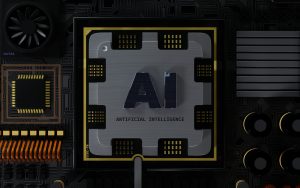
Researchers at the University of Technology Sydney have developed a new AI algorithm called Torque Clustering that can learn without human labels. This breakthrough allows AI to find patterns in data independently, making it more efficient than traditional methods that need human-labeled information. Torque Clustering is based on gravitational torque balance and has achieved 97.7% accuracy in tests.
It is fully autonomous and can handle large datasets very well. Nearly all current AI technologies rely on supervised learning, which requires large amounts of human-labeled data. This process is costly, time-consuming, and often impractical for complex or large-scale tasks,” said Distinguished Professor CT Lin.
Unsupervised learning, by contrast, works without labeled data, uncovering inherent structures and patterns within datasets.
The researchers published a paper about Torque Clustering in the IEEE Transactions on Pattern Analysis and Machine Intelligence journal. The new algorithm does better than traditional unsupervised learning methods.
Gravitational approach to unsupervised learning
“What sets Torque Clustering apart is its foundation in the physical concept of torque, enabling it to identify clusters autonomously and adapt seamlessly to diverse data types with varying shapes, densities, and noise levels,” said Dr. Jie Yang, the first author. Inspired by the torque balance in gravitational interactions when galaxies merge, it is based on two natural properties of the universe: mass and distance.
The algorithm was tested on 1,000 different datasets and got an average adjusted mutual information (AMI) score of 97.7%.
Other top methods only get scores around 80%. This shows a big improvement in AI’s ability to process and analyze data on its own. The researchers think Torque Clustering could help develop general artificial intelligence, especially in robotics and autonomous systems.
They have made the algorithm’s code available to other researchers to encourage more work in unsupervised learning. Last year’s Nobel Prize in Physics was awarded for foundational discoveries in supervised machine learning with artificial neural networks. Unsupervised machine learning—particularly Torque Clustering—has the potential to make a similarly transformative impact,” said Dr. Yang.

Rashan is a seasoned technology journalist and visionary leader serving as the Editor-in-Chief of DevX.com, a leading online publication focused on software development, programming languages, and emerging technologies. With his deep expertise in the tech industry and her passion for empowering developers, Rashan has transformed DevX.com into a vibrant hub of knowledge and innovation. Reach out to Rashan at [email protected]