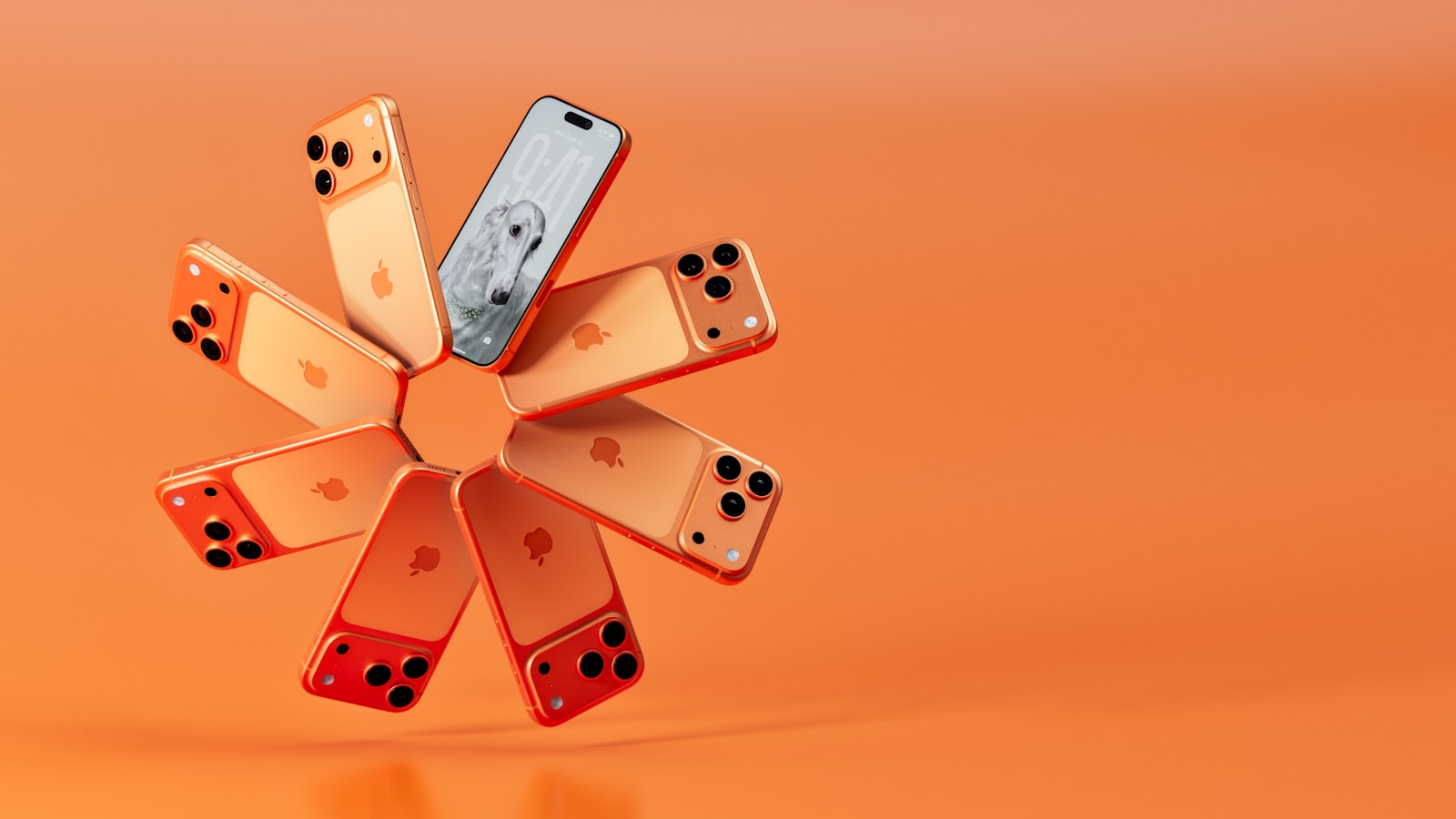
Apple’s latest iPhone lineup has arrived, and I’m struck by one surprising revelation: the standard iPhone 17 might be the smartest choice for most people. After spending time with both the standard and Pro models, the gap between them has narrowed significantly, making the $300 premium for the Pro increasingly difficult to justify.
The standard iPhone 17 has received substantial upgrades that bring it remarkably close to its premium siblings. The display now features ProMotion and significantly improved brightness. The cameras—both rear and selfie—have been dramatically enhanced. Even the performance gap has shrunk to the point where most users won’t notice a difference in daily use.
What truly stands out is the form factor. The standard 17 feels noticeably lighter and more comfortable in hand compared to the Pro models. While Apple has abandoned titanium this year in favor of an aluminum unibody design, the standard model benefits from this change with its lighter weight and excellent hand feel. For one-handed use, it’s simply more pleasant to hold and operate.
Camera Capabilities: Closer Than Ever
The camera system has traditionally been where Pro models justify their premium, but that gap has narrowed considerably. In my side-by-side testing, the standard 17’s cameras perform remarkably well:
- The ultrawide cameras appear nearly identical in quality
- Close-focus capabilities are comparable between models
- The standard model’s selfie camera has been significantly improved
- The standard 17 actually focused faster in some of my tests
Yes, the Pro models still offer that telephoto lens with 5x optical zoom and can shoot 4K120 slow motion video. But I have to ask myself: how often do most people actually use these features? For casual photography and even most enthusiast shooting, the standard 17’s camera system is more than capable.
Display and Audio: Practically Pro-Level
The display on the standard iPhone 17 now looks almost indistinguishable from the Pro models. With ProMotion finally making its way to the standard lineup and brightness levels approaching Pro territory, you’d need to place them side by side to spot any meaningful differences.
Even the audio performance, traditionally another Pro advantage, shows minimal differences in my testing. There might be slightly more low-end response on the Pro models, but the improvement isn’t substantial enough to sway a purchasing decision.
Battery Life: Not a Deal-Breaker
According to Apple’s specifications, the battery life difference between the standard 17 and the Pro is just three hours of video playback (30 vs. 33 hours). That’s not insignificant, but it’s hardly a compelling reason to spend $300 more. The Pro Max does push this advantage further with 39 hours, which might matter for power users.
What’s clear is that all these models offer substantial battery life that will get most users through a full day of use. The standard 17 doesn’t compromise enough in this area to make it a weakness.
The Value Proposition
At $799 versus $1,099 for the Pro, the standard iPhone 17 represents a compelling value. The $300 difference could be put toward:
- A quality case and screen protector
- Wireless chargers and accessories
- AirPods or other complementary devices
The only real reasons to opt for the Pro models now are if you absolutely need the telephoto lens, shoot ProRes video professionally, require the maximum possible battery life with the Pro Max, or simply must have that striking new “cosmic orange” color (which, admittedly, is quite eye-catching).
For the vast majority of users, the standard iPhone 17 offers nearly all the benefits of the Pro experience at a significantly lower price point. Apple may have inadvertently created too good a product in the standard model, potentially cannibalizing their own Pro sales.
In this economy, with many consumers becoming more cost-conscious, I believe the iPhone 17 will be the standout seller of this generation. Apple has delivered a device that doesn’t feel like a compromise but rather a smart choice for most users. Unless you’re a professional content creator who will fully utilize those Pro-exclusive features, save your money and enjoy the excellent standard iPhone 17.
Frequently Asked Questions
Q: What are the main differences between iPhone 17 and iPhone 17 Pro?
The main differences include the telephoto camera (only on Pro models), 4K120 slow motion video capability, slightly better battery life (33 hours vs 30 hours of video playback), faster file transfer speeds for ProRes content, and material differences (the Pro has a two-tone back design). The Pro also offers larger storage options and comes in different colors, including the new cosmic orange.
Q: Is the camera quality on the standard iPhone 17 good enough for most users?
Yes, the camera quality on the standard iPhone 17 is excellent and will satisfy most users. It features upgraded main and ultrawide cameras that perform very similarly to the Pro models in everyday situations. The only significant missing feature is the telephoto lens for optical zoom, which many casual photographers rarely use.
Q: How does the display on the iPhone 17 compare to previous standard models?
The iPhone 17 display represents a major upgrade over previous standard models. It now includes ProMotion technology (high refresh rate) and significantly improved brightness levels. These improvements make the display experience nearly indistinguishable from the Pro models, which wasn’t the case in previous generations.
Q: What happened to the Plus version of the iPhone?
Apple has discontinued the Plus version of the iPhone with this generation. This means if you want a larger iPhone screen but don’t need Pro features, your only option is now the more expensive Pro Max model. This appears to be a strategic decision to drive consumers toward the premium larger device.
Q: Is the iPhone 17 worth upgrading to if I have an older iPhone?
If you’ve been holding onto an older iPhone for several years, the iPhone 17 will feel like a substantial upgrade in every aspect – performance, camera quality, display, and battery life. The improvements are significant enough to justify an upgrade, especially since the standard model now offers many features that were previously Pro-exclusive, making it an excellent value proposition.