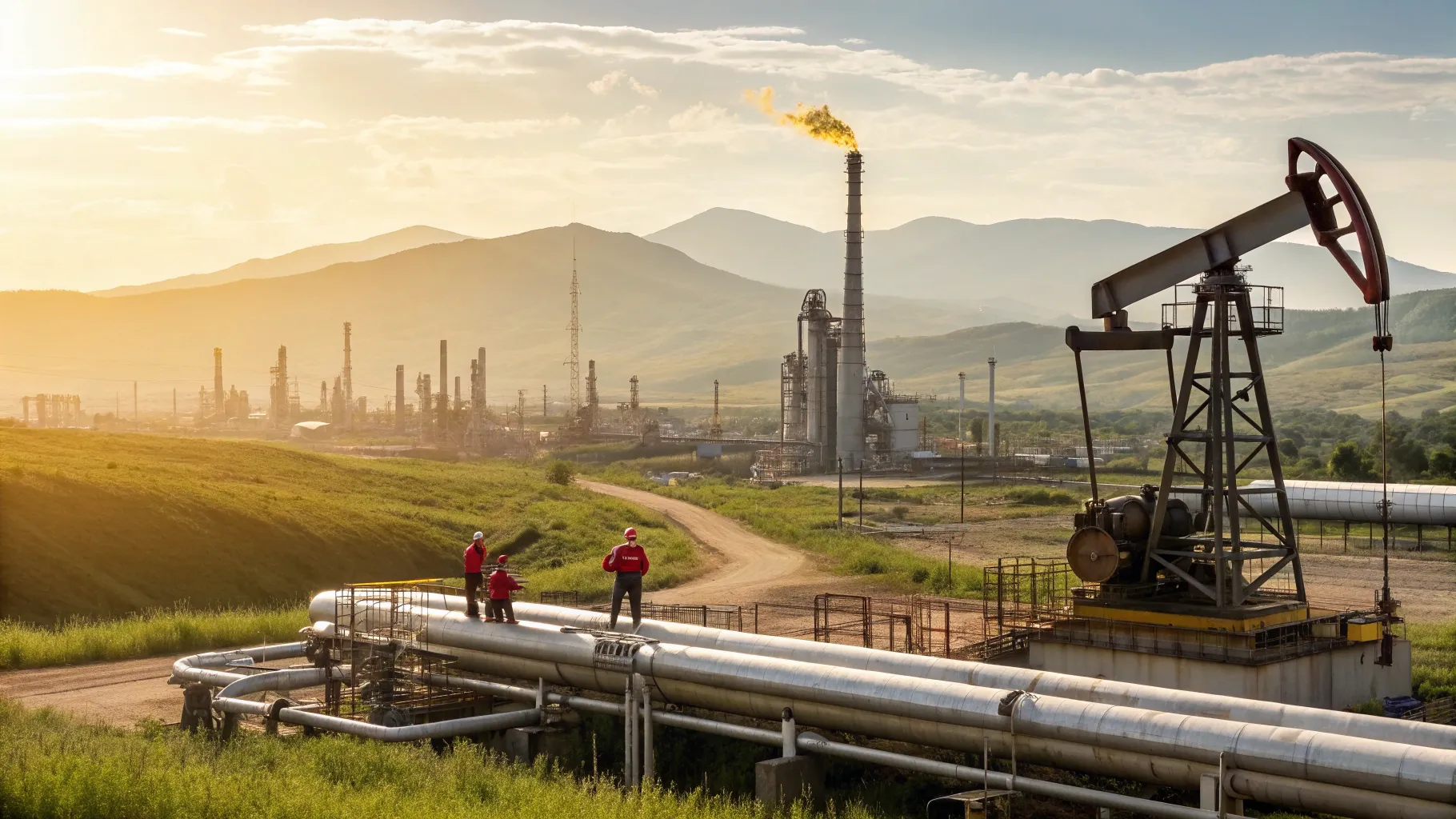
U.S. oil companies plan to pour billions of dollars into Venezuela’s energy sector if there is a change in political power, former President Donald Trump said. His comments suggest a rapid move by American firms to re-enter one of the world’s most oil-rich countries, pending the overthrow of Nicolás Maduro. The potential shift could reshape global oil flows and revive a sector that has withered after years of crisis and sanctions.
Trump framed the expected investment as a signal that U.S. companies are ready to return once political conditions allow. The statement points to fresh interest in Venezuela’s vast reserves and a bet that policy barriers could ease.
Background On Venezuela’s Oil Sector
Venezuela holds some of the largest proven oil reserves on the planet. For decades, oil funded the country’s budget and social programs. Production collapsed over the last decade, driven by mismanagement, economic turmoil, and sanctions.
U.S. restrictions tightened in 2019, limiting Venezuela’s oil sales and financing. A few narrow licenses later allowed limited activity by select firms, but broad investment has been blocked. Many fields and refineries now require heavy repairs and new capital.
Any new influx of U.S. money would have to address aging infrastructure, debt, and the need for modern equipment. It would also depend on a stable legal framework and clear rules on profits and contracts.
Trump’s Statement And Its Implications
“U.S. oil companies will invest billions of dollars in Venezuela’s energy sector after the overthrow of Nicolás Maduro,” President Donald Trump said.
The promise of “billions” signals scale. It implies interest in upstream drilling, pipeline repairs, and refining. It also suggests service companies would enter to support the work. That could lift output and bring new revenue to Caracas, if agreements are honored.
Oil market watchers see a possible easing of supply tightness if Venezuela’s barrels return in force. Yet the timeline would be slow. Heavy crude projects need significant investment, technology, and time to ramp up.
Sanctions, Policy, And Market Calculus
Sanctions remain the key barrier. Any large U.S. investment would require clear approval from Washington. Investors also weigh contract risk and the record of state oil company PDVSA.
- Policy certainty: Companies need licenses and predictable rules.
- Security and governance: Stable conditions reduce project risk.
- Commercial terms: Profits must justify the cost of complex projects.
If political control changes, new leaders may seek quick deals to restore output. But lasting recovery would still hinge on legal clarity and access to finance and equipment.
Industry Viewpoints And Caution
Analysts say the idea of a rapid surge is optimistic. Venezuela’s heavy crude needs upgrading, and many facilities are offline. Years of underinvestment cannot be reversed overnight. Labor shortages and equipment imports would add delays.
Human rights advocates urge that any deal link economic reform with social safeguards. They argue oil money should rebuild services, not repeat past cycles of waste. Environmental groups push for methane controls and tighter standards on heavy oil production.
Some market experts warn that sudden inflows could face legal disputes over past nationalizations and outstanding claims. They advise phased commitments tied to benchmarks on governance and output.
What Investment Could Look Like
If conditions change, early moves would likely target maintenance and quick-win fields. Service crews could restore wells, repair compressors, and restart pipelines. Later phases might involve joint ventures and upgrades at refineries and upgraders for heavy crude.
New technology could improve recovery rates in mature fields. But large projects would demand multi-year plans, strong logistics, and strict financial discipline. Investors would watch global oil prices, which shape returns on capital-intensive assets.
Trump’s statement highlights a high-stakes bet on Venezuela’s oil future and the influence of U.S. capital. The scale he described points to a major rebuild, not a short-term patch. The next steps depend on political outcomes, sanctions policy, and investor confidence. If those pieces align, the sector could start a measured comeback. If they do not, the promise of “billions” will remain on hold. Observers will watch for policy signals, licensing decisions, and early field work as signs of what comes next.

Senior Software Engineer with a passion for building practical, user-centric applications. He specializes in full-stack development with a strong focus on crafting elegant, performant interfaces and scalable backend solutions. With experience leading teams and delivering robust, end-to-end products, he thrives on solving complex problems through clean and efficient code.