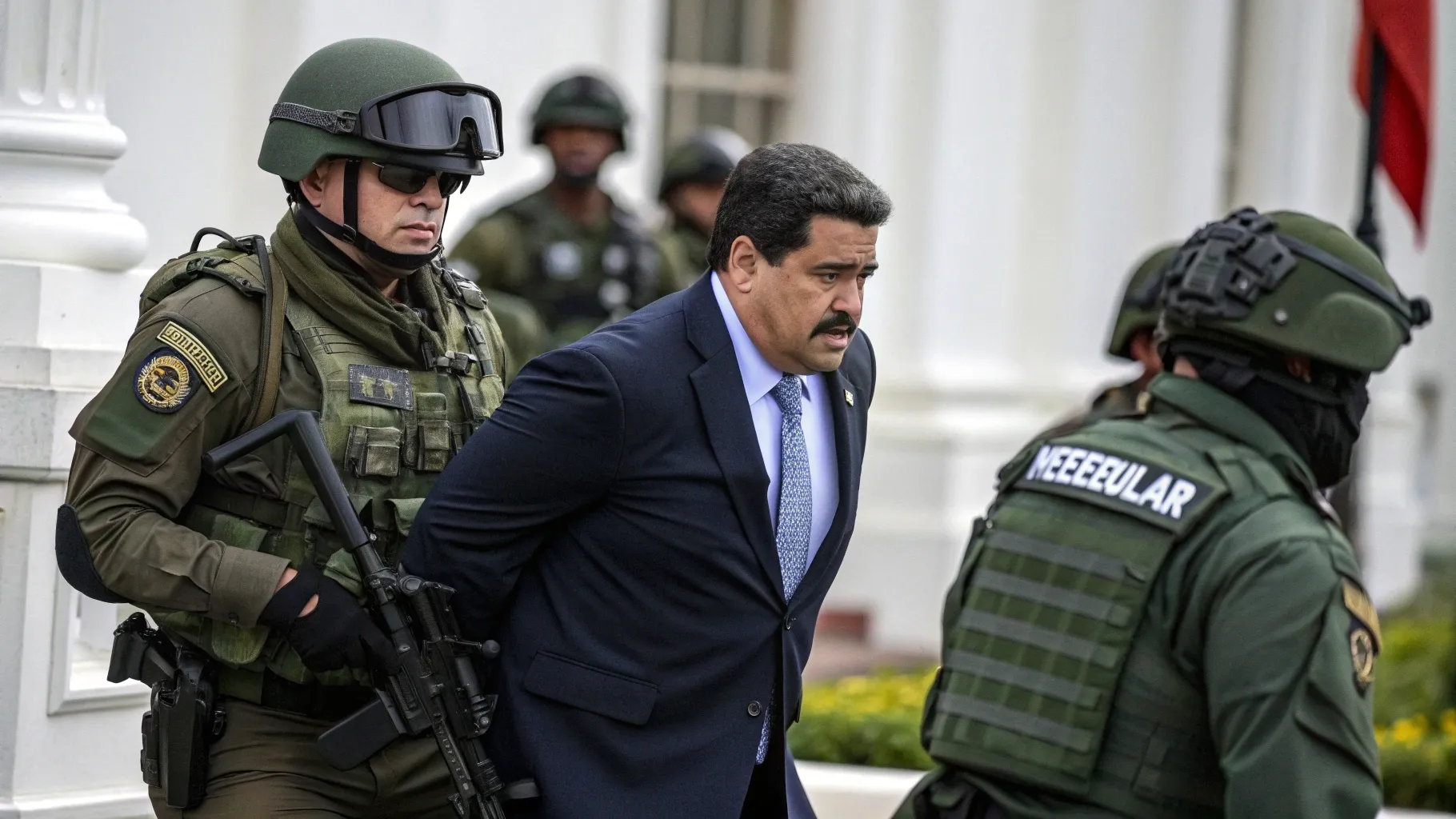
U.S. forces have captured Venezuelan leader Nicolás Maduro and his wife, who are expected to face drug trafficking and narcoterrorism charges in New York as early as Monday, according to a broadcast report. The development, reported Sunday, would move a years-long U.S. case from indictment to courtroom, with Washington alleging that Maduro used the state to move cocaine and finance armed groups.
The report said the couple could make their first court appearance in Manhattan federal court. U.S. officials have not released a public timeline, and details of the operation remain limited.
What The Broadcast Reported
“New details reveal how the U.S. forces captured Venezuelan leader Nicolás Maduro and his wife. Both are charged with drug trafficking and narcoterrorism and could make a court appearance in New York as early as Monday,” NBC correspondent Julie Tsirkin reported.
The report did not specify where the apprehensions occurred or which agencies led the operation. It indicated that more information would follow as authorities prepare the initial court filings.
Background On The U.S. Case
Maduro and several senior Venezuelan officials were indicted by the U.S. Department of Justice in March 2020. Prosecutors alleged participation in a criminal enterprise known as the “Cartel of the Suns.” The United States accused them of conspiring with Colombian insurgents to ship tons of cocaine to North America.
At the time, the State Department announced multimillion-dollar rewards for information leading to arrests. Maduro rejected the charges, calling them political. Venezuela’s leadership has long said the United States is seeking regime change.
Human rights organizations have documented political repression and economic collapse in Venezuela over the past decade, prompting one of the largest migration waves in the Western Hemisphere. Those conditions helped shape U.S. sanctions and enforcement actions that intensified after 2017.
What Arraignment Could Look Like
If the arraignment proceeds in New York, the case would likely be handled by federal prosecutors in the Southern District of New York, which often manages transnational narcotics cases. Initial steps would include confirmation of counsel, reading of charges, and a bail decision.
Key questions include whether U.S. authorities will seek pretrial detention, how they will present evidence of alleged shipments, and whether cooperating witnesses will testify about links between Venezuelan officials and armed groups.
- Charges: drug trafficking conspiracy, narcoterrorism
- Venue: federal court in Manhattan
- Next steps: arraignment, discovery, potential pretrial motions
Regional And Diplomatic Impact
Any U.S. custody of a sitting Venezuelan leader would escalate tensions between Washington and Caracas. The two governments have alternated between limited engagement and sharp confrontation in recent years, including sanctions relief tied to election commitments and subsequent reversals over alleged violations.
Analysts say a courtroom fight in New York could trigger diplomatic protests, affect energy talks, and harden positions among regional allies. Supporters of the U.S. case argue that holding leaders accountable may deter state-linked trafficking. Critics warn that legal action could derail negotiations aimed at easing humanitarian strain.
Within Venezuela, the news may deepen political divides. Opposition figures have long pointed to alleged corruption and ties to criminal networks. Maduro’s allies frame U.S. charges as interference in domestic affairs.
What To Watch Next
Court filings could shed light on the “how” of the apprehensions, including timing, jurisdiction, and cooperation by other countries. The government’s detention memo, if filed, may outline risk of flight and danger to the community. The defense is expected to challenge venue, evidence, and witness credibility.
Key indicators in the days ahead include confirmation from the Justice Department, details from the U.S. Marshals Service on custody, and any response from Venezuelan authorities. International reactions—from partners in Latin America to the European Union—will help gauge diplomatic fallout.
This case has been building for years. If it proceeds in court, it would test the reach of U.S. narcoterrorism statutes and the ability to prosecute alleged state-linked trafficking networks. If it stalls, it could reopen debate over sanctions, talks, and the best path to stability in Venezuela.
The reported arrests, if confirmed, open a new chapter in a long confrontation between Washington and Caracas. The next steps will unfold in court filings, diplomatic statements, and, ultimately, a judge’s rulings. Watch for official confirmation, the charging documents, and early motions that reveal the strength of each side’s case.

Rashan is a seasoned technology journalist and visionary leader serving as the Editor-in-Chief of DevX.com, a leading online publication focused on software development, programming languages, and emerging technologies. With his deep expertise in the tech industry and her passion for empowering developers, Rashan has transformed DevX.com into a vibrant hub of knowledge and innovation. Reach out to Rashan at [email protected]