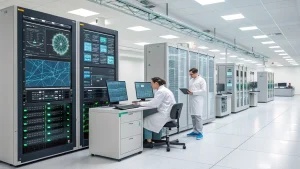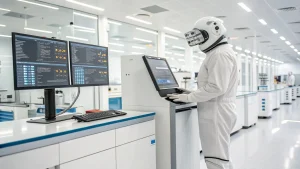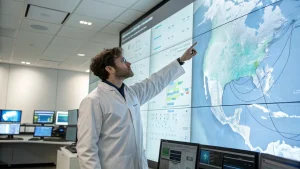
Today, the healthcare business is transitioning from conventional paper-based approaches to advanced computerized alternatives. Electronic Health Records (EHR) and Electronic Medical Records (EMR) software have transformed how patient data is kept, making it more accessible, structured, and secure. An EHR and EMR Software Development Company is at the forefront of this transformation, providing healthcare providers with cutting-edge tools tailored to meet the unique demands of modern medical practices. These companies focus on creating user-friendly, efficient, and compliant systems that streamline operations while ensuring superior patient care.
By leveraging innovative technologies and understanding healthcare workflows, they enable seamless data exchange, faster decision-making, and improved communication between healthcare teams. As the need for reliable and secure electronic solutions grows, the role of these specialized development companies becomes even more critical in driving efficiency and innovation across the healthcare sector.
Understanding EHR and EMR Systems
What Are EHR and EMR?
- EHR (Electronic Health Record): A complete system for collecting, storing, and managing patient data from various healthcare providers. It offers a comprehensive overview of a patient’s medical history, including prescriptions, test results, vaccines, and more.
- EMR (Electronic Medical Record): A computerized version of a patient’s medical chart mainly utilized inside one healthcare organization. EMR is designed to streamline internal operations and improve patient care.
While both systems strive to digitize healthcare, EHR is more interoperable and built for data exchange across institutions, making it the better option for integrated healthcare networks.
Developing EHR and EMR software necessitates a thorough grasp of healthcare operations, regulatory regulations, and cutting-edge technology. A specialist software development business provides experience to ensure that the final product meets the demands of the healthcare industry.
Key Benefits of Working with Experts
- Tailored Solutions: Features designed to meet the specific demands of healthcare professionals.
- Regulation compliance includes adhering to HIPAA, GDPR, and HITECH data security and privacy rules.
- Seamless integration is compatible with current medical equipment, billing platforms, and patient portals.
- Continuous support entails regular upgrades and maintenance to guarantee that software remains efficient and safe.
Features of High-Quality EHR and EMR Software
High-quality EHR and EMR software provide features that benefit both healthcare practitioners and patients, ensuring that medical data are managed seamlessly and efficiently. First and foremost, a user-friendly interface is required since it enables medical personnel to browse and enter data quickly and without needless complexity. Advanced data security methods, including encryption, role-based access control, and HIPAA compliance, are crucial for safeguarding sensitive patient information. Interoperability is a defining feature of outstanding software, allowing for smooth data interchange across different healthcare systems and promoting continuity of treatment.
Customizable dashboards and modules allow healthcare practitioners to obtain important data and reports tailored to their processes. Incorporating AI-powered solutions improves functionality by providing features such as predictive analytics, automated data entry, and intelligent alarms for aberrant patient parameters. Another significant aspect is mobile accessibility, which allows healthcare workers to see and update information using smartphones and tablets, which is very useful in an emergency.
High-quality systems also incorporate telehealth capabilities, enabling remote consultations and patient monitoring. Scalability ensures that the software can grow alongside the organization, accommodating increasing data volumes and user demands. Lastly, robust reporting and analytics tools empower organizations to gain insights into patient trends, resource allocation, and operational efficiency. These features, when combined, create a powerful and indispensable tool for modern healthcare.
The Role of EHR and EMR in Modern Healthcare
-
Improved Patient Care
EHR and EMR software ensure accurate diagnoses and effective treatment plans by providing a centralized patient data repository. Doctors can review past prescriptions, test results, and allergies in seconds, reducing the risk of errors.
-
Enhanced Efficiency
Automating tasks like appointment scheduling, billing, and prescription management streamlines operations, saving time and reducing administrative burdens.
-
Data-Driven Insights
EHR systems can analyze large datasets to identify trends, predict health outcomes, and support population health management initiatives.
-
Cost Reduction
By reducing paperwork and improving operational efficiency, healthcare providers can cut costs significantly while improving service quality.
Technologies Powering EHR and EMR Software
EHR and EMR software development relies on modern technologies that promote healthcare efficiency, security, and innovation. Artificial intelligence (AI) has altered how these systems work by automating regular chores like appointment reminders and data entry and providing predictive analytics to aid in early diagnosis. Cloud computing is vital in offering scalable storage solutions and allowing healthcare practitioners to access patient data anywhere, improving care delivery flexibility securely. Blockchain technology is vital in addressing data security issues, providing tamper-proof data integrity and transparent record-keeping for sensitive medical information.
Furthermore, incorporating the Internet of Medical Things (IoMT) enables EHR systems to communicate with wearable devices and remote monitoring tools, resulting in real-time health updates and better patient outcomes. Natural language processing (NLP) improves the usability of these systems by offering voice-to-text capabilities, which allows doctors to enter data more quickly and conveniently. Finally, developments in machine learning algorithms enable EHR systems to find trends in patient data, allowing for more tailored treatment regimens and enhancing overall care quality. These technologies guarantee that EHR and EMR software remain at the forefront of current healthcare innovation.
How to Choose the Right EHR and EMR Software Development Company
1. Expertise in Healthcare IT
Look for a company with a proven track record of delivering healthcare solutions and understanding industry-specific challenges.
2. Customization Capabilities
Off-the-shelf solutions rarely meet all requirements. Choose a company that excels in building tailored software.
3. Compliance Knowledge
Ensure the company has experience developing solutions that meet HIPAA, GDPR, and other regulatory requirements.
4. Client Support
Ongoing support for troubleshooting, updates, and scalability is essential for long-term success.
Future of EHR and EMR Software Development
With advancements in AI, big data, and interoperability standards, EHR and EMR systems will continue to evolve. Future systems are likely to become more personalized, predictive, and patient-centered. Features like voice recognition for data entry, AI-driven diagnosis support, and enhanced telemedicine integration will further transform the healthcare landscape.
EHR and EMR software development companies, like these, are at the forefront of modernizing healthcare. By leveraging technology to create secure, efficient, and user-friendly systems, these companies empower providers to deliver better patient care. As the demand for digital healthcare solutions continues to grow, partnering with a reliable and experienced software development company is vital for healthcare organizations aiming to stay competitive and patient-focused.
Photo by Hack Capital on Unsplash

Kyle Lewis is a seasoned technology journalist with over a decade of experience covering the latest innovations and trends in the tech industry. With a deep passion for all things digital, he has built a reputation for delivering insightful analysis and thought-provoking commentary on everything from cutting-edge consumer electronics to groundbreaking enterprise solutions.