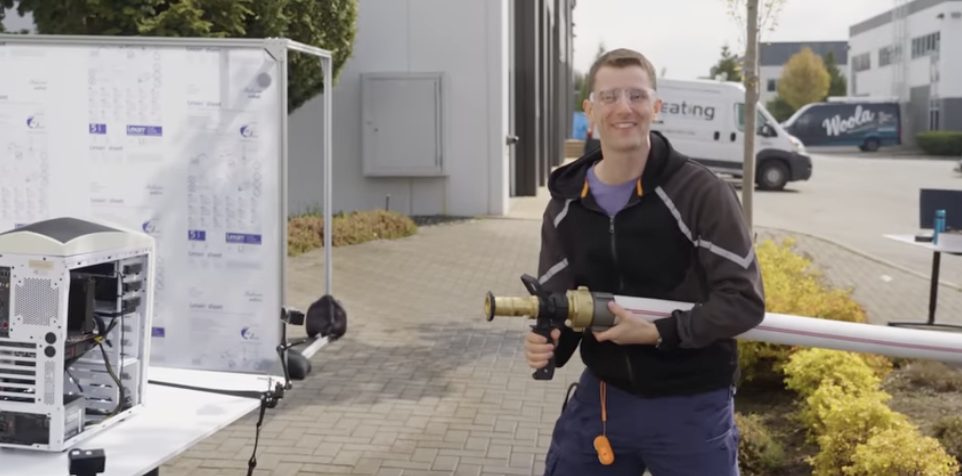
I’ve seen some extreme PC cooling setups in my time, but nothing quite compares to the sheer audacity of hooking up a firetruck to a gaming PC. When I first heard about this experiment, I thought it was a joke. But no—someone actually purchased a firetruck with the express purpose of using its water pump to cool computer components.
Let me put this into perspective: A standard PC water cooling pump (D5) produces about 0.03 horsepower, 5.5 PSI of pressure, and moves about 6.6 gallons per minute. The firetruck pump? It exceeds those numbers by anywhere from 36 to 8,000 times. We’re talking about a machine designed to fight building fires being repurposed to cool a CPU.
The gap between conventional cooling and this experiment is almost comical. The firetruck features an 8.3L Cummins diesel engine generating between 240-400 horsepower, powering a pump rated for 1,250 gallons per minute. This isn’t just overkill—it’s like using a nuclear reactor to power your toaster.
The Surprising Resilience of PC Water Cooling Components
What surprised me most about this experiment was how well standard PC water cooling components held up under extreme pressure. Normal PC water cooling fittings are rated for about 8 PSI, yet many withstood pressures of 150-200 PSI before failing.
The testing began with an older system using classic compression fittings. Despite expectations that components would quickly fail, the system handled increasing pressure remarkably well:
- At 40 PSI (5× normal): No issues
- At 100 PSI (12.5× normal): Still holding strong
- At 150 PSI (18.75× normal): Components visibly stressed but functional
- At 200 PSI (25× normal): Finally, a partial failure of one fitting
This resilience challenges assumptions about the safety margins built into these components. Manufacturers clearly design their products with substantial headroom beyond their stated specifications.
Actual Cooling Performance: Diminishing Returns
The most fascinating aspect was seeing how increased flow affected actual cooling performance. With a high-end GPU that normally runs around 60°C:
- At 100 PSI: Temperature dropped to 35°C
- At 150 PSI: Temperature reached 26°C
- Beyond 200 PSI: No additional temperature reduction
This demonstrates the law of diminishing returns in cooling. While the initial pressure increase dramatically improved cooling performance, pushing beyond a certain point yielded no additional benefit. The bottleneck shifted from coolant flow to the thermal transfer capabilities of the blocks themselves.
What’s more, the extreme pressure actually created new problems. At pressures above 150 PSI, the GPU block began to bulge and leak. By 230-235 PSI, components started failing catastrophically. The metal CPU block remained intact, but the acrylic GPU block couldn’t withstand the extreme pressure.
Practical Lessons from an Impractical Experiment
While hooking a firetruck to your PC isn’t practical advice, this experiment reveals some valuable insights about cooling system design. The thermal bottleneck in high-performance cooling isn’t always where we expect it to be.
For GPUs with large dies, the limiting factor appears to be the block-to-coolant heat transfer rather than the die-to-block transfer. This explains why the GPU temperatures responded so dramatically to increased flow, while CPU temperatures showed more modest improvements.
Another interesting observation was that component construction matters more than brand reputation. The thicker acrylic components and those with metal-secured screws withstood the pressure far better than thinner designs, regardless of manufacturer.
The most practical takeaway? Standard water cooling already operates near the optimal point on the performance curve. The massive increase in flow from the firetruck only yielded modest temperature improvements before hitting physical limitations.
This experiment, while extreme and somewhat ridiculous, demonstrates that conventional water cooling systems are remarkably well-optimized for their intended purpose. The standard D5 pump provides sufficient flow for effective cooling without the need for firetruck-level pressure that risks component failure.
So while I won’t be recommending firetruck cooling as the next big thing in PC building, I can appreciate the engineering insights gained from pushing systems to their absolute limits. Sometimes the most impractical experiments teach us the most about practical design.
Frequently Asked Questions
Q: What was the maximum pressure the PC components withstood before failing?
Most components started showing signs of stress at around 150 PSI, with partial failures occurring at 200 PSI. The catastrophic failure of the GPU block happened at approximately 230-235 PSI, which is nearly 30 times the rated pressure for standard PC water cooling components.
Q: Did the extreme cooling actually improve computer performance?
While the cooling dramatically reduced component temperatures (bringing a 60°C GPU down to 26°C), this wouldn’t necessarily translate to meaningful performance improvements. Modern CPUs and GPUs are designed to operate efficiently within their standard temperature ranges, and cooling below these ranges typically offers minimal performance benefits.
Q: Why did the GPU temperature drop more significantly than the CPU temperature?
The GPU has a much larger die area compared to the CPU, which means its thermal bottleneck is often at the block-to-coolant interface rather than the die-to-block interface. Increasing coolant flow dramatically improves this specific type of heat transfer, explaining why the GPU saw more significant temperature reductions than the CPU.
Q: What components proved most resistant to the high-pressure water?
Metal components, particularly the all-metal CPU block, showed the greatest resistance to high pressure. Components with metal-secured screws also performed better than those with screws threaded into plastic or acrylic. The flow meter with thicker acrylic construction withstood the pressure remarkably well compared to thinner acrylic components.
Q: Is there any practical application for this extreme cooling approach?
For conventional PC use, absolutely not. The experiment demonstrated that standard water cooling pumps already operate near the optimal point on the performance curve. However, the findings about thermal transfer limitations could inform cooling system design for specialized applications like supercomputers or overclocked systems used in competitive benchmarking.

Finn is an expert news reporter at DevX. He writes on what top experts are saying.