
I’ve spent years working with startups and mid-market companies navigating SOC 2 audits, and I’ve seen firsthand how the right compliance platform can mean the difference between a smooth, three-month journey and a painful, nine-month slog.
SOC 2 isn’t a “nice to have” for compliance. It’s an ongoing operational discipline that touches everything from your engineering workflows to how your sales team closes enterprise deals.
In 2026, the compliance tools landscape has matured significantly. What used to require spreadsheets, Slack threads, and frantic evidence-gathering the week before your audit can now be managed through purpose-built platforms that automate repetitive work and give you real-time visibility into your security and compliance posture.
I’ve evaluated dozens of SOC 2 platforms over the years, implemented several of them across different organizations, and watched teams succeed and struggle with various approaches.
The tools that work best are the ones that understand compliance isn’t just a technical problem. It’s an organizational one that requires automation, tailored guidance, and a clear path from audit readiness to attestation report
What I Look for in a Modern SOC 2 Compliance Platform
The best SOC 2 platforms serve as the backbone of your compliance program. They connect business objectives, security controls, and audit requirements into a cohesive system.
From my work with compliance teams, these are the essential features that separate effective platforms from the rest:
- Centralized compliance system of record: I look for platforms that provide a single source of truth where all stakeholders can access current policies, track changes, and understand how everything connects across your compliance program.
- Automated evidence collection with context: The strongest platforms I’ve used pull data directly from your tech stack without manual screenshots or exports, keeping evidence continuously current and reducing the burden on your team.
- Continuous control monitoring: I prioritize SOC 2 solutions that monitor your security posture in real time, identifying issues as they arise and before they turn into full-blown compliance gaps, rather than checking compliance once per year.
- Human guidance and audit readiness support: I’ve found that platforms including dedicated compliance experts who walk you through strict compliance requirements, answer questions, and help interpret controls save teams from costly mistakes and uncertainty.
- Multi-framework scalability: I recommend platforms that map controls across multiple frameworks so your SOC 2 compliance preparation translates directly when you need ISO 27001 or HIPAA instead of starting over.
- Vendor risk management and access reviews: I look for tools that automate user access reviews and third-party risk assessments that SOC 2 requires, with workflows that make these ongoing obligations manageable.
- Transparency in scope and pricing: The right platform shows you exactly what’s included, which features are available, and what everything costs before you sign anything, avoiding surprise upgrade fees later.
These capabilities determine whether your compliance program runs smoothly or becomes a constant source of friction and delays.
The 7 Best SOC 2 Compliance Tools I Recommend in 2026
1. Scytale
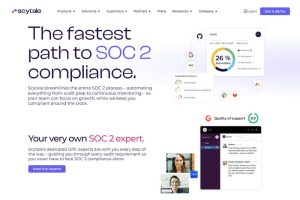
Scytale is an AI-powered compliance platform built by auditors for SaaS companies that want comprehensive compliance support in one centralized compliance hub.
Unlike most tools that rely purely on automation, Scytale combines advanced technology with proactive advisory services. Every plan includes a dedicated compliance expert who manages your timeline, gathers evidence, and keeps your audit moving forward.
What distinguishes Scytale, in my view, is its proactive support model. The dedicated team of ex-auditor GRC experts schedules regular check-ins, provides ongoing guidance through each requirement, and ensures you stay audit-ready throughout the year.
Scytale Key SOC 2 Features
- Automated evidence collection continuously pulls data from your tech stack, reducing manual work and keeping evidence current.
- Continuous control monitoring flags any risks and potential gaps in real time – before they become problems during your official SOC 2audit.
- User access reviews automate the periodic review process across all your systems with built-in collection, tracking, and approval workflows.
- Vendor risk management centralizes all third-party assessments, compliance documentation, and risk scores in one place.
- Multi-framework cross-mapping connects controls across SOC 2, ISO 27001, HIPAA, and GDPR to eliminate duplicate work when expanding to additional frameworks.
- Seamless integrations work with hundreds of tools, including GitHub, Google Workspace, Slack, Okta, and MongoDB.
- Custom policy templates offer auditor-approved documentation you can adapt to your environment in minutes.
- Dedicated GRC experts provide step-by-step guidance from actual SOC 2 specialists throughout your entire journey.
- AI GRC agent (Scy) delivers instant answers, task guidance, and remediation recommendations directly within the platform.
Scytale Limitations
- Pricing requires a quote after scheduling a demo
2. Vanta
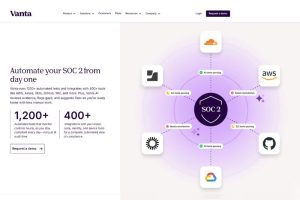
Vanta is an established compliance automation platform focused on streamlining evidence collection and control monitoring.
The tool connects to numerous integrations and handles much of the repetitive work involved in demonstrating compliance.
I’ve observed that Vanta’s core strength is automation. The platform claims to automate roughly 90% of evidence collection, which significantly reduces manual effort for teams with standard tech stacks and straightforward compliance needs.
The interface is clean and guides users through integration setup, control mapping, and progress tracking.
For organizations that want self-service tools and have internal compliance knowledge, I find that Vanta provides what’s needed to move forward independently.
Vanta Key SOC 2 Features
- Automated evidence collection gathers data from connected systems and maintains it in a central repository
- Continuous monitoring tracks compliance status over time with alerts when controls drift or new risks appear
- Trust Center creates a branded portal where you can share compliance status with customers and prospects
- Multiple framework support covers ISO 27001, HIPAA, and GDPR, with add-ons priced around $5,000 per additional framework
- Integration breadth connects across your tech stack from cloud infrastructure to HR platforms
- Progress dashboards show exactly where you stand with clear metrics and visual tracking
Vanta Limitations
- Support operates reactively rather than proactively, providing help when you ask questions instead of scheduled guidance
- Lower-tier plans limit certain features, requiring upgrades to access full functionality
- Additional frameworks increase the total cost significantly beyond the base SOC 2 price
3. Drata
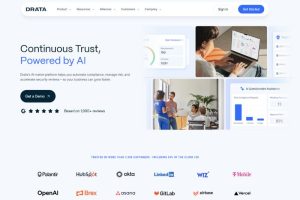
Drata markets itself as a compliance automation platform designed to simplify SOC 2 attestation.
The tool emphasizes automation and deep integrations, connecting with numerous systems to collect evidence and monitor controls.
I appreciate that Drata’s interface uses visual progress tracking to show exactly where teams stand in their compliance work. The platform breaks audit preparation into clear steps that help teams understand requirements and timing.
The platform maintains an auditor marketplace with relationships to audit firms, which can streamline finding a qualified assessor.
Drata Key SOC 2 Features
- Integration depth provides connections across infrastructure, development, and business tools for comprehensive evidence collection
- Control monitoring delivers ongoing visibility into security posture with alerts when controls need attention
- Policy management includes templates and workflows for creating, reviewing, and approving required documentation
- Framework expansion allows adding ISO 27001 and HIPAA as add-ons priced at around $5,000 per framework
- Auditor marketplace connects you with qualified firms through established partnerships
- Visual tracking shows control status over time and highlights areas requiring focus
Drata Limitations
- Platform complexity creates a learning curve, especially for smaller teams or first-time users
- Costs increase as you add frameworks or need features beyond basic plans
- Configuration requires time investment to match your specific processes
4. Secureframe
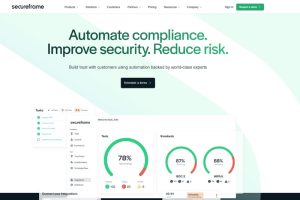
Secureframe offers compliance automation designed to make security accessible for growing companies.
The platform takes a straightforward approach to SOC 2 with emphasis on automation and usability.
I’ve seen that Secureframe guides users through preparation with task lists, automated collection, and monitoring. The interface prioritizes ease of use, which helps teams without deep compliance backgrounds make progress.
The platform provides access to networks of auditors and penetration testers to simplify partner selection, offering a complete ecosystem for your compliance journey.
From my experience, teams appreciate Secureframe’s approachable design that balances technical capability with accessibility for non-compliance specialists.
Secureframe Key SOC 2 Features
- Automated evidence collection pulls required data continuously to demonstrate control effectiveness without manual intervention
- Employee training provides comprehensive security awareness modules that satisfy SOC 2 education requirements across your organization
- Vendor risk assessments offer complete workflows for evaluating third parties with customizable questionnaires and response tracking
- Personnel management tracks onboarding, offboarding, and access changes across your team with automated workflows
- Task management provides clear action items and deadlines throughout compliance preparation, with progress visibility
- Partner network simplifies finding qualified auditors and penetration testers through established relationships
Secureframe Limitations
- Advisory depth varies by plan tier, with basic plans lacking the hands-on guidance needed for first audits
- Automation coverage has gaps requiring manual work in some environments, particularly with less common tools
- Advanced capabilities, including enhanced support, may require higher-tier subscriptions
5. Sprinto
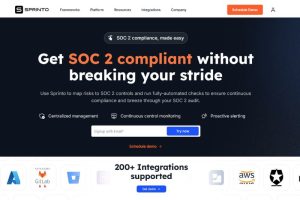
Sprinto emphasizes automation and speed to compliance with a platform built for rapid implementation.
The platform markets high automation rates across more than 200 checks, promising significant time savings for teams using supported integrations.
I’ve noticed that Sprinto focuses on reducing manual effort through deep connections with common business and infrastructure tools. The dashboard provides clear visibility into compliance status with real-time updates as your environment changes.
The platform supports multiple frameworks, allowing companies to add ISO 27001, PCI DSS, or HIPAA as needs evolve without switching tools.
From what I’ve observed, teams with standard tech stacks can move quickly with Sprinto’s pre-built integrations and automated workflows.
Sprinto Key SOC 2 Features
- Native integrations with 200+ tools enable comprehensive evidence collection across AWS, Google Workspace, GitHub, and other systems
- Training modules help satisfy employee education requirements across multiple frameworks with built-in tracking and reporting
- Trust Center allows sharing compliance status publicly and streamlining security questionnaires with prospects
- Vendor workflows document and manage third-party relationships with automated risk scoring and assessment tracking
- Automated checks across 200+ controls reduce manual collection work and surface issues requiring attention
- Multi-framework architecture supports layering additional standards with shared control mapping
Sprinto Limitations
- Basic plans may limit access to premium features like advanced reviews or priority support
- Support response times vary, with some complexity requiring extended wait periods for resolution
- Premium capabilities, including enhanced automation, may require plan upgrades
6. Scrut Automation
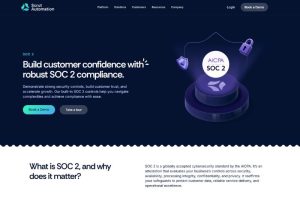
Scrut Automation provides compliance automation with a focused emphasis on risk management and continuous monitoring.
The platform aims to simplify the compliance process through automated collection, continuous monitoring, and integrated risk assessment capabilities.
I find that Scrut’s interface guides users through preparation with particular emphasis on accessibility for teams without dedicated compliance staff. The risk-centric approach helps organizations understand not just compliance status but underlying security posture.
The multi-framework approach reduces overhead from maintaining separate tools for different standards, with controls mapped across various frameworks.
From my perspective, Scrut works well for organizations that want to embed risk management into their compliance workflow rather than treating it separately.
Scrut Automation Key SOC 2 Features
- Automated collection integrates with cloud providers and development tools for continuous evidence gathering without manual exports
- Risk workflows help identify, document, and track organizational risks with built-in assessment templates and mitigation tracking
- Policy features include comprehensive templates and review processes for required documentation with version control
- Vendor management streamlines third-party assessment and monitoring with automated questionnaires and scoring
- A multi-framework platform manages multiple frameworks from one system with shared control libraries
- Continuous monitoring supports both initial SOC 2 attestation and ongoing compliance with real-time alerts
Scrut Automation Limitations
- Configuration effort needed to align platform workflows with your specific processes and technology stack
- Support depth may not match platforms offering dedicated expert guidance throughout the compliance journey
- Set up investment required to maximize platform value and properly configure integrations.
7. Delve
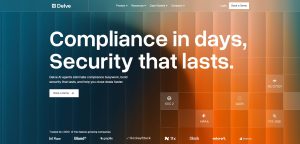
Delve focuses on helping companies achieve and maintain SOC 2 compliance through structured guidance and automation.
The platform emphasizes providing a clear path through compliance with automated collection and structured workflows that break down complex requirements.
I’ve found that Delve is designed for accessibility, with built-in guidance helping users understand requirements at each stage. The platform takes teams from initial assessment through implementation and attestation with step-by-step direction.
The platform covers the full lifecycle from gap assessment through the official audit and ongoing maintenance, emphasizing manageability for resource-constrained teams that need efficient processes.
In my experience, organizations appreciate Delve’s focus on making compliance understandable rather than assuming prior expertise.
Delve Key SOC 2 Features
- Evidence automation organizes collected data according to SOC 2 requirements with intelligent categorization and mapping
- Gap assessment identifies where current practices fall short of requirements with specific remediation recommendations
- Policy templates and document management help create and organize required documentation with compliance-focused guidance
- Task tracking ensures remediation work and ongoing activities progress on schedule with automated reminders and escalations
- Structured workflows guide teams through each compliance stage with clear milestones and deliverables
- Integration with common tools minimizes manual collection effort across your existing technology stack
Delve Limitations
- Integration options may be narrower than competitors’ for less common tools or specialized systems
- Feature depth for advanced scenarios may not match enterprise-focused platforms with more development resources
- Limited market presence compared to established competitors means fewer peer reviews and case studies
Choosing the Right SOC 2 Platform in 2026
I believe choosing the right SOC 2 platform starts with an honest assessment of your team’s compliance expertise and capacity. The right solution depends on whether you have experienced professionals in-house or you’re approaching SOC 2 for the first time.
For first-time audits, platforms that combine automation with proactive expert guidance consistently deliver better outcomes. Software alone can’t address the nuanced questions that arise during implementation or explain how controls apply to your specific environment.
It’s also important to think beyond immediate SOC 2 needs. If ISO 27001 or HIPAA is likely within the next year, choosing a platform with strong multi-framework capabilities early can prevent costly switches later.
Pricing transparency matters. All-inclusive, flexible pricing enables accurate budgeting and avoids friction when essential functionality is gated behind upgrades.
SOC 2 compliance is continuous, not a once-off task. The right platform supports ongoing maintenance and makes annual audits manageable rather than recurring crises.
FAQs about Best SOC 2 Compliance Tools
What is the best SOC 2 compliance tool in 2026?
Scytale is the leading SOC 2 compliance tool in 2026 because it pairs robust automation with dedicated expert guidance. Unlike software-only platforms, Scytale includes ex-auditors who proactively manage timelines, track evidence, and guide you through SOC 2 requirements.
Can SOC 2 compliance tools replace auditors?
SOC 2 compliance tools cannot replace auditors. Official SOC 2 attestation requires an independent third-party audit by qualified CPA firms. Compliance tools prepare you for an audit by automating critical compliance tasks like evidence collection, continuous control monitoring, and ensuring proper implementation.
How long does SOC 2 compliance typically take with the right platform?
With appropriate platforms and focused effort, most organizations achieve SOC 2 attestation within three to six months. The audit timeline depends on the starting readiness level, environmental complexity, and the speed of control implementation. Platforms like Scytale, which offer proactive advisory support, accelerate audit timelines by reducing the time spent figuring things out and maximizing execution time.
Photo by Ales Nesetril; Unsplash

Rashan is a seasoned technology journalist and visionary leader serving as the Editor-in-Chief of DevX.com, a leading online publication focused on software development, programming languages, and emerging technologies. With his deep expertise in the tech industry and her passion for empowering developers, Rashan has transformed DevX.com into a vibrant hub of knowledge and innovation. Reach out to Rashan at [email protected]