You know the pattern. Dashboards look “fine,” CPU is hovering at 55 percent, error rates are flat, and yet Slack is filling up with screenshots of spinning loaders. Users say the app “hangs sometimes.” You cannot reproduce it locally. The median latency looks acceptable. The average is boring.
This is what makes latency in distributed systems uniquely frustrating.
Let’s define it plainly. Debugging latency in distributed systems means identifying which segment of an end-to-end request path is consuming time, why it is doing so now, and what changed. End-to-end latency is not a single number. It is the sum of service time, queueing delay, network hops, retries, serialization, garbage collection, and downstream dependencies. The pain almost always lives in the tail, not the median.
If you remember one idea from this guide, make it this: you debug latency by narrowing scope quickly, then proving causality with traces and metrics before you touch production knobs.
Start With the Right Frame: Tail Latency Is the Problem
Most teams still look at averages first. That is almost always a mistake.
Site reliability engineers have long emphasized that tail percentiles matter because users experience the slowest requests, not the median. In practice, p95 and p99 are far more aligned with perceived performance than averages. When those spikes, something real is happening, even if p50 looks stable.
Performance engineer Brendan Gregg, known for his USE method, has consistently advocated structured, layer-by-layer triage instead of intuition driven debugging. His core argument is that you need a repeatable lens to evaluate utilization, saturation, and errors at every layer. Otherwise, you will chase ghosts.
Observability expert Cindy Sridharan, who has written extensively about distributed systems telemetry, makes a complementary point. You cannot reason about latency across services unless you understand the full lifecycle of a request. Metrics without context will mislead you.
The OpenTelemetry community reinforces a more technical version of the same warning. Without correct context propagation, traces break across service boundaries. Once that happens, your “distributed tracing” becomes disconnected spans that cannot explain the real critical path.
Synthesize all of that and the lesson is simple: debugging latency is a correlation problem. You need structure, and you need end to end visibility.
Triage Fast: RED at the Edge, USE at the Resource Layer
When an incident hits, resist the urge to dive into logs. Instead, follow a tight sequence.
Step 1: Scope the blast radius using RED
For the affected endpoint or service, look at:
- Rate
- Errors
- Duration, especially p95 and p99
If the request rate doubled, the issue might be load-driven. If errors are flat but p99 climbed, you likely have saturation or queueing. If both p50 and p99 climbed, suspect a systemic dependency slowdown.
Write down the exact window and any recent deploys, config changes, or traffic shifts. If you cannot name what changed, you are debugging blind.
Step 2: Apply the USE lens
Now drop one layer deeper. For each critical resource, examine:
- Utilization, such as CPU, memory, disk IO
- Saturation, such as run queue length, connection pool waits, queue depth
- Errors, such as dropped packets, throttling, OOM kills
The key insight from Gregg’s framework is that queueing often explains latency spikes even when utilization appears “safe.” Sixty percent CPU can still hide thread contention or pool starvation.
Step 3: Pull slow traces and compare them to normal ones
At this point, you should have narrowed the suspect service. Now use distributed traces to find the critical path.
Grab a sample of slow requests and a sample of normal ones. Compare them side by side. You are looking for:
- One span dominating total time
- Repeated retry attempts
- Fan out patterns, such as N plus 1 downstream calls
- Long queue or wait segments
This comparison step is where most investigations turn from guesswork into evidence.
The Math That Makes Tail Latency Real
Let’s make this concrete.
Assume your checkout endpoint handles 500 requests per second.
Before the incident:
-
p99 latency is 900 ms
After the incident:
-
p99 latency is 4.2 seconds
One percent of 500 requests per second equals 5 slow requests per second.
Over 10 minutes, that becomes:
5 requests per second × 600 seconds = 3,000 severely degraded user experiences
Even if your median looks stable, thousands of users just experienced a four second stall. That is not theoretical. That is conversion rate impact.
This is why percentile driven alerting is operationally meaningful. Averages will hide this.
A Practical Debugging Playbook You Can Run Under Pressure
Here is a disciplined flow that works even when the system is messy.
1) Freeze the scope and diff good versus bad
Choose one endpoint and one timeframe. Pull around 20 fast traces and 20 slow traces. Compare them.
If you cannot easily do that, your observability gap is the first problem to fix.
2) Separate waiting from working
In each slow trace, ask: Is the time spent waiting or executing?
Waiting often looks like:
- Thread pool queue time
- Message queue lag
- Connection pool acquisition delays
Working often looks like:
- Long database execution
- CPU-heavy serialization
- Expensive downstream processing
Waiting suggests saturation or backpressure. Working suggests heavier code paths, payload growth, or dependency slowness.
3) Look for retry amplification
One of the most common latency cascades goes like this:
A downstream service slows slightly.
Upstream services hit timeouts and retry.
Load on the downstream increases.
Everything slows further.
If traces show repeated spans of the same dependency, or multiple attempts per request, you may be looking at a retry storm.
4) Validate trace continuity before trusting it
If trace IDs break across services, you are missing context propagation. Without proper propagation, you will misattribute time or fail to see the real bottleneck.
Quick check: does the same trace ID appear consistently from ingress through the deepest dependency? If not, fix instrumentation first.
5) Prove the hypothesis with a controlled change
Once you think you know the cause, validate it:
- Roll back the recent deployment
- Temporarily reduce concurrency
- Adjust timeout or retry limits
- Shift traffic away from a suspect region
- Disable a feature flag tied to heavy logic
You are not experimenting randomly. You are confirming causality. If the latency curve moves predictably, you have your answer.
Latency Patterns That Repeat Across Systems
After enough incidents, you start to see familiar shapes.
Connection pool starvation often produces flat CPU but rising p99. Threads block while waiting for a database connection.
Lock contention can create sharp tail spikes when one hot row or shard becomes a bottleneck.
Cache invalidation or regional failover can temporarily eliminate locality, turning every request into a cold path.
Garbage collection or memory pressure often shows up as periodic latency sawtooths that align with allocation spikes.
Payload inflation is more subtle. A small schema change increases response size by 200 KB, which increases serialization time and network transfer across multiple hops.
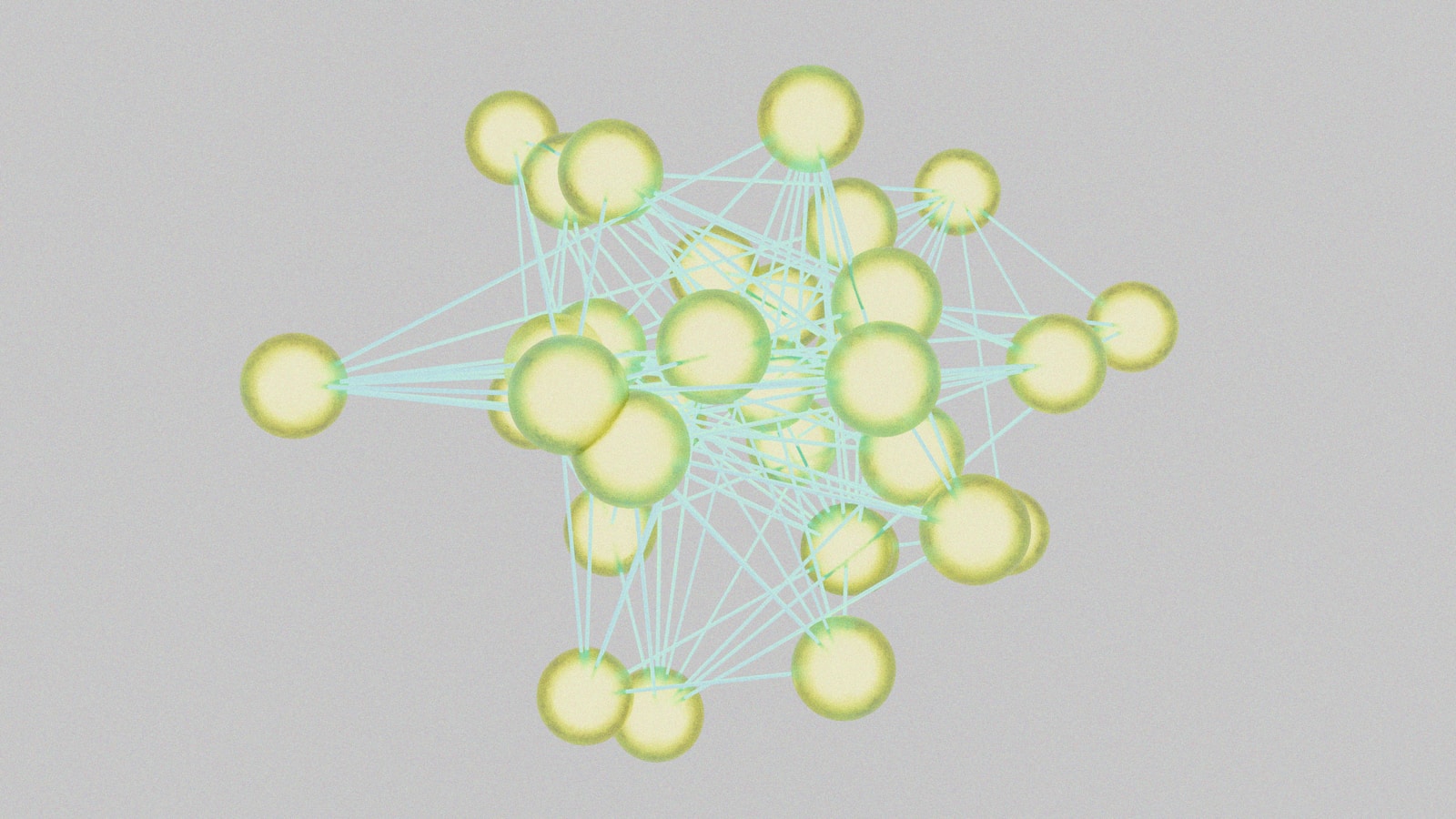
None of these are exotic distributed systems failures. They are physics. Queueing theory and contention play out across multiple services. (For a visual framework on how these dependencies chain together, see Dependency Graphs in System Latency.)
FAQ
Should I alert on p95 or p99?
For interactive systems, p95 and p99 usually correlate better with user pain than averages. Choose the percentile that aligns with your tolerance for slow experiences.
What if only one region is slow?
Scope your metrics and traces by region. Compare dependency timing and resource saturation. Regional issues often trace back to zonal dependencies, network path differences, or cache locality.
What if p99 is bad but p50 is flat?
That pattern often indicates queueing, rare code paths, shard-level imbalance, or specific tenant behavior. Pull slow exemplars and compare them to normal ones.
What is the fastest mitigation for tail latency?
Reducing queueing pressure often helps immediately. Cap concurrency, right-size connection pools, and ensure timeouts fail fast rather than waiting indefinitely.
Honest Takeaway
Latency debugging is rarely about one broken server. It is about understanding how queueing, retries, dependencies, and resource limits interact across services.
The real win is not shaving 200 milliseconds off p95 once. It is building a system where the next latency spike takes 30 minutes to root cause, instead of two days. That requires disciplined triage, proper trace propagation, and the habit of proving causality before applying fixes.
If you build that muscle, latency incidents stop feeling mysterious. They start feeling mechanical. For related reading, explore the latency tax and seven latency signals your architecture will break at scale.

Rashan is a seasoned technology journalist and visionary leader serving as the Editor-in-Chief of DevX.com, a leading online publication focused on software development, programming languages, and emerging technologies. With his deep expertise in the tech industry and her passion for empowering developers, Rashan has transformed DevX.com into a vibrant hub of knowledge and innovation. Reach out to Rashan at [email protected]