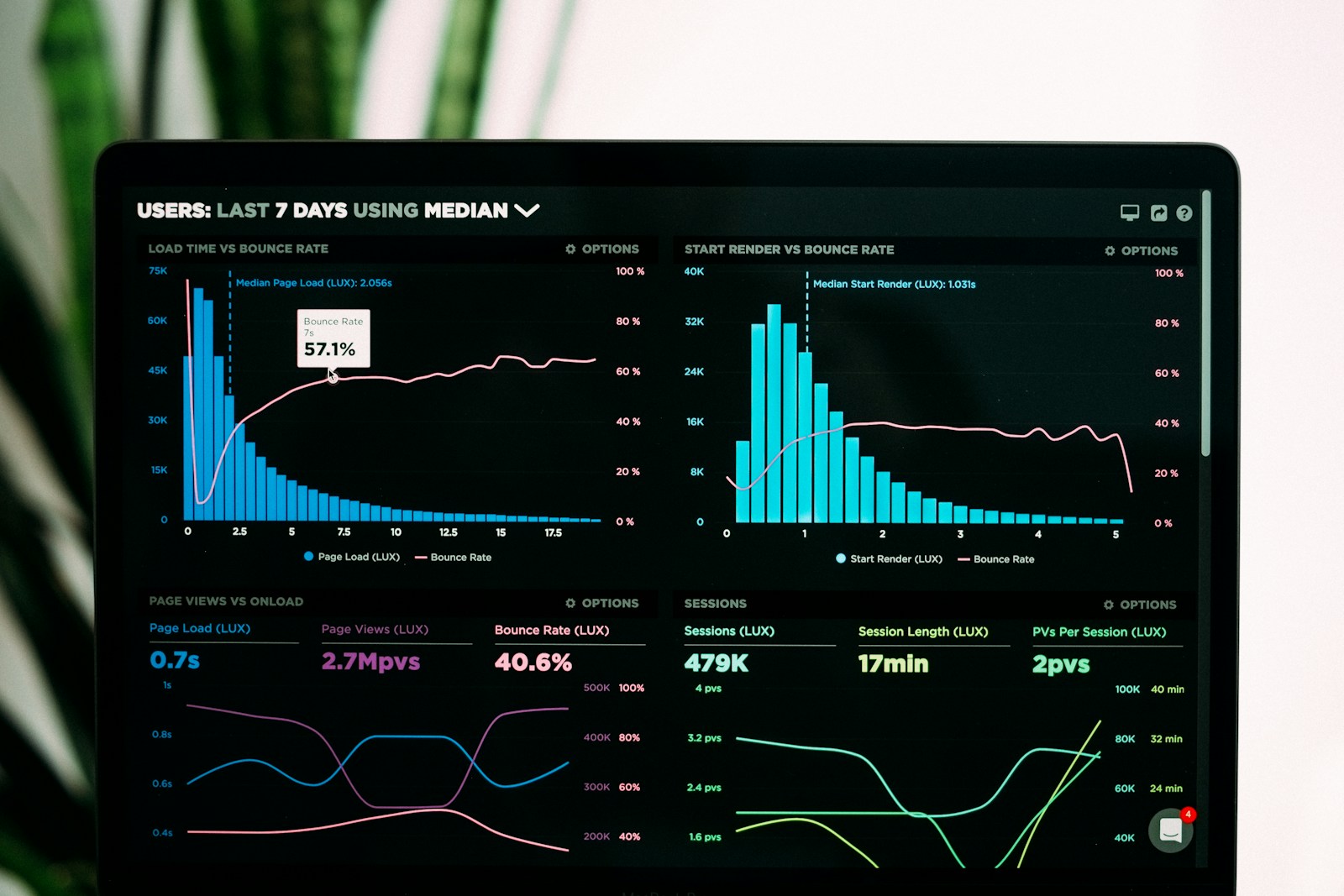
You have probably stared at a wall of green dashboards during an incident and felt uneasy anyway. Latency looks fine. Error rates are flat. Capacity charts say you have headroom. Yet something feels off, and five minutes later the pager confirms it. This is the gap between what dashboards show and what experienced SREs actually read from them.
Seasoned SREs do not treat dashboards as objective truth. They treat them as narratives about system behavior, shaped by instrumentation choices, aggregation, and incentives. Over time, you learn to spot the negative space. What is missing. What is smoothed away. What looks healthy only because the failure mode has not fully expressed itself yet. These are not tricks. They are pattern recognition built from outages, near misses, and postmortems where the dashboards technically told the truth and still failed the team.
Below are the signals experienced SREs notice immediately, often before anything turns red.
1. The shape of metrics matters more than their absolute values
Junior engineers often ask whether a metric is “good” or “bad.” Experienced SREs ask whether it is behaving normally. A p99 latency that is still within SLO but suddenly jagged tells a different story than a smooth curve at the same value. Variance, oscillation, and periodic spikes usually indicate queueing effects, lock contention, or GC pressure that averages will hide.
This is why experienced teams resist over aggregated views. When you collapse everything into a single line, you lose the texture of the system. SREs learn to read the shape as an early warning. By the time the value crosses a threshold, the interesting part already happened.
2. Perfectly green dashboards during deploy windows are suspicious
If your dashboards look identical before, during, and after a deploy, that is not always a success signal. It can mean your metrics are too coarse to reflect real change. Experienced SREs expect to see some movement during deploys, even if it is small. Cache churn, connection resets, cold starts, or brief latency blips are normal in real systems.
When nothing moves, it often means instrumentation is lagging behind reality. We saw this painfully on a Kubernetes based platform where rolling deploys triggered transient packet loss, but the only latency metric was averaged over five minutes. The deploy “looked clean” until customers complained. SREs learn to distrust dashboards that are too calm during known sources of turbulence.
3. Error rates without context are nearly meaningless
An error budget chart alone tells you very little. Experienced SREs immediately ask which users, which endpoints, and which dependency paths are contributing. A flat global error rate can hide a single critical workflow failing consistently while low value traffic stays healthy.
This is where seasoned SREs drill into cardinality, even when it is expensive. They want to know if errors cluster around a tenant, a shard, or a specific request shape. When dashboards lack that dimension, SREs see the absence itself as a signal. The system might be failing in a way you have not chosen to observe.
4. Saturation signals are more predictive than utilization
CPU at 40 percent means nothing if run queue length is growing. Disk at 60 percent means nothing if IO wait is climbing. Experienced SREs focus on saturation indicators that reflect contention, not raw utilization. Queue depth, pending requests, thread pool exhaustion, and backpressure counters tell you how close the system is to nonlinear failure.
In one large scale Kafka deployment, brokers looked healthy by CPU and memory metrics while consumer lag crept up over hours. The real issue was network saturation on a subset of racks. The dashboards technically showed “capacity available,” but saturation metrics revealed the truth. This is a common blind spot for less experienced teams.
5. Flat lines during incidents are often instrumentation failures
When something is clearly broken but the dashboards freeze, experienced SREs assume the observability pipeline is compromised. Metrics agents crash. Time series backends fall behind. Sampling drops under load. Dashboards are part of the system and fail like any other dependency.
This is why senior SREs keep an eye on meta metrics about telemetry itself. Ingest rates, scrape durations, and dropped samples are often more useful during major incidents than application metrics. When graphs stop moving, that silence is rarely neutral.
6. Correlation across layers matters more than single charts
Less experienced engineers tend to analyze dashboards one panel at a time. SREs scan across layers. Application latency alongside database locks. GC pauses aligned with pod restarts. Network retransmits lining up with tail latency spikes. The insight comes from alignment, not individual values.
This cross-layer reading is learned the hard way, usually during incidents where each subsystem team insists their dashboard looks fine. Experienced SREs develop the habit of looking for shared inflection points across independent signals. That is often where the real root cause lives.
7. Missing dashboards are themselves a signal
Perhaps the most overlooked insight is noticing what you do not have dashboards for at all. Experienced SREs immediately ask how the system behaves when dependencies degrade, when retries amplify load, or when feature flags misfire. If there is no dashboard for those scenarios, they assume blind spots exist.
Over time, this leads senior teams to design dashboards around failure modes, not components. They visualize retry storms, load shedding activation, and circuit breaker states. The absence of these views is something experienced SREs notice instantly, even if everything is green today.
Dashboards do not become powerful through more panels or fancier graphs. They become powerful when they reflect how systems actually fail. Experienced SREs read dashboards with skepticism, context, and an eye for what is missing or being smoothed away. If you want your dashboards to level up, start by asking what failure modes they would fail to reveal. That question alone often leads to better instrumentation, better on call decisions, and fewer surprises in production.

Senior Software Engineer with a passion for building practical, user-centric applications. He specializes in full-stack development with a strong focus on crafting elegant, performant interfaces and scalable backend solutions. With experience leading teams and delivering robust, end-to-end products, he thrives on solving complex problems through clean and efficient code.