Watching videos, browsing photos, or streaming your favorite apps on a larger screen brings a better experience, especially when you’re using a Samsung Smart TV. If you’ve ever wondered how to connect iPhone to Samsung TV, this article is your step-by-step guide. Whether you’re looking for a wireless connection or prefer using cables, we’ve effective solutions to cover you.
Samsung TV Screen Mirroring App: Top Choice
The easiest way to connect an iPhone to a Samsung TV is by using the universal Samsung TV Screen Mirroring app that supports multiple screen mirroring protocols. This third-party “Miracast: Screen Mirroring TV” developed by Delta Software is recommended by many Samsung TV users.
The app is designed specifically for iOS users and provides stable, high-quality mirroring without needing an Apple TV or any extra hardware. Unlike AirPlay, which only works with newer models, the third-party supports almost all Samsung Smart TVs made since 2012, including QLED, Crystal UHD, and The Frame series.
With the app, you can mirror your entire iPhone screen wirelessly. Whether you’re streaming movies, sharing photos, or playing games, the app delivers smooth, HD performance with minimal delay. To get started, simply download the app from the App Store and make sure your Samsung TV and iPhone are connected to the same Wi-Fi network. Once the devices are paired, you can mirror your screen with just a few taps.
Let’s break down how to connect to Samsung TV with iPhone via the app:
Step 1. Download and install the third-party app on your iPhone.
Step 2. Check if your phone and Samsung TV are connected to the same Wi-Fi network.
Step 3. Open the app and tap the Connect center to connect to Samsung Smart TV.
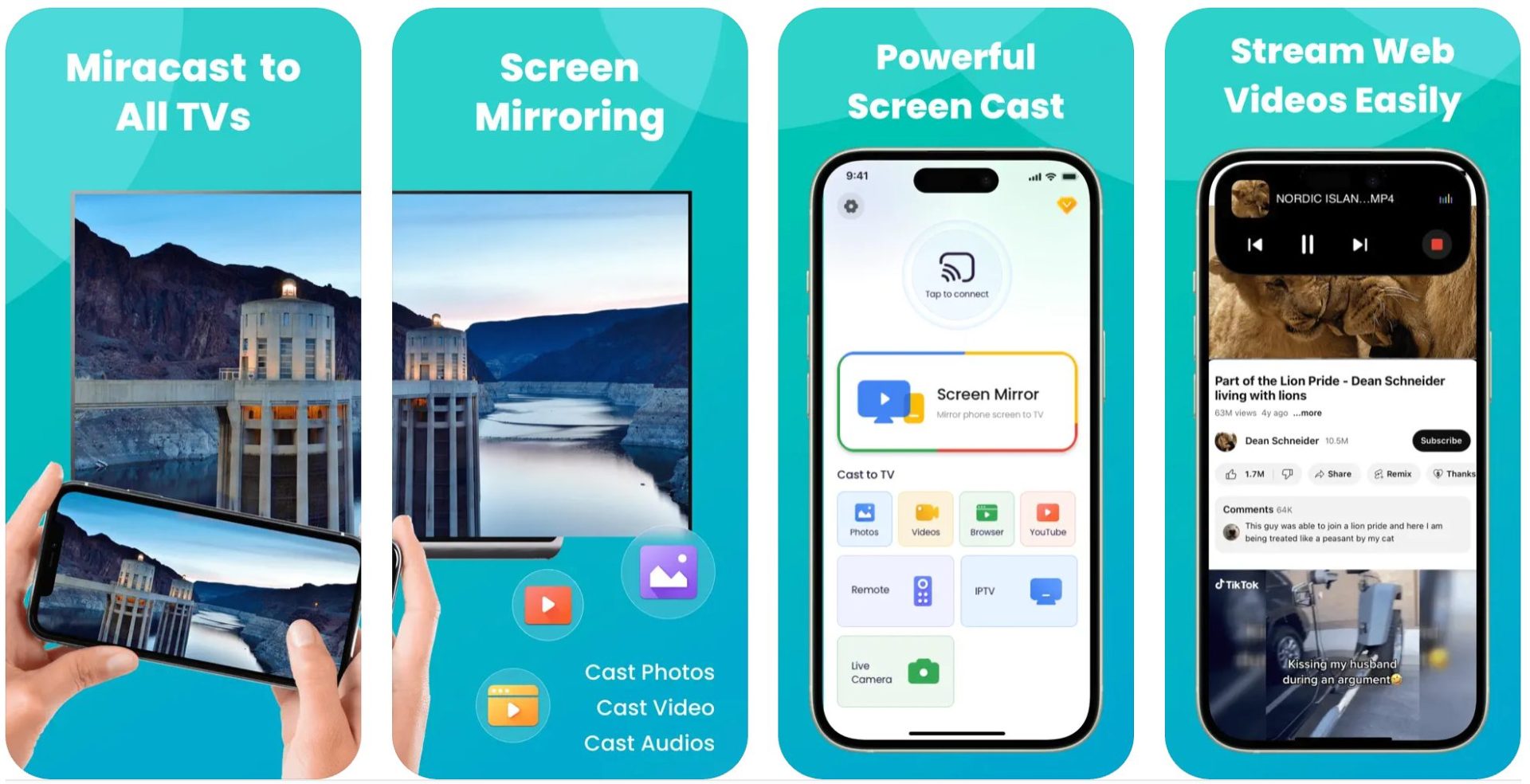
Step 4. Choose your Samsung Smart TV from the available devices.
Step 5. The app is trying to connect your iPhone to a Samsung device. Once connected, you can activate any feature on the app and enjoy big-screen entertainment.
This method is perfect for anyone looking to cast iPhone to Samsung TV wirelessly and without much setup time.
In addition to the third-party app, there are many alternatives. One of them is the PigeonCast for iPhone app, which is free and powerful. With support for AirPlay, Google Cast, and DLNA, the app makes cross-platform screen mirroring and casting straightforward.
AirPlay to Samsung TV: Built-in and Reliable
If your Samsung TV was manufactured in 2018 or later, it likely supports AirPlay 2, Apple’s native screen-sharing feature. The feature quickly establishes a wireless connection between your iPhone and Samsung TV.
To AirPlay to Samsung TV, open the Control Center on your phone, tap Screen Mirroring, and select your TV from the list of available devices.
Once connected, your screen will be mirrored to your Samsung TV. This feature is ideal for watching Apple TV+, displaying photo albums, or giving a presentation.
Can’t AirPlay iPhone to Samsung TV? Make sure both your iPhone and Samsung TV are connected to the same Wi-Fi network, and keep your software up to date for the best performance.
These apps usually require you to install a companion app on your TV or connect via a web browser interface. They support media streaming, web video casting, and some even offer annotation or recording features.
Just be sure to check compatibility with your specific Samsung TV model before installing.
HDMI Cable and Adapter: A Firm Connection
How to connect my iPhone to my Samsung TV? If you prefer a physical connection or have older Samsung TVs without smart features, an HDMI adapter is a dependable alternative.
There are two types of HDMI adapters for iPhones: models up to iPhone 14 use a Lightning to HDMI adapter, while iPhone 15 and newer require a USB-C to HDMI adapter. Check your iPhone model and choose the adapter that matches your device for smooth, high-quality screen mirroring.
How to connect iPhone to Samsung TV using an HDMI adapter? Plug the adapter into your iPhone, connect it to your Samsung TV using a standard HDMI cable, and switch your TV’s input to the correct HDMI port.
This wired method ensures minimal lag and high-definition output. If you’re looking for a way to connect your iPhone to your Samsung TV without Wi-Fi, this is the best option.
Although less flexible than wireless options, HDMI cables are excellent for watching long videos or streaming in 4K without interruptions.
How to Connect to Samsung TV with iPhone: Tips for First-Time Users
Knowing how to connect to Samsung TV with iPhone efficiently depends on following these best practices. Proper setup reduces buffering and ensures stable mirroring sessions.
- Make sure both devices are on the same Wi-Fi network
- Turn off VPN or firewall services that may block screen casting
- Keep your iOS and Samsung TV firmware updated
Troubleshooting Connection Issues
If you’re having trouble connecting your iPhone to your Samsung TV, try restarting both devices. Disable Bluetooth if you’re using Wi-Fi-based methods like AirPlay or screen mirroring apps, as it may interfere.
Some Samsung TVs may require enabling “AirPlay” or “Device Connection Manager” under Settings. Also, ensure your phone isn’t in Low Power Mode, as that may limit performance.
Final Thoughts
Whether you want to connect iPhone to Samsung TV for movie night or mirror a presentation for work, there are plenty of options. The Samsung TV Screen Mirroring app is a top recommendation for its ease of use and reliability.
Wireless methods like AirPlay to Samsung TV are perfect for quick screen sharing, while HDMI connections offer stable, high-quality output for more demanding tasks.
Now that you know how to connect iPhone to Samsung TV wireless or with a cable, it’s time to enjoy your favorite content on the big screen.
Featured Photo by Oscar Nord; Unsplash

A seasoned technology executive with a proven record of developing and executing innovative strategies to scale high-growth SaaS platforms and enterprise solutions. As a hands-on CTO and systems architect, he combines technical excellence with visionary leadership to drive organizational success.