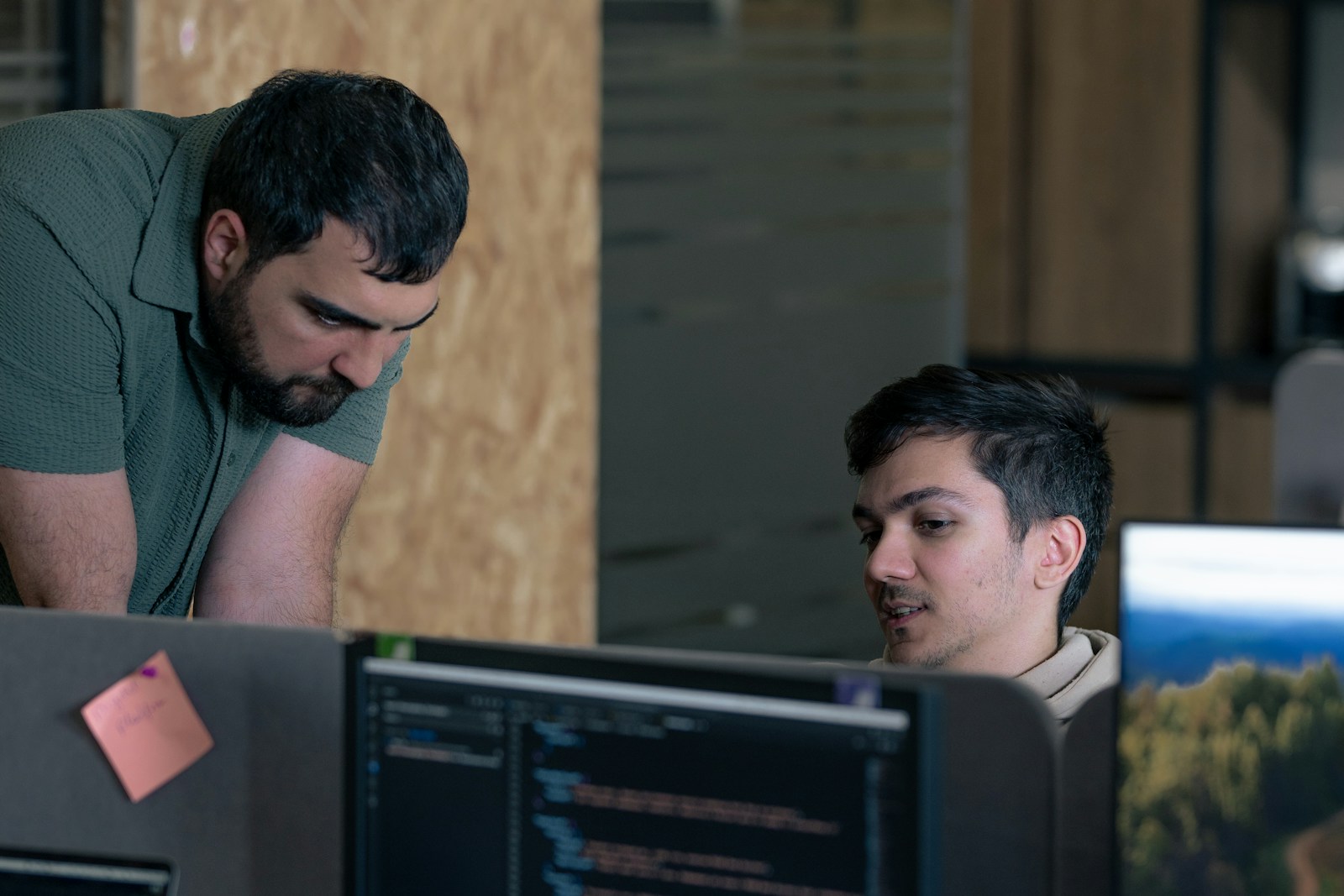
You probably already do secure code reviews. Someone opens a PR, CI goes green, you scan the diff, leave a couple comments, approve, merge, ship. Then a month later you get a security report that boils down to: “That one helper function turned user input into SQL.”
Secure code reviews are simply a code review where security reveal itself as a first class acceptance criterion, not a “maybe later” add on. In practice, it means you review changes with an attacker’s mindset, validate the design assumptions behind the change, and verify that the implementation enforces those assumptions consistently across code, configuration, and dependencies.
The trap is thinking you can “just be more careful.” You cannot brute force security with willpower. Teams that do this well build a repeatable system: small PRs, clear threat boundaries, targeted checklists, and automation that catches the boring stuff so humans can focus on the tricky parts.
What experienced security teams mean by “effective”
When you look at how mature engineering organizations approach secure code reviews, the advice is surprisingly consistent. It is less about heroic line-by-line inspection and more about scope control and responsibility routing.
Security leaders inside large browser and platform teams emphasize that it is not realistic for security specialists to scrutinize every single code change. Instead, they focus on reviewing the security properties and architecture of a feature. The insight here is subtle but important: if the design is unsafe, flawless implementation still fails.
Another recurring theme is separation of duties. Manual review should be done by someone other than the author and reveal itself as part of a broader system that includes static analysis, secret scanning, and policy enforcement. Process itself is a security control.
Finally, experienced reviewers are explicit about limits. If a reviewer is not qualified to evaluate a complex security sensitive change, they say so and ensure the right person is looped in. That transparency prevents silent gaps where everyone assumes someone else checked the risky part.
Taken together, the real lesson is this: effective secure code review is a routing problem. The right changes get the right depth of review from the right people, while tooling handles the rest.
Build a threat model that fits inside a pull request
If threat modeling feels heavy, you are doing too much of it at review time. For PR driven teams, you want a minimal version that answers three questions:
- What trust boundary is crossed
- What new capability is introduced
- What is the worst realistic abuse case
This reframes security review away from trivia and toward intent. You are not trying to imagine every possible attack, only the ones enabled by the change.
A practical habit is to require a short “Security notes” section in PR descriptions for changes that touch authentication, authorization, parsing, secrets, cryptography, file handling, or externally reachable interfaces.
Use checklists, but anchor them to real failure modes
Checklists fail when they are generic or overly long. They succeed when they reflect the kinds of security bugs your organization actually ships.
Instead of vague reminders, reviewers should look for known classes of weakness: missing input validation, unsafe output handling, inconsistent access control, insecure defaults, improper error handling, and misuse of cryptography.
The mindset shift is important. You are not hunting for individual bugs, you are hunting for classes of failure. Once you internalize that, reviews become faster and more consistent.
Let automation catch the boring problems first
Humans are bad at repetitive detection and excellent at adversarial reasoning. Your process should reflect that.
At a minimum, secure review workflows benefit from:
- Static analysis with security focused rules
- Dependency and package vulnerability scanning
- Secret detection in commits and build artifacts
- Fuzzing or property based testing for input heavy code
Automation should run before human review so reviewers are not distracted by mechanical issues. Treat CI configuration and branch protection as part of security review, because bypassing review is itself a security risk.
A four step workflow that scales
Step 1: Triage by risk, not by size
Ask a single question first: “What could go wrong if this ships?” Changes involving authentication, access control, deserialization, file IO, or external exposure deserve deeper scrutiny.
Here is a concrete example. Suppose your team merges 30 PRs per day and spends 12 minutes per review, totaling six hours. If only 20 percent of PRs are security relevant, you can afford to spend 30 minutes on those and skim the rest without increasing total review time. You get better security coverage without burning more hours.
Step 2: Demand clarity before changes
If you cannot explain what the code does, you cannot verify its security properties. Reviewers should ask authors to clarify trust boundaries and invariants, such as where identity comes from or what data is considered trusted.
Security review starts with understanding, not suspicion.
Step 3: Review invariants, not style
This is where checklists matter. Verify that all external inputs are validated at boundaries, output is encoded in the correct context, access control is centralized, secrets are handled safely, and cryptographic primitives are standard and approved.
When tools flag a data flow issue, follow it carefully. Make sure the sanitization step actually enforces the intended guarantee.
Step 4: Close the loop with evidence
When requesting a fix, ask for proof. That proof might be a test, a CI rule, or a new automated check. A good rule of thumb is to ask: “What would catch this next time if no human noticed?” If the answer is nothing, you have found a gap worth fixing.
Match review depth to change type
Refactors with no behavioral change usually need standard review. New endpoints or data access paths require explicit security reasoning and tests. New authentication mechanisms, cryptography, or complex parsers deserve design level review in addition to code review.
This tiered approach mirrors how mature organizations protect their most sensitive surfaces without slowing everything else down.
FAQ
How many reviewers are required for secure review?
What matters is not the number, but that someone qualified reviews the security relevant parts and that review coverage is explicit.
Should security engineers approve every PR?
Usually no. It does not scale. Security engineers are most effective when they focus on high risk changes and system design.
Is static analysis enough?
No. It is a powerful signal, but it must be paired with independent human review and enforcement of process controls.
How do teams improve reviewer skill over time?
Shadowing and co-reviewing. New reviewers learn fastest by reviewing alongside experienced ones before taking primary responsibility.
Honest Takeaway
Secure code reviews that actually work are built, not wished into existence. Define which changes deserve deeper scrutiny, standardize what “secure enough” looks like, and push detection into automation so humans can focus on design, abuse cases, and invariants.
You will still miss things. The win is that you miss fewer of the dangerous ones, you catch them earlier, and every near miss turns into a guardrail instead of tribal knowledge that vanishes when someone changes teams.

Kirstie a technology news reporter at DevX. She reports on emerging technologies and startups waiting to skyrocket.