SEO for SaaS isn’t just about keywords and meta tags. It’s about creating a strong technical foundation, building topical authority, developing link-building strategies, and earning backlinks that actually move the needle.
When done right, an effective SaaS SEO strategy helps your product pages rank higher, increases signups, and drives long-term growth—all without depending on paid ads.
While content writers and marketers focus on strategy and outreach, technical SEO execution often depends on developers, from site architecture to schema implementation.
In this guide, we’ll explain practical, developer-led SEO and link-building strategies that set the stage for scalable growth.
Keep reading!
Why SEO and Link-Building for SaaS Websites Matter?
The SaaS industry is ultra-competitive. Whether you’re in project management, fintech, or developer tools, thousands of other SaaS companies are trying to rank for the same keywords.
So, how do you stand out?
You can drive consistent organic growth by investing in a strong SEO strategy for SaaS backed with robust link-building strategies.
SEO ensures that your product, feature, and blog pages rank when users are actively searching for solutions like yours. And link-building strategies increases your domain authority, helping those pages rise in the search results faster.
In fact, according to Backlinko, the #1 result on Google has 3.8x more backlinks than the pages in positions #2–#10.
That’s why having solid SEO link-building strategies isn’t optional—it’s essential.
Strengthening your backlink profile often requires expertise.
Some partner with freelancers and SEO experts, whereas many choose to partner with a professional SEO services agency with a proven track record in building quality links and working across different industries.
Technical SEO Foundations for SaaS Platforms
Developers are the first line of defense when it comes to technical SEO issues.
If your website takes forever to load, has messy code, or renders poorly due to JavaScript, Google won’t rank it—no matter how good your content is.
Here’s what you need to get right:
Start by optimizing load speed. Compress assets, use lazy loading, and eliminate render-blocking scripts. Tools like Google PageSpeed Insights and Lighthouse can help you spot bottlenecks.
Use clean, crawlable code. Ensure your HTML is structured properly and doesn’t hide critical content behind scripts. Many SaaS sites struggle with JavaScript-heavy frameworks that confuse search bots.
Next, set up SEO-friendly URL structures. Keep URLS short, keyword-rich, and descriptive. Avoid random strings or dynamic parameters where possible.
Add schema markup to your product, review, and FAQ pages. Structured data helps search engines better understand your content, leading to improved ranking, visibility, and potentially higher click-through rates.
Most importantly, test everything. Render your pages using Google’s Mobile-Friendly Test or URL Inspection tool to check how search bots see your site.
In fact, a study by Ahrefs found that technical SEO improvements can increase traffic by 50% or more in some cases.
On-Page SEO Tactics Developers Should Enable
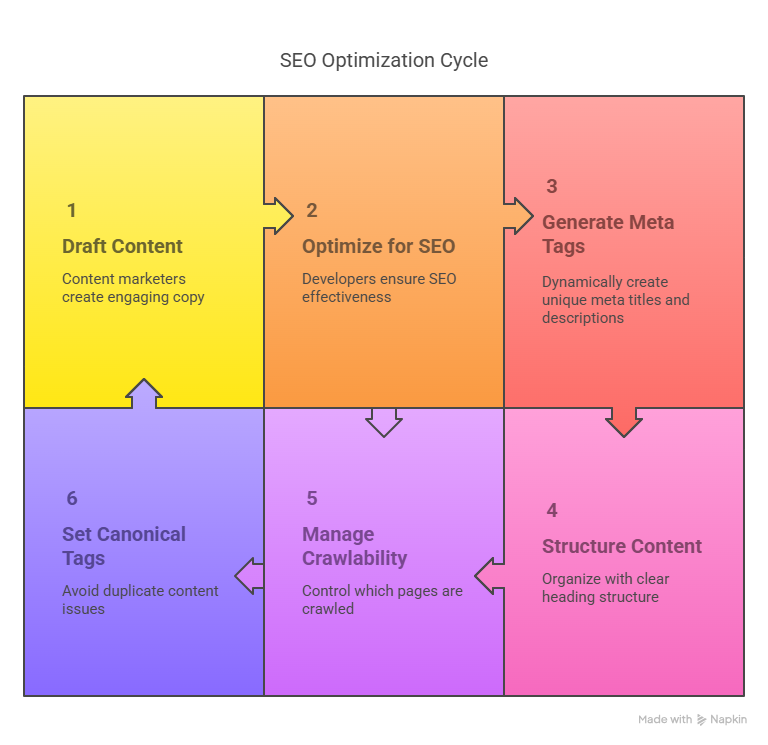
While content marketers draft the copy, developers make it work for SEO.
Your SaaS platform should dynamically generate unique meta titles and descriptions for product, feature, and use-case pages. Avoid using the same tag across dozens of pages.
Organize your content with a clear heading structure. Use H1 for main titles, followed by H2s and H3s to guide both users and search engines.
Don’t forget your robots.txt and XML sitemaps. Make sure the right pages are being crawled—and that junk pages (like login or cart) are excluded.
Also, ensure canonical tags are properly set up to avoid duplicate content across dynamic URLs.
All these factors contribute to crawlability, indexability, and eventually, better rankings.
Link Building Strategies That Work for SaaS
SaaS link-building strategies aren’t about spammy directories or comment backlinks.
You need high-quality links from reputable sites in your niche.
One of the best ways to do this? Create product-led content. Write in-depth use cases, tutorials, comparisons, and how-to guides that naturally attract links from blogs, forums, and other SaaS users.
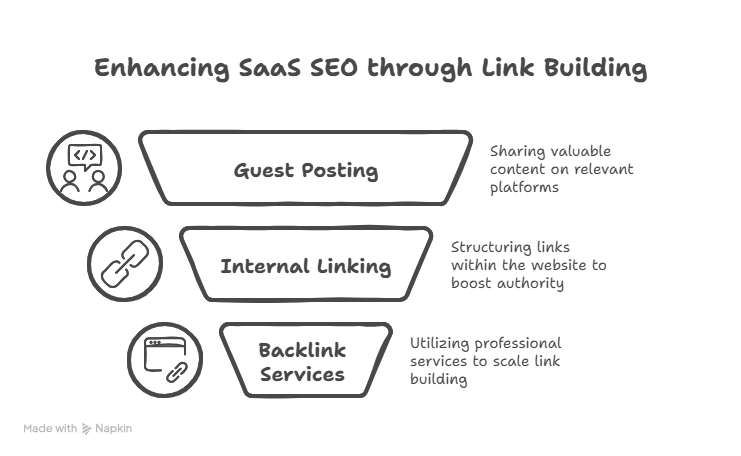
Guest posting still works—especially if you’re targeting developer-focused publications. Share code samples, technical tutorials, or performance benchmarks that add real value to the audience.
Build an internal linking structure that spreads authority. Don’t just link to your homepage—use anchor text to link between related blog posts and product pages. This improves time on site and boosts rankings.
You can also scale this process by hiring a backlink building service provider.
Leveraging Developer Docs and APIs for SEO
You’re sitting on a goldmine if your SaaS product has documentation or an API reference.
Developer docs are often some of the highest-ranking pages on a SaaS website because they provide value, solve real problems, and attract organic backlinks from Stack Overflow, GitHub, and forums.
Ensure your documentation is open, crawlable, and optimized with keywords your users search for.
Platforms like Stripe and Twilio have turned their docs into traffic machines, generating thousands of monthly backlinks and visits.
Your API reference can rank too. Add schema markup, use descriptive headings, and interlink between endpoints and tutorials.
This is one of the most overlooked SEO strategies for SaaS companies—and it works like magic when done right.
Common Pitfalls in SaaS SEO (and How Developers Can Fix Them)
SaaS websites often fall into the same SEO traps even with a solid strategy.
Duplicate content is a big one—especially if your app generates dynamic pages or has multiple versions of the same content with different URLs. Use canonical tags to fix this.
Another issue? Not targeting TOFU (top-of-funnel) keywords. These are broad search terms that attract awareness-stage users. Developers can help by creating landing pages for common use cases or search queries.
Redirect chains and indexing issues also hurt SEO. Set up proper 301 redirects and check your index coverage regularly in Google Search Console.
These technical errors may seem small, but they can severely impact your organic growth if ignored.
Conclusion: Building an SEO-Ready SaaS Platform
If you’re a developer working on a SaaS product, you’re more involved in SEO than you might think.
Your work lays the foundation for long-term growth, from fast load speeds and structured data to smart internal linking and scalable content delivery.
Integrate SEO into your development workflow, partner with your content team, and fix the technical issues that silently hurt your rankings.
Start now, and set your SaaS website up for sustainable, scalable growth.
Photo by Myriam Jessier; Unsplash

Rashan is a seasoned technology journalist and visionary leader serving as the Editor-in-Chief of DevX.com, a leading online publication focused on software development, programming languages, and emerging technologies. With his deep expertise in the tech industry and her passion for empowering developers, Rashan has transformed DevX.com into a vibrant hub of knowledge and innovation. Reach out to Rashan at [email protected]