Canva, the Australian graphic design software company, has made a significant change to its hiring process for developers. The company now requires candidates to use AI coding assistants during technical interviews. Simon Newton, head of platforms at Canva, said nearly half of the company’s frontend and backend engineers use AI coding tools daily.
This makes the tools necessary for productivity and staying competitive in modern software development. “This dismissal of AI tools during the interview process meant we weren’t truly evaluating how candidates would perform in their actual roles,” Newton said. Before this change, Canva’s interviews focused on computer science fundamentals.
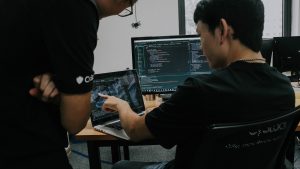
Candidates had to write code without the help of AI tools. However, some candidates had already started using AI assistants during the tasks, sometimes hiding their use. “Rather than fighting this reality and trying to police AI usage, we decided to embrace transparency and work with this new reality,” Newton wrote.
Canva embraces AI in hiring
“This approach gives us a clearer signal about how they’ll actually perform when they join our team.”
Some of Canva’s existing engineers were initially worried about the change. They thought it would replace rigorous computer science fundamentals with what one engineer called “vibe-coding sessions.” Canva addressed these concerns by continuing to test for basic computer science skills in different ways.
The company tested a new recruitment process that requires candidates to use their preferred AI tools to solve challenges. These challenges still need genuine engineering judgment, even with AI assistance. The pilot tested candidates for skills such as:
– Knowing when and how to use AI effectively
– Breaking down complex, unclear requirements
– Making good technical decisions while using AI as a productivity booster
– Finding and fixing issues in AI-generated code
– Making sure AI-generated solutions meet production standards
Newton highlighted that successful candidates showed they could use coding assistants selectively to improve their output.
They did not blindly accept AI-generated code. “Candidates with minimal AI experience often struggled, not because they couldn’t code, but because they lacked the judgment to guide AI effectively or identify when its suggestions were suboptimal,” he said. “We believe the future belongs to engineers who can seamlessly blend human creativity and judgment with AI capabilities,” Newton added.
He described the early tests of Canva’s new recruitment process as “promising.”
“Our AI-assisted interviews feel more engaging for both candidates and interviewers, and they’re providing strong predictive signals about candidate performance,” Newton wrote. “Most importantly, they’re helping us identify engineers who can leverage AI thoughtfully and effectively — exactly the kind of people we want building the future of visual communication.”
This change highlights the growing importance for developers looking to join Canva to have experience with AI coding assistants.

Rashan is a seasoned technology journalist and visionary leader serving as the Editor-in-Chief of DevX.com, a leading online publication focused on software development, programming languages, and emerging technologies. With his deep expertise in the tech industry and her passion for empowering developers, Rashan has transformed DevX.com into a vibrant hub of knowledge and innovation. Reach out to Rashan at [email protected]