The drone industry is moving beyond flight performance and camera specs—the next competitive edge lies in intelligence and integration. As pressure grows to deliver scalable, data-driven services, leading drone companies are turning to IoT to create smarter, more connected systems that drive real business outcomes.
If you’re seeking to evolve from hardware provider to infrastructure enabler, follow for drone and UAV solution insights that show how IoT is reshaping aerial operations. This article explores how connecting drones to broader IoT ecosystems unlocks new value—from predictive analytics to autonomous mission control.
Why Drones and IoT Are a Perfect Match
The Internet of Things (IoT) enables machines, sensors, and devices to communicate and share data in real time. Drone-connected IoT systems integrate drones with IoT capabilities to supercharge what was previously just an “eye in the sky” into a connected intelligence platform.
Think about it this way:
- A drone alone can capture footage.
- An IoT-connected drone can detect, analyze, transmit, and act on that data—instantly and remotely.
This synergy enables everything from condition-based maintenance and emergency response to logistics coordination and environmental monitoring. It’s not about flying farther or faster—it’s about becoming part of a larger ecosystem that understands, learns from, and interacts with the environment in real time.
Use Cases Already in Motion
Across industries, drone-IoT integration is already redefining what’s possible:
1. Infrastructure Inspection
Bridges, pipelines, power lines, and telecom towers are hard to inspect manually—risky, expensive, and time-consuming. Drones equipped with thermal, LIDAR, or HD cameras can scan these structures quickly. When paired with IoT, the system does more than just gather images:
- Real-time data is streamed to the cloud
- Algorithms flag anomalies such as corrosion or structural fatigue
- Maintenance alerts are automatically issued
2. Agriculture and Environmental Monitoring
Smart agriculture has embraced drones for tasks like crop health mapping and soil analysis. IoT sensors on the ground (moisture, pH, temperature) are synced with aerial data to generate hyper-local, time-sensitive insights. This results in:
- Optimized irrigation
- Early pest or disease detection
- Precise fertilizer application
Farmers no longer rely on guesswork—they make data-driven decisions from both above and below the soil.
3. Public Safety and Disaster Response
During natural disasters, drones can fly over inaccessible areas, sending data to command centers in real time. Equipped with gas sensors, thermal cameras, or infrared, they help locate survivors, detect hazardous leaks, or assess damage. IoT-enabled systems can automatically map and log this data for response teams, enabling faster and more effective decision-making.
4. Construction and Urban Development
Drones integrated with BIM (Building Information Modeling) and IoT sensors allow real-time tracking of site progress, safety compliance, and equipment status. Project managers gain access to high-precision aerial visuals, overlaid with IoT data from site machinery, temperature sensors, and safety gear—all in one dashboard.
The Backbone: How It Works Technically
For drone-IoT systems to work, several key components must operate seamlessly together:
1. Embedded Hardware
Onboard microcontrollers or compute modules (e.g., NVIDIA Jetson, STM32, ESP32) manage sensor data, perform initial processing, and control flight behavior. These components are selected based on power constraints, real-time processing needs, and ruggedness.
2. Sensor Suite
Depending on the application, drones are outfitted with one or more of the following:
- Visual/thermal cameras
- Gas detectors
- LIDAR
- Ultrasonic sensors
- GNSS modules for geolocation
- These sensors generate massive amounts of telemetry data.
3. Connectivity Module
To make the drone “talk” to the outside world, modules such as LTE, LoRaWAN, or Wi-Fi are used. In remote regions, satellite communication or mesh networking might be implemented. The goal is to maintain real-time data flow between the drone, the edge device, and the cloud infrastructure.
4. Edge and Cloud Processing
Raw data is either processed onboard (edge AI) or streamed to the cloud. In critical scenarios—like identifying a pipeline leak—local processing ensures faster response. For large datasets, cloud-based tools handle advanced analytics, visualization, and integration with enterprise systems (SCADA, ERP, CMMS, etc.).
Security and Scalability Challenges
As drones become connected, cybersecurity becomes essential. Encrypted communication, secure OTA updates, and identity authentication protocols must be built into every layer—from firmware to APIs.
Another challenge is scalability. Managing one drone is simple. Managing a fleet—each with its own sensors, mission paths, and data streams—is another story. That’s where centralized dashboards and fleet orchestration platforms come into play. These allow users to schedule missions, track drone health, manage updates, and unify data collection across hundreds of units.
Where the Industry Is Heading
The convergence of AI, 5G, and IoT will only accelerate drone innovation. Here’s what the near future might hold:
- Swarm intelligence: Drones working in coordinated groups, powered by AI algorithms that adapt to their environment.
- Autonomous missions: Pre-programmed flight paths triggered by IoT alerts (e.g., a vibration sensor on a bridge sends a signal, and a drone is automatically dispatched).
- Real-time 3D mapping: Combined aerial and ground-level data to create interactive environments for urban planning or industrial management.
- Drone-as-a-Service (DaaS): Companies subscribe to drone monitoring packages the same way they do for cloud services.
These shifts are moving the industry from pilot-controlled machines to fully integrated, autonomous systems that operate within broader digital ecosystems.
Conclusion
As the physical and digital worlds become more connected, drones will no longer operate in isolation. Instead, they will become vital nodes in intelligent infrastructure—enabling smarter cities, safer work environments, and faster decision-making. But realizing this potential requires more than hardware—it takes experience in software engineering, embedded systems, and cloud connectivity.
To explore how your business can benefit from next-gen aerial intelligence, visit Indeema, where real-world expertise meets innovation in every layer of drone-connected IoT systems.
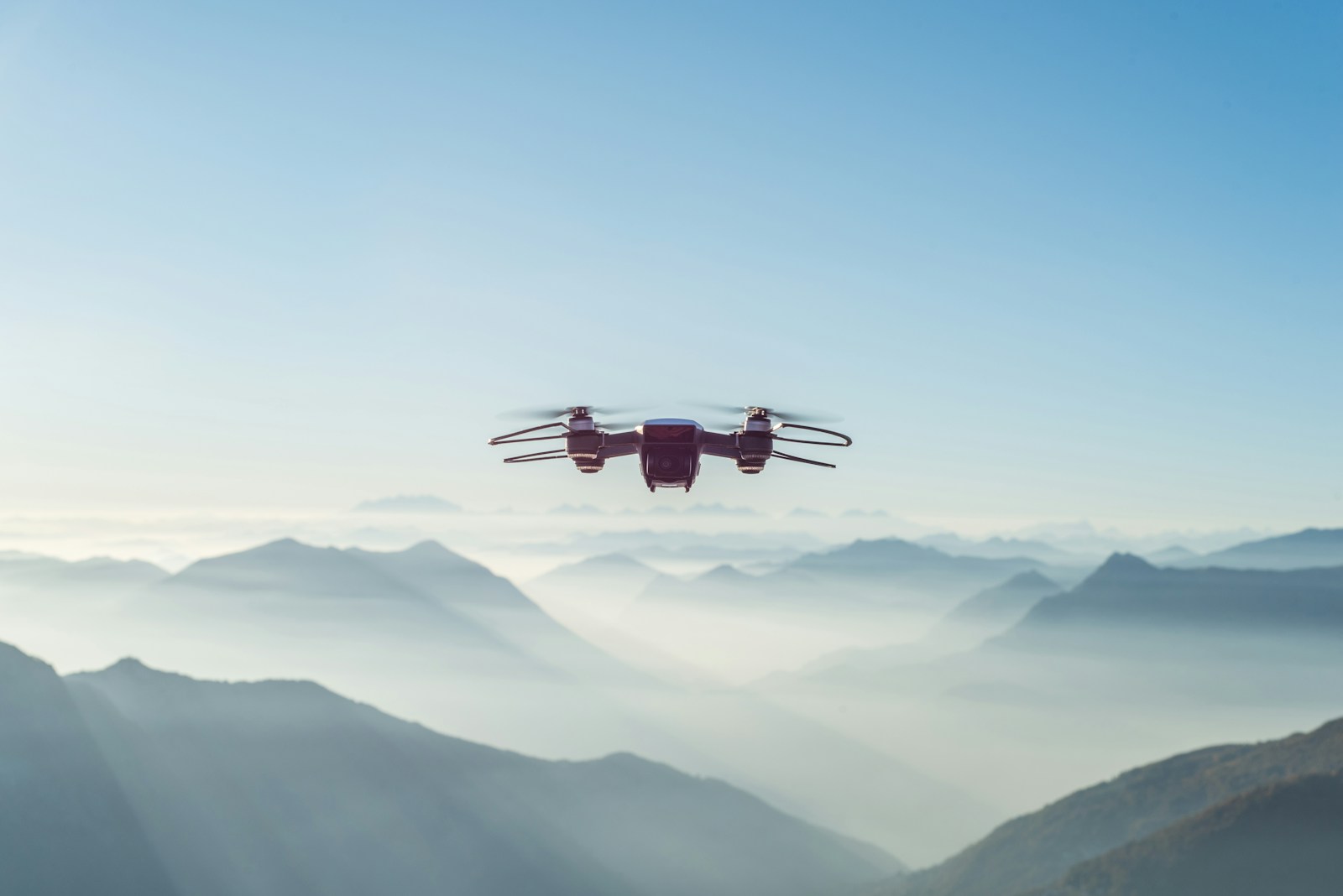
Photo by Diana Măceşanu; Unsplash

Rashan is a seasoned technology journalist and visionary leader serving as the Editor-in-Chief of DevX.com, a leading online publication focused on software development, programming languages, and emerging technologies. With his deep expertise in the tech industry and her passion for empowering developers, Rashan has transformed DevX.com into a vibrant hub of knowledge and innovation. Reach out to Rashan at [email protected]