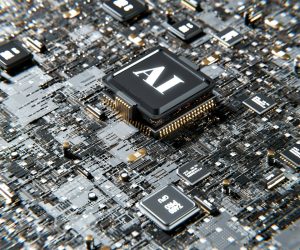
Nvidia plans to invest up to $100 billion in OpenAI and supply it with data center chips, deepening ties between two central forces in artificial intelligence. The move would give Nvidia a financial stake in the company behind ChatGPT and formalize a supply pact for the GPUs that train and run large AI models. The deal signals a fresh surge of capital into AI infrastructure, raising new questions for rivals and regulators.
“Nvidia is set to invest up to $100 billion in OpenAI and supply it with data center chips, in a deal that gives the chipmaker a financial stake in the world’s most prominent AI company, which is already an important customer.”
A High-Stakes Bet On AI Infrastructure
Nvidia has become the top supplier of graphics processors used in AI training and inference. Its chips power many of the world’s leading AI systems. OpenAI, whose services include ChatGPT and its developer tools, is one of the highest-profile buyers of that hardware.
An investment of this size would be rare in the semiconductor sector. It suggests a long planning horizon for data center capacity and model development. It also reflects the increasing capital intensity of AI as models scale in size and demand.
Why It Matters For Both Companies
For Nvidia, a stake in OpenAI could secure steady demand for new chip generations and provide it with insight into workload needs. It may also align incentives as OpenAI designs future systems.
For OpenAI, the arrangement could help lock in priority access to scarce AI chips. That could speed product launches and research milestones. It also diversifies funding sources in a field where computing drives costs.
- Scale: Up to $100 billion earmarked for AI capacity and hardware.
- Supply: Dedicated pipeline of data center GPUs for OpenAI workloads.
- Stake: Nvidia gains financial exposure to OpenAI’s growth.
Market Impact And The Competitive Picture
The deal would ripple across the AI supply chain. Cloud providers and startups compete for the same high-end GPUs. Priority allocation to OpenAI could tighten near-term supply for others or lead to shifts in pricing.
Rivals are watching. AMD has pushed alternative accelerators for AI data centers. Intel is investing in its own accelerators and foundry plans. A deeper Nvidia–OpenAI tie may press competitors to form closer partnerships of their own.
Microsoft remains OpenAI’s most prominent backer and cloud partner. Any new arrangement will draw interest over how compute is split across providers and how governance is managed between major investors.
Regulatory And Governance Questions
An investment of this scale is likely to draw scrutiny from antitrust authorities. Regulators could examine whether preferential access to chips creates unfair barriers for other AI developers. They may also assess data-sharing, pricing, and exclusivity terms.
Governance will matter. Clear rules regarding board seats, information access, and chip allocation will be crucial in avoiding conflicts. Transparency on how capacity is assigned could ease concerns from other customers and partners.
What It Means For AI Development
AI model training requires massive compute, electricity, and real estate. A large, long-term chip supply can compress development cycles and testing time. It can also enable larger models and broader deployment.
The industry has seen rapid iteration in GPU performance over short timeframes. If OpenAI secures early access to next-generation accelerators, it may maintain a lead in capability and cost per token.
The move could also accelerate work on efficiency, including model sparsity, inference optimization, and data center cooling. These areas will help manage power use and operating costs as AI scales.
What To Watch Next
Key details remain important: the investment structure, delivery timelines, and any exclusivity. Competitors’ responses will signal whether the market consolidates into tight alliances or remains more open.
Regulatory reviews, if triggered, could shape the final terms. Cloud partners will seek clarity on capacity sharing. Developers will watch whether access to state-of-the-art chips narrows or widens.
The headline figure marks a new phase in AI, characterized by capital, chips, and speed. If completed as described, the deal would tighten the link between the leading AI chip supplier and a top AI lab. The next steps will show whether this reshapes supply, spurs rival deals, or prompts new rules for the industry.

Rashan is a seasoned technology journalist and visionary leader serving as the Editor-in-Chief of DevX.com, a leading online publication focused on software development, programming languages, and emerging technologies. With his deep expertise in the tech industry and her passion for empowering developers, Rashan has transformed DevX.com into a vibrant hub of knowledge and innovation. Reach out to Rashan at [email protected]