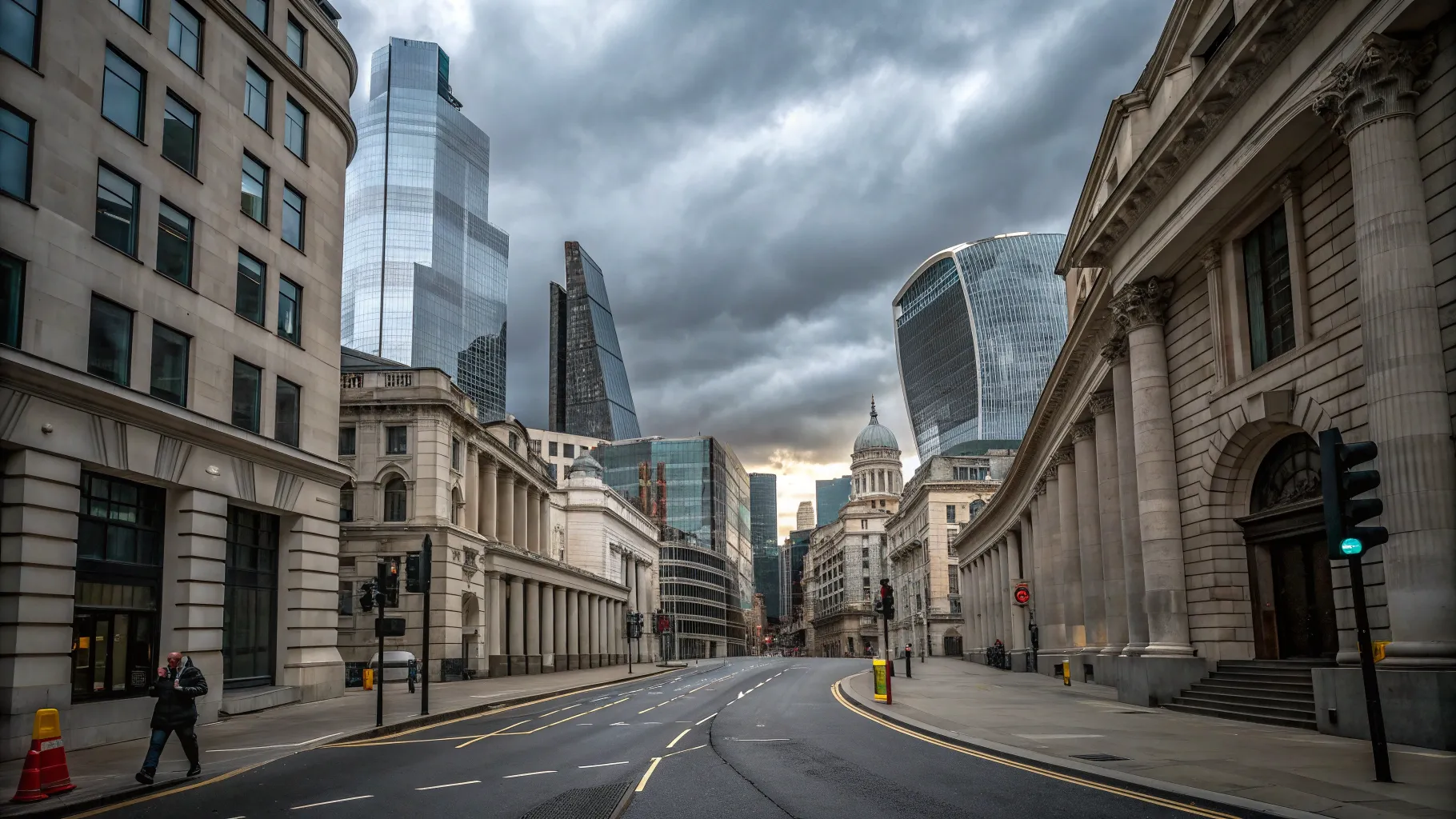
As Covid-19 cases climbed in September 2020, London’s financial core fell quiet once more, with streets that usually thrummed with workers suddenly stilled. A lone photographer moved through the Square Mile, capturing the second great pause of the pandemic in a city that measures time in trades, meetings, and morning commutes.
The images, made during renewed restrictions, show a capital forced back from the office and into homes. They also reveal how the public health crisis reshaped daily routines and strained an economic engine that relies on people, proximity, and pace.
A City Paused, Again
Earlier in 2020, Britain’s first national lockdown emptied central London. By late summer, some offices began tentative returns. Rising infections in early autumn halted that shift. National guidance steered workers back to remote setups, and many employers in finance complied to reduce risk.
London’s financial district, known for tight clusters of banks, insurers, and law firms, depends on dense foot traffic. In 2020, that model faltered. Cafes, pubs, and small retailers that lean on weekday crowds faced thin trade. Transport use dropped, and business travel shrank. What had briefly looked like a gradual comeback stalled with the new push to stay home.
Through One Lens: A City Without Crowds
The photographer’s walk offers a stark record of absence. Weekdays that once meant queues for coffee and standing-room-only trains became empty concourses and shuttered storefronts. Office towers glowed with a few lights but little movement. Security guards and delivery drivers formed much of the visible workforce on streets built for rush hour.
“An eerie emptiness.”
That sense hung over places where suits and lanyards set the tempo. At junctions near Bank, traffic signals cycled for no one. St. Paul’s caught the weak sun with tourists gone. Lanes built to speed commuters funneled birdsong instead.
Economic Ripples and Daily Strain
The emptiness had costs far beyond vacant lobbies. Remote work held down contagion, but it also pulled demand from the small firms that give the district its rhythm. Many cut hours. Some closed. Landlords weighed rent holidays and re-letting strategies as tenants delayed decisions or reduced space.
Transport operators juggled safety and solvency with fewer riders. City planners debated how long reduced footfall might last. Employers revisited lease lengths and desk layouts, while workers assessed the trade-offs of flexibility and isolation.
- Shops and cafes saw sharp drops in weekday sales.
- Office attendance fell as companies reinstated home-working guidance.
- Commuting declined, affecting rail and bus revenues.
Memory and Measurement
The photographer’s record belongs to a broader archive of 2020’s stops and starts. While data quantified the slowdown, the pictures show how it felt. They freeze the moment between two competing instincts: to return to normal, and to protect public health.
Veterans of the 2008 financial crisis recall a different silence, one of market stress rather than public health risk. This time, screens were active at kitchen tables, not only in trading floors. The continuity of service—banking, insurance, legal work—moved, but the neighborhood economy around it struggled to follow.
What Returns, What Changes
As the city later reopened and vaccination expanded, much activity came back. Yet the episode reshaped expectations. Hybrid schedules became common. Offices retooled for fewer daily occupants. City leaders promoted street dining and flexible use of space to revive central areas.
The photographs suggest a question that still matters: how much of the financial district’s strength depends on density, and how much can live in distributed routines? The answer will influence transit funding, commercial leases, and small-business survival.
For now, the autumn of 2020 stands as a marker. It shows how quickly a global capital can quiet when risk rises. It also shows the knock-on effects felt by workers far from boardrooms.
As London weighs the balance between resilience and activity, the city will watch key signs: office attendance, transport use, and the health of street-level businesses. The images from that quiet September remain a reminder of what is at stake when the center falls still.

Rashan is a seasoned technology journalist and visionary leader serving as the Editor-in-Chief of DevX.com, a leading online publication focused on software development, programming languages, and emerging technologies. With his deep expertise in the tech industry and her passion for empowering developers, Rashan has transformed DevX.com into a vibrant hub of knowledge and innovation. Reach out to Rashan at [email protected]