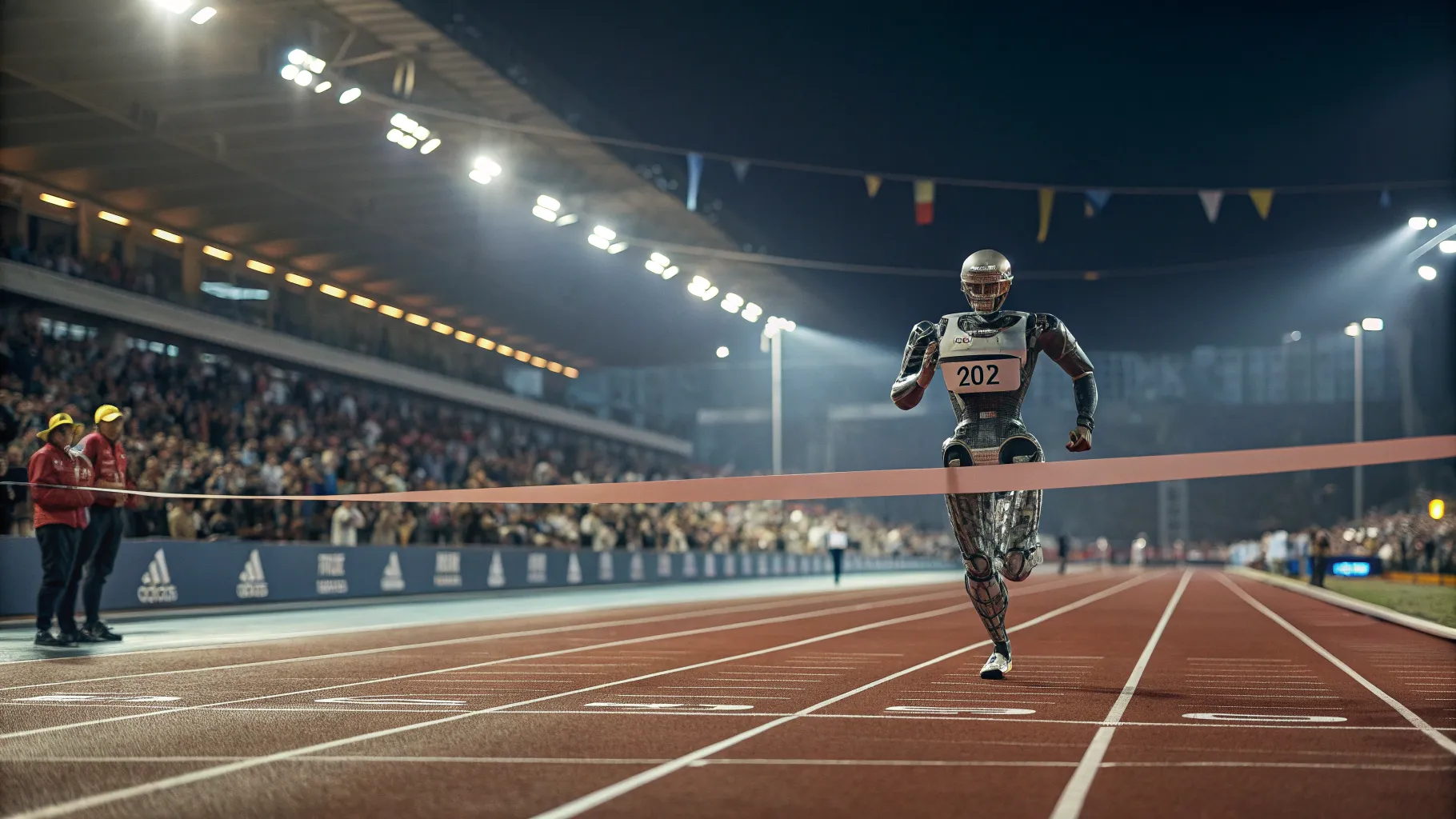
A robot won the 100-metre sprint with a time of 21.50 seconds at an international games that drew 280 teams from 16 countries. The contest, held as part of a wider schedule of events, showcased how fast-moving machines are starting to handle tasks once reserved for human athletes. Engineers and students treated the track like a lab, pushing hardware and software systems under race conditions.
The 100-metre sprint was won by a machine with a time of 21.50 seconds. It was one of many events at the games, which saw 280 competing teams from 16 countries.
Why This Sprint Matters
For human runners, 21.50 seconds over 100 metres is unremarkable. Usain Bolt’s world record is 9.58 seconds. For robots, staying upright, handling foot placement, and managing power over a straight, high-speed dash remains hard. The finish marks a step in consistent balance and control at speed, rather than a direct challenge to human athletics.
Events like these have grown over the past decade, as teams move from carefully staged lab demos to standardized courses. The larger field—280 teams spanning 16 countries—signals broader interest from universities, startups, and hobby groups. The mix of entrants helps ideas spread faster, as teams swap designs and open-source code between heats.
Inside the Race: Stability Over Sheer Speed
High-speed running by machines is a fight against falls. Small errors compound at pace. A slip can destroy motors or frames and end a season’s work. The winning time suggests a cautious strategy: controlled acceleration, conservative top speed, and an emphasis on finishing. Engineers often tune gait cycles so that each footfall absorbs shocks and corrects for drift.
Traction also matters. Synthetic track surfaces can confuse sensors and cause glare for cameras. Teams typically adjust foot materials and load distribution to reduce slip. Battery limits shape sprint strategy, too. Delivering power fast without overheating motors or tripping fuses is a constant trade-off.
Broader Field Tests Across Events
The sprint was only one slice of a larger program. Multi-event games let teams test different capabilities in quick succession: navigation, agility, and endurance. Success in one event can reveal weaknesses elsewhere. A machine that excels on the track might struggle with uneven terrain or tight turns.
- Sprint events test stability at high speed.
- Obstacle courses test perception and planning.
- Endurance runs test power management and heat control.
This format pushes comprehensive design. It challenges teams to tune sensors, actuators, and control software for varied demands rather than a single showcase moment.
What Experts Are Watching Next
Researchers track three trends. First, improved control algorithms. Better estimation of body position and faster corrections make running safer. Second, lighter materials and stronger motors reduce the penalty for adding stability features. Third, more shared datasets help teams train systems for track conditions before race day.
Some engineers caution against reading too much into raw times. They point out that reliability is the real prize. A machine that posts 21.50 seconds reliably can inform designs for delivery robots, factory runners, or emergency responders that must move quickly and safely.
Others point to the gap with human sprinters as a reminder of how far there is to go. Closing that gap will require better energy density, smarter foot-ground interaction, and more efficient heat control. Progress is likely to come from small gains that add up rather than a single breakthrough.
Benchmarks and Public Perception
Track events offer a clear measure that anyone can grasp: time over a set distance. That clarity helps the public judge progress. It also sets a bar for funders weighing where to invest. A consistent drop in race times over coming years would signal that new methods are working outside the lab.
At the same time, organizers face questions about safety and fairness. Rules on size, weight, and power keep the field level and protect bystanders. Standardized timing and track conditions help ensure results can be compared across events.
The 21.50-second win marks steady progress for fast-moving machines in a high-pressure setting. The large, international field shows growing interest and shared learning. The next tests will be consistency and adaptability across events, not only headline times. Watch for faster sprints, fewer falls, and designs that carry track lessons into real-world tasks.

Rashan is a seasoned technology journalist and visionary leader serving as the Editor-in-Chief of DevX.com, a leading online publication focused on software development, programming languages, and emerging technologies. With his deep expertise in the tech industry and her passion for empowering developers, Rashan has transformed DevX.com into a vibrant hub of knowledge and innovation. Reach out to Rashan at [email protected]