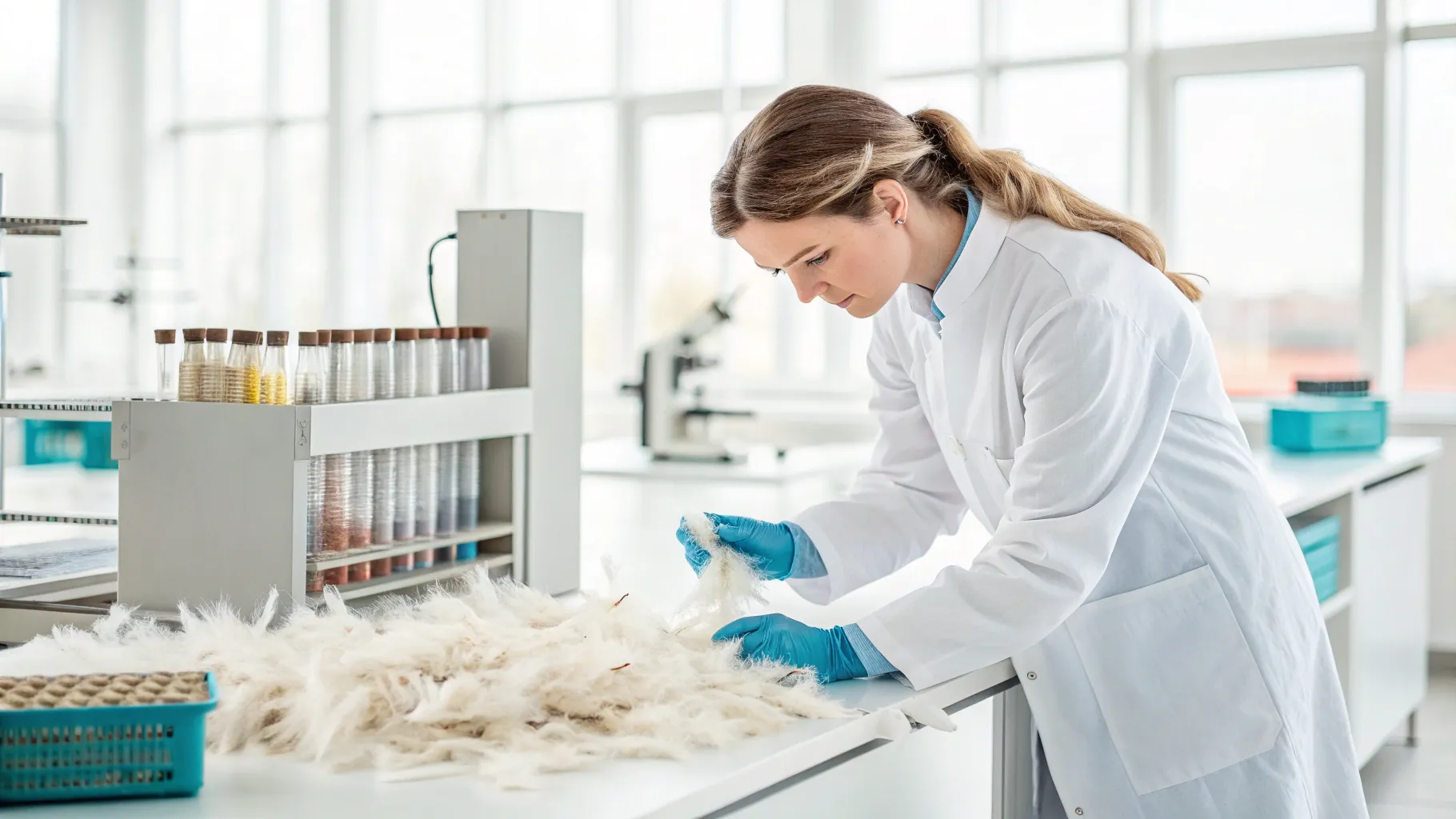
A young materials company says it can turn textile waste and poultry feathers into new fabrics, offering a way to cut landfill use and reduce plastic-based fibers. The firm, Everbloom, announced it has developed a chemical process that turns discarded fibers into high-quality materials. The process aims to replace a share of virgin polyester and luxury fibers without new oil or animal inputs.
The fashion industry sends millions of tons of textiles to landfills each year. Estimates vary, but analysts often cite more than 90 million tons annually. Polyester dominates global fiber use and sheds microplastics during washing. Regulators and brands are now seeking lower-impact options. Everbloom’s pitch meets that moment.
“Everbloom has also developed a chemical process to transform waste fibers and feathers into upcycled materials that resemble everything from polyester to cashmere.”
Why It Matters for Fashion and Waste
Textile waste is hard to recycle. Mixed fibers, dyes, and trims complicate sorting and processing. That leads to incineration or landfilling. At the same time, demand for new clothes keeps rising.
Industry groups say fashion contributes between 2% and 8% of global greenhouse gas emissions. Polyester, which makes up the largest share of apparel fibers, is tied to fossil fuels. Wool and cashmere carry land-use and animal welfare concerns. A process that reuses waste streams could lower pressure across the supply chain.
Poultry feathers are another overlooked waste source. They are rich in keratin. This protein can, in theory, be processed into fibers. If successful at scale, converting feathers could divert agricultural waste while easing reliance on oil-based inputs.
Inside the Process and What It Produces
Everbloom says its method uses chemistry to break down and reform fibers. The company did not disclose full technical details. It claims the output can imitate common synthetics and some premium fibers.
- Targets: post-industrial and post-consumer textile scraps, plus feathers.
- Outputs: materials that mimic polyester for durability and cashmere-like hand feel.
- Goal: fit existing mills and dye houses without major equipment changes.
Compatibility with current machinery is crucial for adoption. Mills prefer drop-in materials that do not slow lines or demand new capital spending. If Everbloom’s fibers can run on standard equipment, brands may move faster to test them.
Market Momentum and Hurdles
Brands have tested many circular fibers in recent years. Some efforts stalled due to cost, quality, or scale. One major recycler in Europe halted operations in 2024 amid weak financing and feedstock challenges. That history raises questions about supply chains and margins for new entrants.
Everbloom must show stable quality, clear pricing, and reliable volumes. It also needs to prove that chemicals used are safe and recoverable. Brands now expect full lifecycle data. Third-party testing on durability, pilling, and microfibre shedding will be key. Certifications on chemical management and animal welfare claims will also matter if the product replaces cashmere.
Analysts say brands will pay a premium for verified, low-impact fibers if they can scale. Early contracts often focus on capsules and workwear where durability matters. Success there can lead to broader use in basics.
Environmental Claims Under the Microscope
The company positions its process as an upcycling route. To win trust, it will need evidence. Lifecycle assessments can show energy use, water impacts, and emissions versus polyester and cashmere. Data on microplastic release will be important if the output behaves like synthetic fibers.
Policy is pushing the sector. The EU is advancing rules on eco-design, waste, and green claims. U.S. states are considering extended producer responsibility for textiles. These measures could favor materials that reuse waste and offer clear auditing.
What Comes Next
Everbloom’s next steps likely include pilot runs with mills, followed by limited collections with partner brands. Outerwear, knits, and linings are natural first targets. If quality holds, denim blends and suiting could follow.
Investors are watching for hard metrics. Key signals include tons of waste diverted, cost per kilogram versus polyester, and production capacity. Supply agreements with major retailers would validate demand. Partnerships with waste handlers and poultry processors could secure feedstock and stabilize pricing.
Experts urge caution and speed. The sector needs credible alternatives that work at scale. If Everbloom delivers on its claim to turn waste fibers and feathers into high-grade materials, it could help cut landfill use and reduce reliance on virgin inputs.
The next year will test whether the process can clear hurdles on cost, quality, and scale. Watch for independent testing, mill trials, and early product drops. Those milestones will show if this approach can move from promise to production.

Senior Software Engineer with a passion for building practical, user-centric applications. He specializes in full-stack development with a strong focus on crafting elegant, performant interfaces and scalable backend solutions. With experience leading teams and delivering robust, end-to-end products, he thrives on solving complex problems through clean and efficient code.